Avoid Bypassing a Starter Solenoid with a Screwdriver: Safe DIY Troubleshooting
Learn why bypassing a starter solenoid with a screwdriver is unsafe and illegal in many cases, and discover safe diagnostic steps to diagnose and repair starting-system issues without bypassing safety features.


Bypassing a starter solenoid with a screwdriver is unsafe and often illegal. It creates risks of electric shock, short circuits, battery damage, and engine bay fires. This quick answer guides you away from improvised bypasses and toward safe diagnostic methods, proper testing, and legitimate repairs that protect you and your vehicle.
Why Bypassing a Starter Solenoid with a Screwdriver Is Dangerous
Bypassing a starter solenoid with a screwdriver may seem like a quick fix when a vehicle won’t start, but it creates serious safety hazards. The starter solenoid carries high current from the battery to the starter motor. Shorting or bridging contacts with a metal tool can cause sparks, arcing, and a violent battery discharge. A momentary spark can ignite hydrogen gas produced by the battery, damage expensive electrical modules, blow fuses, or fuse the wiring. In modern vehicles, the starter circuit often shares circuits with the engine control module (ECM); altering it can cause software fault codes, misbehavior when trying to start, or damage to the ECM. Even touching the solenoid with a screwdriver can create a dangerous short if the battery terminals or housing contact metal. The safe path is to treat the fault as a diagnostic problem and follow a proven plan, not a hack. Always prioritize personal safety, protect the battery, and seek professional help for persistent starting problems.
Safe Diagnostic Approaches for Starter Systems
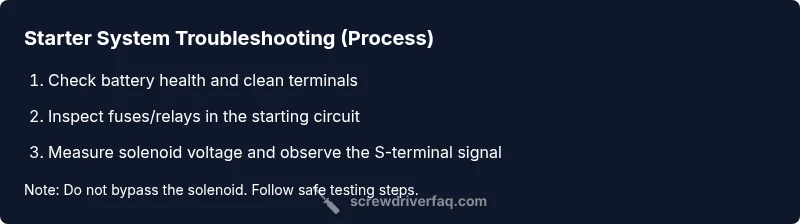
To address a vehicle that won’t start without risking safety, adopt a methodical electrical inspection. First, ensure the battery is charged and the terminals are clean and tight. Inspect fuses and relays associated with the starting circuit; a blown fuse or a sticking relay is a common culprit. Use a multimeter to verify battery voltage at rest (around 12.6 volts) and during cranking. If voltage drops significantly when trying to start, you may have a loose connection, a weak battery, or a fault in the wiring. Check the solenoid signal ('S' terminal) with the ignition in the START position; you should observe a voltage signal when cranking. If you’re not sure how to perform these tests safely, consult a professional for bench testing of the solenoid and starter motor. The aim is to locate the fault without bypassing safety features or altering the circuit.
Tools and Safety Precautions Before You Start
Before you touch any electrical components, prepare your workspace and protect yourself. Disconnect the negative battery cable to prevent accidental shorting, then verify there is no residual voltage with a multimeter. Wear protective gloves and safety glasses, keep flammables away from the work area, and remove any metal jewelry that could cause shorts. Use insulated tools and organize wires with clear labels so you can reassemble correctly. Always consult the vehicle’s service manual for exact starting circuit diagrams and any required torque specs. Never attempt improvised bypasses or jumping the circuit; doing so can cause damage to the electrical system and void warranties.
Alternative Paths and Next Steps If Your Starter Is Faulty
This guide emphasizes safety and proper diagnosis. If tests show the solenoid, starter motor, or ignition switch is faulty, pursue legitimate repair options. This could involve replacing the faulty component, refurbishing the starter, or having a certified technician inspect the wiring harness. If your vehicle is under warranty, contact the dealer for coverage. For older vehicles, a mobile mechanic can perform diagnostics at your location. Keeping a maintenance log of starting issues can help your mechanic pinpoint intermittent faults more quickly.
Tools & Materials
- Automotive multimeter(Used to measure battery voltage and solenoid signal voltage.)
- Safety gloves(Non-slip, insulated gloves for handling battery terminals.)
- Insulated screwdriver(Use only for non-conductive tasks; never bridge live contacts.)
- Battery terminal cleaner brush(Optional for removing corrosion from terminals.)
- Fuse puller or needle-nose pliers(Helpful for safely removing or inspecting fuses as part of diagnosis.)
Steps
Estimated time: 60-120 minutes
- 1
Power down and prepare the workspace
Park on a flat surface, apply the parking brake, and turn off the ignition. Open the hood and locate the battery, ensuring the area is well-ventilated. This initial step reduces the risk of accidental short circuits while you inspect the starting circuit.
Tip: Always disconnect the negative battery terminal first and confirm with a voltage tester before touching any wires. - 2
Inspect the battery and cable connections
Visually inspect battery posts for corrosion, looseness, or damaged cables. Clean corrosion with a safe battery cleaner or a mixture recommended by the vehicle manual. Tighten all clamps to the specified torque as you find them in the service manual.
Tip: Corrosion is a common cause of no-start; cleaning terminals can restore proper current flow. - 3
Check fuses and relays in the starting circuit
Locate the starter relay and associated fuses in the fuse box. Inspect for signs of burning or corrosion and test with the multimeter if you’re comfortable. Replace any blown fuses and reseat relays firmly.
Tip: A failed relay can mimic a bad solenoid; verify you’re testing the right circuit with the vehicle’s diagram. - 4
Test voltage at the solenoid input and signal terminal
With the ignition in the START position, measure the voltage at the solenoid input terminal and at the S-terminal. A healthy system should show a clear signal at the S-terminal when cranking. If voltage is absent or inconsistent, the fault may lie in wiring or the ignition switch rather than a bypass.
Tip: Have a helper to turn the key while you monitor voltages to avoid misreading a momentary signal. - 5
Consider safe bench testing if you’re trained
If you have the service manual and proper equipment, you can perform a bench test of the starter and solenoid away from the vehicle. This requires disconnecting all power sources and following detailed procedures to avoid shorts or shock.
Tip: Do not attempt bench testing if you’re unsure about the procedure; improper handling can cause injury or further damage. - 6
Decide on professional help and next steps
If diagnostics point to the solenoid, starter motor, or ignition switch and you’re uncertain about repairs, contact a licensed technician. Document tests and findings to share with the mechanic for faster service.
Tip: Professional diagnosis protects your vehicle’s safety systems and reduces the risk of repeated failures.
Quick Answers
Is it legal to bypass a starter solenoid with a screwdriver?
No. Bypassing safety systems can be illegal and dangerous, potentially leading to injury or theft. It also may void warranties and violate vehicle regulations.
No. Bypassing safety features is not legal and can be dangerous, so avoid it and seek proper diagnostics.
What are the risks of attempting to bypass the solenoid?
Risks include electric shock, battery damage, short circuits, fires, and potential damage to the engine control system. These hazards can cause injury and expensive repairs.
The risks are electric shock, fires, and damage to your vehicle’s electrical system.
What safe alternatives exist to diagnose starting problems?
Use a multimeter to check battery condition, inspect fuses/relays, test for voltage at the solenoid signal terminal, and consult the vehicle’s service manual for exact procedures.
Check the battery and fuses, measure voltages, and follow the manual for safe diagnostics.
When should I seek professional help?
If tests indicate faults beyond basic wiring or the solenoid/starter, or if you’re unsure about procedures, contact a licensed technician for safe repair.
If you’re unsure, it’s best to call a trained technician to diagnose and fix the issue.
Can I start a vehicle safely without the bypass?
Yes. Safe starting relies on the designed electrical path and proper repairs. Bypassing is unsafe and should not be attempted even temporarily.
You should not bypass; focus on safe diagnostics and repairs to start the vehicle.
Watch Video
The Essentials
- Avoid bypassing safety-critical components at all costs
- Perform safe electrical diagnostics before any repair
- Use the right tools and follow the vehicle manual
- Consult a professional for persistent starting issues