Safe Car Starting Guide: Why the Screwdriver Trick Is a Bad Idea
Learn safe, legal steps to diagnose a car that won't start. Discover why the screwdriver trick to start car is dangerous, and follow practical diagnostics, proper tools, and when to call a professional.


This article explains why the 'screwdriver trick to start car' is dangerous, illegal in many places, and typically ineffective. According to Screwdriver FAQ, attempting to hot-wire a vehicle can cause electrical damage or legal trouble. Instead, learn safe, legal troubleshooting steps, common starting problems, and when to call a professional for ignition or battery repairs.
Why the 'screwdriver trick to start car' is unsafe and illegal
The phrase 'screwdriver trick to start car' refers to hot-wiring a vehicle to bypass the ignition switch. This practice is illegal in many regions and can land you in legal trouble, especially if the car isn't yours or you don’t own the keys. More than that, attempting to bridge circuits with a screwdriver can arc, blow fuses, or trigger vehicle security systems, leaving the car completely inoperable and potentially creating dangerous hazards such as battery fires or fuel system sparks. According to Screwdriver FAQ, such shortcuts are not reliable and often cause more damage than they solve. For DIYers who want to learn about their tools safely, the right approach is to understand the ignition and electrical system and to practice within legal boundaries. In this article, we’ll walk through legitimate troubleshooting steps, identify common starting problems, and outline when the involvement of a professional is required.
Safer, legal routes to diagnose starting problems
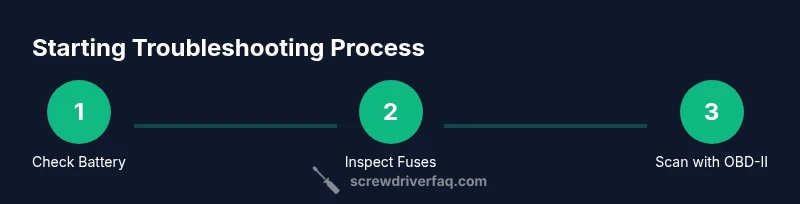
When a car won't start, there are legitimate, low-risk ways to diagnose the issue without risking damage to your vehicle or expensive repairs. Begin with safety: ensure the car is in park with the parking brake set and remove the key before inspecting anything. Gather the basic tools listed in the Tools & Materials section, and prepare to work in a well-lit area. Focus on candidate systems: the battery and its connections, the ignition switch, fuses and relays, and the starter circuit. If your car has an on-board diagnostic port, an OBD-II scanner can reveal fault codes that point to the underlying problem. The goal is to build a structured plan that isolates one subsystem at a time, rather than attempting quick, risky fixes that bypass safety features.
Common causes of a car that won't start
- Dead battery or loose connections: A weak or disconnected battery is a frequent cause of a no-start condition. Check the battery terminals for corrosion, clean if needed, and ensure clamps are tight. A loose ground or positive connection can prevent proper power delivery to the starter and ignition system.
- Faulty ignition switch or wiring: A failing ignition switch may fail to send the start signal or may intermittently cut power to essential systems. Inspect visible wiring and connectors, and note any symptoms like an unresponsive ignition cylinder.
- Blown fuses or bad relays: A blown fuse can cut power to crucial circuits such as the fuel pump or starter solenoid. Relays that fail or stick can also prevent the starter from engaging.
- Starter motor or solenoid problems: A rapid clicking sound at the start can indicate a weak or failing starter/solenoid. If power appears, but the motor doesn’t spin, this area deserves attention from a pro.
- Fuel delivery issues: If the engine cranks but doesn’t catch, there could be problems with fuel delivery, such as a failing fuel pump, clogged filter, or no fuel pressure.
Tools and safety gear for legitimate car diagnostics
Having the right tools keeps you safe and effective. Essential items include a digital multimeter for voltage checks, an OBD-II scanner to read fault codes, insulated gloves to protect your hands, a flashlight for dark areas, and a battery terminal cleaner to remove corrosion. Keep a copy of the vehicle owner’s manual for model-specific guidance, and wear eye protection. Optional but helpful items include a spare battery or jump-start pack and a clean, dry work area to prevent slips or shorts.
Battery basics: how to test safely
A safe battery check starts with a visual inspection for corrosion or damage and then a voltage check using a multimeter. If you see corrosion, clean it with appropriate cleaners and ensure the terminals are tight. When testing voltage, compare readings to the vehicle’s manual guidance rather than relying on rough estimates. If the battery struggles to hold a charge or shows persistent weakness after a recharge, replacement is likely needed. Always disconnect the negative terminal before removing or reinstalling battery components and avoid touching metal tools to the terminals during testing.
Ignition system inspection: safe checks
Inspect the ignition wiring harness and connectors for looseness, wear, or damage. Confirm the ignition switch is delivering power to the starter and that immobilizer or security systems aren’t inadvertently blocking the signal. If the key turns but ignition doesn’t engage, a worn tumbler or damaged wiring could be the culprit. Do not bypass security features; instead, consult the manufacturer’s guidelines or a certified technician.
Fuel delivery and starter considerations
If you hear a faint whine or hum from the fuel pump when turning the key, this indicates the pump is likely pressurizing the system. If there’s no sound, there could be a problem with the fuel pump, a clogged filter, or an electrical fault controlling fuel delivery. The starter motor is another potential bottleneck; if it engages with a loud click but won’t turn the engine, consult a professional to assess wiring and the solenoid.
When to seek professional help
If basic checks do not reveal a clear cause, or if you’re uncomfortable working around the electrical system, it’s best to contact roadside assistance or a licensed mechanic. Ignoring warning signs or attempting advanced repairs without proper training can cause more damage or safety hazards. A professional can perform a comprehensive diagnostic using specialized equipment and factory service information.
Maintenance to prevent future starting problems
Preventive maintenance reduces future no-start scenarios. Regularly inspect battery health, clean terminals, and replace aging cables. Keep the fuel system in good shape by using the correct fuel, replacing the fuel filter as recommended, and listening for unusual noises. Schedule periodic inspections of wiring, relays, and connectors, and ensure your car’s security system is functioning correctly. Proactive care minimizes surprise starts and keeps you on the road with confidence.
Tools & Materials
- Digital multimeter(Used to measure voltage and continuity in the battery and circuits)
- OBD-II scanner(Reads fault codes from the engine computer for quicker diagnosis)
- Insulated gloves(Protects hands when working near live electrical components)
- Flashlight or headlamp(Illuminates hard-to-see areas in the engine bay)
- Battery terminal cleaner(Removes corrosion to improve electrical contact)
- Owner's manual(Model-specific steps and warning indicators)
Steps
Estimated time: 60-120 minutes
- 1
Prepare safely and legally
Ensure the car is stationary, in park, with the parking brake engaged. Remove the key and wear protective eyewear. Clear the area around the engine bay before touching any components.
Tip: Keep a clear passway and avoid working near moving parts or hot surfaces. - 2
Check battery connections
Visually inspect the battery terminals for corrosion and tightness. If you see white, gray, or blue buildup, disconnect the negative terminal first, clean, then re-tighten.
Tip: Always disconnect the negative terminal first to reduce short-circuit risk. - 3
Inspect fuses and relays
Locate the fuse box and visually inspect critical fuses tied to the starter and fuel system. Replace any blown fuses with the correct rating and reseat relays that may have shifted.
Tip: Use the vehicle manual to identify which fuses to check for starting circuits. - 4
Test battery health with a multimeter
Measure the battery voltage and compare with the manual's guidelines. If the reading is weak or fluctuates with load, consider charging or replacing the battery.
Tip: Test under load whenever possible to get a realistic reading. - 5
Read codes with an OBD-II scanner
Connect the scanner to the OBD-II port and scan for fault codes. Use the codes to guide your next checks or consult a repair manual.
Tip: Record codes before clearing them so you can reference them later. - 6
Check ignition switch signals
If power seems inconsistent from the ignition switch, inspect wiring harness connections and immobilizer indicators for errors. Do not attempt to bypass security features.
Tip: If the immobilizer light behaves abnormally, seek professional help rather than DIY fixes. - 7
Evaluate fuel delivery
Listen for the fuel pump when turning the key. If there is no pump sound or pressure, the issue may lie in the pump, relay, or wiring.
Tip: Avoid cranking long enough to overheat the starter; give it a short, controlled cycle instead. - 8
Decide on next steps
If the issue remains unresolved after basic checks, contact roadside assistance or a qualified technician for a deeper diagnostic.
Tip: Keep emergency numbers handy and have your VIN handy when you call.
Quick Answers
Is it illegal to start a car with a screwdriver?
Yes, in many places hot-wiring a car is illegal and can lead to criminal charges. It also poses serious safety risks and can trigger anti-theft systems. Always pursue legitimate diagnostic methods.
Yes, hot-wiring a car is illegal in many areas and dangerous. Seek proper diagnostics instead.
What should I do if my car won't start?
Begin with safe, basic checks: battery, terminals, fuses, and connectors. If there’s still no start, use an OBD-II scanner for fault codes, and call roadside assistance if you’re unsure.
Start with safe checks like the battery and fuses, then consult a professional if needed.
Can I jump-start a car safely?
Jump-starting can be safe when done with proper cables and manufacturer guidance. Do not bypass security features or improvise steps that may damage electrical systems.
Jump-starts should follow the manufacturer’s instructions; don’t improvise.
What are common signs of ignition switch failure?
Key turns without starting, accessories don’t power on consistently, or ignition feels loose. These signs often require professional evaluation to avoid further damage.
Watch for intermittent power to the dashboard and trouble starting; get it checked.
Do I need expensive tools to diagnose starting problems?
Basic tools like a multimeter and an OBD-II scanner are highly helpful and often sufficient for many no-start issues. More advanced diagnostics can be left to professionals.
A multimeter and scanner cover most common no-start problems; seek a pro for advanced checks.
When should I replace the car battery?
If the battery fails to hold a charge after charging or shows persistent weakness, replacement is advised. Have it tested by a professional to confirm.
If charging doesn’t fix it, it’s time to replace the battery.
Watch Video
The Essentials
- Avoid dangerous shortcuts; pursue safe diagnostics
- Start with battery and wiring checks
- Use an OBD-II scanner for codes
- If unsure, seek professional help
- Regular maintenance helps prevent no-start issues