Never Start a Car with a Screwdriver: Safety and Alternatives
Understand why starting a car with a screwdriver is dangerous and illegal, and explore safe, legal ways to diagnose starting problems and get roadside help when your vehicle won’t start.


Do not attempt to start a car with a screwdriver. Using improvised tools to bypass the ignition can damage electrical systems, trigger airbags, and could be illegal. If your car won’t start, rely on proper diagnostics, a jump-start if appropriate, or roadside assistance. This guide explains safe, legal alternatives and why DIY ignition tampering is risky.
Why this is dangerous
According to Screwdriver FAQ, attempting to start a car with a screwdriver is a dangerous, improper practice that can cause serious damage and legal consequences. This isn't a clever hack or a shortcut; it's a misuse of tools that can nick or break sensitive electrical components, compromise airbags, and even ignite fuel vapors. For DIYers and homeowners who want to understand why vehicles won't start or how to handle a dead battery, the safest path is to use legitimate tools and follow the manufacturer's guidance. In practice, ignition systems are designed with multiple safeguards: the ignition switch, anti-theft controls, and complex wiring that routes power only when the system verifies proper signals. Introducing a metal tool into the ignition area can scrape contacts, accidentally short circuits circuits, or trigger fault codes that put the car into a protective shutdown. Beyond the mechanical risk, there are practical concerns: tool damage from metal shards, accidental electric shocks, and the potential to weaponize a minor fault into a costly repair bill. The takeaway is simple: do not attempt to start a car with a screwdriver; pursue safe, legal routes instead.
How ignition systems work (high-level)
Modern cars rely on electronic ignition systems that coordinate the ignition switch, onboard computer, security features, and fuel delivery. When you turn the key or press the start button, sensors verify the key or fob, then the ECU decides whether to energize the starter relay. The starter turns the engine over, while the ignition system provides spark to the cylinders at the right time. Because of this complexity, bypassing the ignition with improvised tools is unsafe and often ineffective. In addition, many vehicles include anti-theft measures that can immobilize the engine if a non-standard object triggers the system. Understanding these basics helps explain why there is no safe, universal DIY method to 'hotwire' a car or bypass the ignition cylinder. If you are curious about how your specific model handles starting, consult the user manual or an authorized repair guide to learn about required signals, fuses, and relays.
Safer alternatives to diagnose starting problems
When a car won't start, the goal is to identify the fault safely and legally. Start by verifying basic conditions: the battery has a healthy voltage, there are no obvious loose connections, and the parking brake is engaged. You can check battery health with a multimeter—aim for roughly 12.6 volts with the engine off; readings well below indicate a discharged or failing battery. Visually inspect terminals for corrosion or loose clamps, then inspect fuses and relays related to the starting circuit. If a warning light indicates a problem with the battery or charging system, address that issue first. Do not attempt to force the engine to crank by inserting tools into the ignition or by improvised methods. If the battery or starting system appears faulty, the safest next step is to contact roadside assistance or a trusted mechanic and arrange a safe diagnostic. If you are in a location with a safe, supervised environment, you may attempt a legitimate jump-start following the vehicle’s official guide, but only if you are trained to do so.
When to call for roadside assistance
If you are unsure about the cause of a no-start condition, or if the vehicle is in an unsafe location, call roadside assistance. Trained technicians can test the battery, charging system, fuses, and relays with professional equipment, and they can determine if a replacement part is needed. Having your VIN and vehicle documentation ready speeds up service. If you do own a roadside plan, use the provider's app or call center to request a tow or on-site service. In many cases, a dead battery or a faulty starter is resolved quickly with proper tools and safety procedures, without risking further damage from improvised repairs. While waiting, keep yourself and passengers safe: stay clear of moving parts, do not lean over the engine bay, and avoid attempting any non-standard repairs.
Common starting problems and legitimate fixes
Several common issues cause a vehicle not to start, and each requires a different legitimate remedy. A discharged battery is the most frequent culprit; charging or replacing the battery often resolves it. Corroded or loose battery terminals reduce start torque and may trigger electrical faults, so cleaning and tightening clamps is helpful. Faults in the starting relay, ignition switch, or immobilizer can prevent cranking; diagnosing these components is best left to a trained technician. Fuel delivery problems, failed sensors, or crankshaft position sensor faults can also prevent ignition. In all cases, trying to bypass the ignition with a tool is not a fix; instead, rely on proper testing, software diagnostics, or component replacement. Keeping up with routine maintenance—battery tests every year, fuses checks, and cleaning metal surfaces—helps prevent these issues from becoming no-starts.
Safety and legal considerations
Tampering with the ignition is illegal in many jurisdictions and can void insurance coverage if it results in damage or an accident. Police or roadside responders may treat attempts to start a car using improvised tools as evidence of unlawful activity, not to mention the safety risk to you or bystanders. If you suspect a security feature such as a factory immobilizer is preventing starting, contact the manufacturer or a licensed technician rather than trying to defeat it. Always follow local laws and manufacturer guidelines. The safer approach is to document symptoms, avoid risky manipulations, and let professionals diagnose and repair the problem. Remember that safety gear, proper tools, and patient, stepwise troubleshooting maximize your chances of a successful, legitimate resolution.
Maintenance to prevent starting problems
Prevention minimizes the chance you’ll face a no-start situation. Regular battery maintenance is essential: keep terminals clean, ensure clamps are tight, and replace aged batteries before they fail. Inspect belts, hoses, and the alternator as part of routine checks so the charging system remains intact. Keep a basic toolkit and a charged phone in the car for emergencies, along with roadside assistance contact information. If you suspect corrosion on battery posts, clean with appropriate solutions and wear gloves. Finally, store your vehicle in a dry, well-ventilated area to reduce moisture-related electrical issues. A proactive maintenance plan reduces risk and extends the life of your ignition and electrical systems.
Where to learn more and stay safe
For more in-depth, trustworthy guidance, consult manufacturer manuals and reputable sources on car starting and electrical safety. Official resources from government agencies and accredited automotive bodies provide safe procedures and warnings about bypass attempts. You can also read consumer safety guides on vehicle maintenance and battery care to help you understand the basics without risking damage. Remember: the safest, legal route is to rely on certified technicians and official service channels when you encounter starting problems. By focusing on prevention, you protect yourself, your vehicle, and your wallet.
Authority sources
- Official guidance: https://www.nhtsa.gov/
- Industry standards: https://www.sae.org/
- Consumer safety reference: https://www.consumerreports.org/cars/starting-a-car-problems/
Tools & Materials
- Owner's manual(Model-specific diagrams and procedures)
- Smartphone with roadside assistance contacts(For quick access and updates)
- Jumper cables(Only if you are trained and following official guides)
- 12V battery tester / multimeter(Helpful to verify battery health when you know how to use it)
- Flashlight(For lighting the engine bay at night)
- Safety gloves(Protects hands from corrosion and sharp edges)
Steps
Estimated time: 30-60 minutes
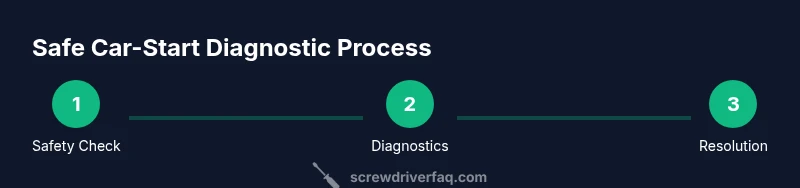
- 1
Ensure safety and pull over
Safely move the vehicle to a secure spot, engage hazards, and apply the parking brake. Ensure all passengers are away from traffic and the engine bay. Do not lean into the engine bay or touch moving parts while the vehicle is in no-start status.
Tip: Always prioritize personal safety; if you feel unsafe, call for help rather than attempting any fixes. - 2
Check dashboard indicators
Look for warning lights such as the battery, check engine, or immobilizer indicators. These icons guide you toward the likely fault area (battery, charging system, or security features) without disassembling the vehicle.
Tip: Note any error codes or lights; this information helps a technician diagnose the issue faster. - 3
Inspect battery connections
If you can safely reach the battery, inspect terminals for corrosion, leaks, or loose clamps. Clean corrosion with proper tools and ensure clamps are tight; never pry terminals apart with metal objects.
Tip: Use gloves and eye protection; disconnect the negative terminal only if you know the procedure and it’s safe to do so. - 4
Assess non-battery starting risks
Consider relays, fuses, immobilizers, and starter circuit components. Visual checks can identify obvious faults, but many issues require professional diagnostic tools.
Tip: Avoid poking around with metal tools near the ignition area; it can trigger airbags or other safety systems. - 5
Decide on jump-start according to official guidance
If you are trained and it’s appropriate for your vehicle, you may follow the manufacturer’s jump-start procedure to test whether the battery is the fault. Do not improvise or bypass security features.
Tip: If you are unsure, skip this step and contact roadside assistance. - 6
Call roadside assistance if unsure
If the cause remains unclear or the location is unsafe, call your roadside service. A trained technician can diagnose and repair safely with proper equipment.
Tip: Have your VIN, model, and symptoms ready to speed up service.
Quick Answers
Is it illegal to start a car with a screwdriver?
Yes. Bypassing the ignition with a tool is illegal in many places and can cause damage. It also risks triggering safety systems and may void insurance.
Yes, it's illegal in many areas and dangerous. Avoid it and call roadside assistance.
What should I do first if my car won't start?
Safely pull over, check warning lights, test battery health if possible, and contact roadside assistance if the cause isn't obvious.
Safely pull over, check lights, and call roadside assistance if needed.
Can I jump-start my car myself?
Only if you are trained and following the vehicle's official guidance. If unsure, have a professional handle it.
Only if you know the proper procedure; otherwise, seek professional help.
What maintenance helps prevent starting problems?
Regular battery tests, cleaning terminals, and checking fuses and relays reduce no-start risk.
Regular battery checks and fuse inspections help prevent starting problems.
Are there safer DIY checks I can perform?
Yes: focus on battery health, terminal cleanliness, and verifying warning lights. Avoid any ignition bypass attempts.
Check the battery and fuses, and avoid bypass hacks.
Watch Video
The Essentials
- Never bypass ignition with tools; prioritize safety.
- Use proper diagnostics for any no-start condition.
- Call roadside assistance when in doubt or in unsafe locations.
- Regular maintenance reduces the risk of starting problems.