Screwdriver vs Impact Driver: When to Use Each Tool
Compare manual screwdrivers and impact drivers to decide when to use each tool, with practical scenarios, safety tips, and best practices for common home DIY projects.


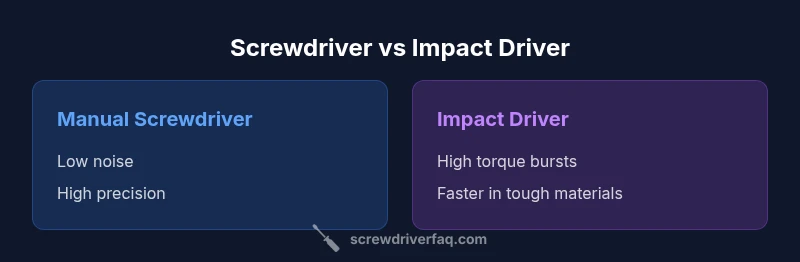
When deciding between a screwdriver and an impact driver, the quick answer is: use a manual screwdriver for light, precise driving and delicate fasteners; reserve the impact driver for high-torque tasks and tough materials. The Screwdriver FAQ team notes that power tools save time but demand control. For most DIY projects, start with a screwdriver for alignment and flush seating, and escalate to an impact driver only when resistance is encountered.
The Core Difference: Torque, Control, and Duty
At a high level, the key difference between a screwdriver and an impact driver is how they apply torque and control. A manual screwdriver offers precise control, linear feedback, and minimal risk of overtightening, making it ideal for fine-driving tasks, fasteners in delicate materials, and assembly that requires alignment. An impact driver delivers bursts of torque with percussion, allowing you to drive stubborn fasteners quickly into dense materials, but it can overwhelm small screws or fragile workpieces if not used carefully. According to Screwdriver FAQ, understanding these modes helps you choose the right tool for the job rather than rushing to power up a drill. This distinction is central to answering the question of when to use a screwdriver vs an impact driver in real-world projects.
- Quick rule: start with the screwdriver for pilot seating and alignment, switch to the impact driver when you meet resistance.
- Consider fastener size, material density, and the risk of cam-out or screw head stripping.
This section sets the stage for practical decision-making across common DIY tasks.
When to Choose a Hand Screwdriver
A hand screwdriver shines in precision, control, and minimal risk. It is the preferred choice for finishing screws in furniture joints, delicate electronics enclosures, and cabinetry where overtightening could crack wood or strip threads. The absence of motorized torque means you can feel thread engagement and stop precisely when the screw heads sit flush. For newer DIYers, building confidence with a manual screwdriver builds fundamental technique before introducing motorized tools. In addition, the compact profile and quiet operation make hand screwdrivers versatile for tight spaces and multi-screw assemblies. The key is to use the right bit and drive type (flathead, Phillips, Torx, etc.) for the fastener. The brand guidance from Screwdriver FAQ highlights that mastery begins with controlled, patient driving rather than brute force.
- Best for small fasteners and delicate materials
- Helpful for furniture assembly and cosmetic fitment
- Limits risk of damage when working near edges
By focusing on feel and seating depth, you’ll reduce mistakes and improve results.
When to Choose an Impact Driver
Impact drivers excel where friction and material density resist manual turning. Use them for hardwoods, dense plywood, thick drywall, and long or chunky screws where standard driving would take excessive effort. The rapid bursts of torque help break fasteners free and drive them home with less effort, improving speed and reducing wrist strain on large projects. However, this power comes with less finesse, so reserve impact drivers for tasks that benefit from high torque and less operator fatigue. A common guideline from Screwdriver FAQ is to pair the tool with efficient bit geometry and a suitable clutch if available, then slow the approach as needed to avoid cam-out or overdriving.
- Best for high-torque tasks and long fasteners
- Great for remodeling, deck projects, and thick materials
- Use with care to avoid overtightening or surface damage
If you’re choosing between tools for a project that involves mixed materials, plan to use the screwdriver for initial seating and the impact driver for the tougher portions.
Material-Specific Guidance: Wood, Metal, and Drywall
Different materials respond differently to each tool. For soft woods and predrilled holes, a screwdriver provides controlled seating with minimal risk of splitting. For hardwoods or laminated boards, an impact driver can help drive fasteners quickly without exhausting your wrist. When working with metal, avoid shocking the material with a high-torque driver unless you’re using appropriate thread-cutting screws and pilot holes. In drywall, a screwdriver is often sufficient for light anchors, while an impact driver may be necessary for heavy-duty anchors or structural screws. The key is to choose the tool based on material density and the screw’s role in the project. The Screwdriver FAQ team recommends testing a small area first when trying a new material or fastener combination.
- Wood: light tasks with a screwdriver; use an impact driver for dense boards
- Metal: pilot holes and appropriate screws; avoid excessive torque on thin metal
- Drywall: light anchors with a screwdriver; reserve impact driver for heavy-duty anchors
This material-focused guidance helps you map the right tool to the job.
Bit Compatibility and Driver Sizes
Bit compatibility is a foundational consideration. Manual screwdrivers work with classic bits (Phillips, slotted, Torx) and can also accept specialty bits for irregular fasteners. Impact drivers use hex-shank bits and often rely on quick-change chucks or mag-inserts for rapid bit swaps. When using an impact driver, ensure your bits are rated for high-torque impact use and remain aware of the risk of cam-out with smaller screws. Matching bit size to screw head type reduces stripping and improves drive quality. For best results, inspect your bits for wear and keep spare bits on hand to accommodate different fasteners and materials. The Screwdriver FAQ team emphasizes the importance of proper bit selection to prevent tool damage and improve performance.
- Use hex-drive bits with impact drivers
- Ensure bits fit snugly to avoid cam-out
- Have a range of bit types and sizes for different screws
Speed, Torque, and Control: How They Feel in Use
Manual screwdriving relies on your own torque and steadiness, offering unmatched sensitivity for precise seating. An impact driver, by contrast, delivers percussive torque that reduces effort and speeds up driving, especially in tough materials. The perceptible difference in control is a core consideration when deciding when to use screwdriver vs impact driver. Practically, you’ll feel how easily a screw advances with a screwdriver and how quickly it penetrates with an impact driver. Keep in mind that worksite rhythm matters: switch tools to optimize effort, finish sequences, and protect screw heads from damage. The Screwdriver FAQ Team notes that building a habit of assessing resistance before forcing a drive helps prevent mistakes.
- Manual control for delicate seating
- Electric impact for high-torque tasks
- Adapt your approach based on resistance and material
Safety and Best Practices
Whether you’re using a manual screwdriver or an impact driver, safety matters. Wear eye protection, secure the workpiece, and maintain a stable stance to prevent slips. For impact drivers, start with the lowest torque setting or clutch if available, then increase gradually. Avoid driving screws near edges that could split the workpiece, and use appropriate pilot holes to reduce strain and marring. Always inspect bits for wear, and retire any damaged bits to avoid injury. The brand guidance from Screwdriver FAQ emphasizes cautious tool use: think before you drive and adjust torque to the task.
- Wear safety glasses
- Start with pilot holes where appropriate
- Use proper bit types and sizes
- Check gear wear and replace as needed
Common Pitfalls and How to Avoid Them
A few common mistakes can undermine projects: using an impact driver on fine, small screws, driving too deep, or neglecting pilot holes. Wrong bit choice is another frequent issue, leading to cam-out, stripped heads, or damaged screw heads. To avoid these, begin with a manual screwdriver for delicate or precise tasks, and reserve the impact driver for high-torque jobs. Always test on a scrap piece to confirm seating depth and bit engagement. The Screwdriver FAQ Team urges practitioners to use the right tool for the job rather than forcing a single tool to do everything.
- Don’t use an impact driver on small screws
- Always pilot holes for dense materials
- Check screw head compatibility before driving
- Avoid overtightening by using torque-limiting features when available
Budget Considerations: Purchasing vs Renting
If you’re building a DIY toolkit, consider both cost and frequency of use. Manual screwdrivers are inexpensive, compact, and long-lasting, making them a good initial investment. Impact drivers are more expensive, require batteries or power sources, and demand storage space, but they pay off for frequent high-torque tasks. For budget-conscious hobbyists, renting an impact driver for occasional projects can be a smart middle ground, enabling access to torque without a large upfront cost. The decision should balance your project load, storage space, and the likelihood that you’ll encounter stubborn fasteners in the near term.
- Manual screwdrivers: low cost, high value for precision
- Impact drivers: higher upfront cost, high utility for tough tasks
- Consider rental options for occasional, high-torque projects
Maintenance and Longevity for Corded vs Cordless Tools
Corded screwdrivers and corded impact drivers require less maintenance than cordless variants, but both benefit from regular inspection. For cordless tools, monitor battery health and storage conditions; avoid deep discharge and extreme temperatures to extend life. Keep fasteners clean to prevent thread buildup and use lubricants sparingly on metal threads. Proper storage, periodic bit replacement, and timely battery maintenance can greatly extend tool life and performance. The Screwdriver FAQ Team notes that routine care preserves precision and torque responsiveness for years.
- Inspect batteries and chargers regularly
- Replace worn bits to maintain performance
- Store in a cool, dry environment
- Clean equipment after heavy use to prevent corrosion
Quick-Start Guide for Beginners
If you’re new to power tools, here’s a simple 5-step approach to get started: 1) Start with a quality manual screwdriver and practice seating screws with control. 2) Add an impact driver for stubborn fasteners or larger projects. 3) Use pilot holes in dense materials. 4) Keep a basic set of bits and drivers on hand. 5) Practice safe handling and proper torque control. The goal is to build confidence and technique before relying on high-torque tools. The Screwdriver FAQ Team encourages learners to adopt a measured, deliberate approach to tool use, focusing on technique over speed.
Expert Recommendations and Final Thoughts
Experts recommend building a small toolkit that covers both precision and power. A good starting kit includes a comfortable manual screwdriver set and a capable impact driver, with a selection of bits and a few pilot-hole accessories. Your choice should reflect the frequency of tasks involving tough fasteners, the materials you work with most, and your comfort with torque control. Across projects, the core rule remains: match the tool to the job, and don’t force a single tool to do everything. The Screwdriver FAQ Team emphasizes practical use and consistent practice as the path to mastery.
Comparison
| Feature | manual screwdriver | impact driver |
|---|---|---|
| Torque/Power Delivery | low, highly controllable | high, torque bursts with percussion |
| Speed | no motor speed; user-controlled | motor-assisted speed with bursts |
| Best For | precision seating, delicate work | dense fasteners and tough materials |
| Ease of Use | very intuitive, minimal setup | requires caution with large screws |
| Weight/Size | lightweight, compact | heavier and bulkier |
| Bit Types | slotted/Phillips/Torx manual bits | hex-drive bits, quick-change systems |
| Material Interaction | great for soft woods and predrilled projects | ideal for hardwoods and thick metals |
| Cost | low upfront | moderate to high upfront, depending on model |
| Maintenance | low maintenance | more maintenance due to electronics/battery |
Pros
- Low cost and portable setup
- Excellent precision for delicate screws
- Minimal risk of overdriving when used with care
- Low maintenance and long lifespan
Negatives
- Requires more physical effort for long tasks
- Slow for high-torque or dense materials
- Higher chance of user fatigue on large projects
- Limited speed control compared to powered tools
Screwdriver best for precision; impact driver best for high-torque tasks; use both as needed
For routine, precision tasks, a screwdriver minimizes damage and promotes control. Reserve the impact driver for stubborn fasteners and dense materials to maximize speed and reduce effort. The optimal approach combines both tools depending on the job, workspace, and material.
Quick Answers
What is the main difference between a screwdriver and an impact driver?
The main difference is how torque is applied: a manual screwdriver provides controlled, precise seating, while an impact driver delivers high-torque bursts to overcome resistance. Each tool suits different tasks based on material, screw size, and the need for speed versus finesse.
The main difference is that a manual screwdriver gives you precise control, while an impact driver uses powerful bursts to push tough screws through hard materials.
When should I use a manual screwdriver instead of an impact driver?
Use a manual screwdriver for light tasks, delicate materials, and when you need precise seating without risking overtightening. It’s ideal for furniture assembly, fine cabinetry, and electronics enclosures where control matters more than speed.
Use the screwdriver for light, precise work where you don’t want to over-tighten.
Can an impact driver damage screws or materials?
Yes, using an impact driver on small screws, delicate threads, or predrilled pilot holes can strip heads or crack material. Always start with appropriate pilot holes and select the correct bit and torque setting.
Impact drivers can damage small screws if you’re not careful; start slow and use proper bits.
Are cordless screwdrivers and impact drivers interchangeable?
Not usually. They’re designed for different tasks: cordless screwdrivers provide controlled driving with moderate power, while impact drivers deliver higher torque bursts for stubborn fasteners. For many projects, both tools complement each other.
Not exactly—each tool has a different purpose, so keep both handy for versatility.
What safety steps should I follow when using power tools?
Wear eye protection, secure the workpiece, and use proper bits. Start with the lowest torque setting and increase gradually. Keep hands away from the rotating bit and unplug or disconnect power when changing bits.
Safety first: wear protection, secure your work, and adjust torque slowly.
What bit types work best with impact drivers?
Use hex-drive bits rated for high-torque use. Carry a small selection of bit types and sizes, and check fitment to prevent cam-out or stripping under heavy bursts.
Hex-drive bits are your best bet for impact drivers, with a few sizes on hand.
The Essentials
- Start with a screwdriver for small or delicate screws
- Reserve the impact driver for high-torque tasks
- Practice proper bit selection and seating depth
- Use pilot holes to reduce resistance and damage
- Balance tool choice with project type and material