Hex screwdriver vs impact driver: A practical comparison
An in-depth, objective comparison of hex screwdriver vs impact driver, covering performance, ergonomics, use cases, safety, and value to help DIYers pick the right tool for each task, today and beyond.


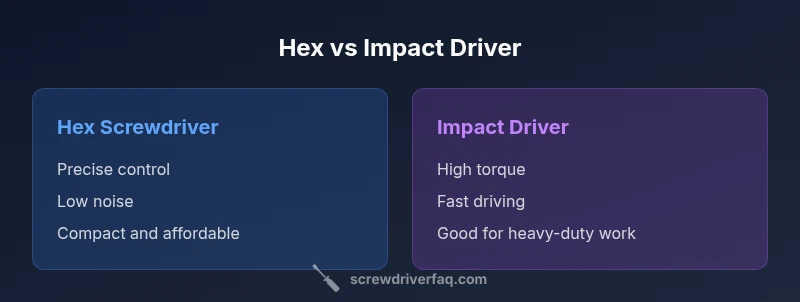
Hex screwdrivers (manual or bit-driven) are ideal for precise, small fasteners and delicate materials, offering control and reduced cam-out risk. Impact drivers deliver high-torque, hammering action for fast driving through tough materials and longer screws, but can overdriven or strip if misused. For a complete setup, DIYers often pair a compact hex driver with a cordless impact driver, using each where it shines.
hex screwdriver vs impact driver: Core definitions and scope
When you compare a hex screwdriver vs impact driver, you’re weighing two very different tool philosophies. A hex screwdriver typically relies on manual power or a small, battery-powered form factor to turn bits with a hex shank. An impact driver, by contrast, is a high-torque cordless tool that adds a hammering action to drive screws quickly through tougher materials. According to Screwdriver FAQ, many DIYers misinterpret the two and assume one can replace the other in every task. In practice, each tool excels in distinct conditions, and the smart DIY setup often includes both. For precision tasks like cabinetry or electronics work, the hex screwdriver gives you better control and reduced risk of cam-out. For framing, decking, or long fasteners in hard wood, the impact driver delivers speed and penetration. As you build your toolkit, keep in mind that a “hex screwdriver vs impact driver” decision should hinge on work scope, material, and tolerance for rework rather than sheer power alone.
Mechanical differences that drive performance
The core differences are mechanical. A hex screwdriver uses a simple interface—generally a 1/4-inch hex bit or a small magnetic bit holder—delivering rotational force with manual or modest electric torque. An impact driver, however, combines a motor with a clutch and a sprung hammer mechanism. The result is a pulsed torque delivery and high overall drive power. The hammering action helps prevent cam-out when the screw bites, especially with hard woods or dense materials. It also excels at driving longer fasteners where friction alone would stall a standard drill. This combination makes the impact driver far more tolerant of user fatigue in long projects, but the sudden torque spikes can be surprising to newcomers. If you’re selecting between hex screwdriver vs impact driver, quantify your likely screwing tasks: gentle assembly vs fast installation in load-bearing structures.
Real-world use cases: Light-duty vs heavy-duty tasks
In light-duty work—such as assembling flat-pack furniture, installing cabinet hardware, or fastening small deck screws—an ergonomic hex screwdriver is often more comfortable and precise. It minimizes risk of stripping and overdriving, and is ideal when you need to feel the screw’s bite. For heavy-duty assembly, framing, or multi-screw runs through hardwood, an impact driver shines. It reduces the time and effort you’d spend with a manual screwdriver and can handle tougher materials. Even if you own both, you’ll switch between them: start with the hex head for the initial bite and use the impact driver for deep seating when the screw meets resistance. A practical approach is to scope tasks by material and screw length, then assign the appropriate tool to each step.
Ergonomics, balance, and user experience
Ergonomics matter as you weigh hex screwdriver vs impact driver. The hex screwdriver is typically lighter, with a slim profile and a comfortable handle for extended use, particularly when working overhead or in tight gaps. The impact driver is sturdier, heavier, and can generate more vibration and noise. The difference isn’t only weight: fast-moving bits and the hammering action require a stable grip and good stance to maintain control. For frequent users, a high-quality, padded handle with a balanced center of gravity reduces fatigue. If you’re buying one tool to cover both worlds, consider a compact hex screwdriver with a magnetized bit holder and a separate, purpose-built impact driver.
Bit ecosystem and accessory considerations
Hex screwdrivers rely on hex bits, commonly 1/4-inch hex shanks, with various lengths and coatings. The broader bit ecosystem includes Phillips, Torx, and square drive alternatives, but you’ll often want to stick to hex-compatible sets for driving hex screws or using driver bits. Impact drivers typically use a 1/4-inch hex chuck that accepts impact-rated bits. The key advantage of the hex interface is precision in pilot holes and screw seating, while the impact driver’s bit engagement needs robust, impact-rated bits. Compatibility is critical: check that your bit sets fit the tool’s chuck or holder without slippage, and consider magnetic bit holders to speed up setups in busy projects.
Safety considerations and best practices
Safety always matters when comparing hex screwdriver vs impact driver. With a hex screwdriver, the main risks involve over-torquing delicate fasteners or slipping, which can injure your hands. When using an impact driver, the risk shifts toward kickback from stubborn fasteners, sudden torque spikes, and longer-term vibration exposure. Always wear eye protection and gloves when appropriate, secure the workpiece, and start with a lower torque setting or light impact when you’re learning. Respect the tool’s power: never drive screws into material that can’t support them, and avoid using impact drivers on delicate electronics or small, fragile components.
Cost, maintenance, and long-term value
Budget wisely by comparing price ranges rather than chasing the most power. Hex screwdrivers—especially manual variants—tend to be affordable and straightforward to maintain, with simple lubrication of moving parts and regular bit replacement. Impact drivers have higher upfront costs and more ongoing maintenance such as battery care and motor health awareness. However, their long-term value in speeding up large projects and reducing fatigue is substantial. When you evaluate hex screwdriver vs impact driver, weigh your typical workload against tool lifespan, battery life, and the cost of quality bit sets. A balanced toolkit avoids bottlenecks and ensures you aren’t left waiting midway through a project.
How to choose: a practical decision framework
Start by listing your common tasks: light assembly, trim work, deck screws, metal fasteners, and hardware installation. If most tasks involve small fasteners with a high risk of cam-out, prioritize a high-quality hex screwdriver with precise control. If you regularly drive long screws through hardwood or framing lumber, an impact driver can dramatically cut your time and effort. Consider battery ecosystems if you want interchangeable tools, ergonomics for repeated use, and the available bit sets. Finally, test both tools if possible: a quick test drive can reveal comfort, balance, and the feel of the bit engagement. Your decision should optimize accuracy, speed, and long-term comfort rather than chasing the loudest tool.
Common myths and misconceptions
A common myth is that you can replace a hex screwdriver with an impact driver for all tasks. In reality, while the impact driver speeds up heavy-duty jobs, using it for tiny screws can strip fasteners or damage delicate components. Another misconception is that more torque always equals better results; control and fit matter as much as power. Finally, many DIYers assume all hex bits are universal—check compatibility with your tool’s chuck and the screw type to avoid slipping and cam-out. Understanding the limits of each tool is essential to avoid frustration and costly errors.
Comparison
| Feature | Hex screwdriver | Impact driver |
|---|---|---|
| Power source | Manual/electric-assisted (hand or lightweight battery) | Cordless, hammer-assisted motor |
| Torque delivery | Low to moderate torque, high precision | High torque with hammer impact |
| Speed (RPM)/drive cadence | Low to moderate speed in manual/low-power modes | High-speed drive with rapid pulses |
| Bit interface | 1/4" hex bits; often magnetic holders | 1/4" hex chuck; impact-rated bits |
| Best for | Precision assembly, delicate materials | Heavy-duty fastening, fast work through wood/metal |
| Weight/size | Light, slim profile; easy to maneuver | Heavier, bulkier; more fatigue in extended use |
| Noise/vibration | Low noise, minimal vibration | Louder, perceptible vibration due to hammering |
| Price range | $15-$60 (manual or compact) | $60-$200+ (basic to pro models) |
Pros
- High precision control for small or delicate fasteners
- Low risk of cam-out with careful use
- Good for tasks in tight spaces or electronics work
- Energy-efficient and quiet in comparison
Negatives
- Limited torque for heavy-duty tasks
- Requires more time and effort for large fasteners
- Manual options may be tiring for long sessions
Hex screwdriver wins for precision; impact driver wins for speed and power
Choose the hex screwdriver when you need precision, minimal cam-out, and delicate seating. For heavy-duty tasks, an impact driver can dramatically cut the time and effort. For broad versatility, a balanced toolkit with both tools is a smart plan.
Quick Answers
When should I choose a hex screwdriver over an impact driver?
Choose a hex screwdriver when you need precision, minimal cam-out, and delicate fasteners. It’s ideal for cabinetry, electronics, and small hardware where control matters more than speed.
Choose a hex screwdriver when you need precision and control for small screws and delicate parts.
Can I use hex screwdriver bits in an impact driver?
Most impact drivers use a 1/4-inch hex chuck that accepts impact-rated bits. Check your model’s bit compatibility and avoid non-rated bits that could slip or shatter under impact.
Impact drivers use 1/4-inch hex bits; verify compatibility and use impact-rated bits.
Are hex screwdrivers suitable for tough materials?
Hex screwdrivers are excellent for small fasteners and controlled seating but may struggle with very long or hard screws. For tough materials, pair with an impact driver for speed and consistency.
Best for precision; for tough material, use it with care or switch to an impact driver for speed.
What safety concerns exist with impact drivers?
Impact drivers generate higher torque and vibration, so always wear eye protection, secure workpieces, and use the correct bits. Start slowly and be mindful of kickback on stubborn screws.
Wear protection and start slow; high torque can cause kickback.
What price ranges should I expect for each tool?
Hex screwdrivers range from budget to mid-range depending on features, while impact drivers range from affordable to pro-grade. Expect basic hex tools in the low hundreds total when you add good bit sets and batteries.
Expect hex screwdrivers to be cheaper; impact drivers cost more, especially with quality batteries.
How should I maintain hex screwdrivers?
Keep bits clean, store in a dry place, and periodically lubricate moving parts if applicable. For quick-change systems, inspect the holder and magnetism to maintain reliability.
Keep bits clean, store dry, and maintain moving parts as needed.
The Essentials
- Choose hex screwdriver for precise seating and small fasteners
- Use impact driver for heavy-duty driving and speed
- Balance your toolkit with both tools for versatility
- Check bit compatibility and battery ecosystems before buying