Electric Screwdriver vs Ratchet: A Practical DIY Guide
A rigorous, practical comparison of electric screwdrivers and ratchets for DIYers and homeowners. Learn when speed, torque, and control matter, and how to choose the right pairing.


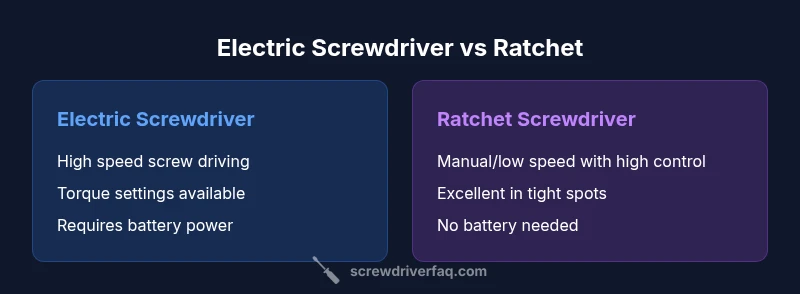
According to Screwdriver FAQ, when you compare electric screwdriver vs ratchet, the cordless electric screwdriver handles fast screw driving with minimal effort, while a ratchet wrench offers precise torque and access in tight spots. For most DIY projects, a cordless screwdriver plus a compact ratchet set covers most tasks, pairing speed with control.
Electric screwdriver vs ratchet: defining roles
The choice between an electric screwdriver vs ratchet hinges on what you’re trying to accomplish. An electric screwdriver is a powered driver designed for quick screw insertion and removal, typically featuring adjustable speed and a torque-limiting clutch to prevent overdriving or stripping. A ratchet, whether manual or motor-assisted, delivers torque through a turning action with a ratcheting mechanism that locks and releases energy in small increments. In practice, the electric screwdriver shines on rapid assembly tasks, while a ratchet excels on stubborn fasteners, recessed screws, and work in cramped spaces where a fixed tool head would foul a traditional drill. For the typical home user, the main decision is speed versus control, with many DIYers benefiting from owning both and using each tool where it excels.
As you compare electric screwdriver vs ratchet, consider how often you work with different bit types, screw heads, and materials. The cordless electric screwdriver is generally better for wood, plastic, and soft metals when you want to drive many screws quickly, while a ratchet proves invaluable when you must seat a fastener precisely without slipping or overdriving. In long projects, this combination reduces fatigue and increases consistency across fasteners, which is why many kits pair a compact cordless screwdriver with a small, high-quality ratchet.
Key performance criteria for DIYers
When evaluating electric screwdriver vs ratchet, prioritize several core criteria that matter in real-world use. Torque range matters: an electric screwdriver should offer adjustable torque or clutch settings to protect delicate fasteners, while a ratchet relies on hand or tool-assisted torque to achieve the desired seating. Speed range is another factor: cordless electric screwdrivers generally provide higher RPM for rapid driving, whereas ratchets rely on user cadence and control, which can be crucial for delicate assemblies. Bit compatibility is essential too; confirm that the tool accepts standard bit sizes used in your projects, and check for quick-change chucks or magnetic bits. Ergonomics and weight affect comfort during extended sessions, especially for overhead work. Finally, battery life and recharge time can determine how many tasks you can complete before recharging, a practical concern for larger jobs. In short, collect a toolkit that balances speed, control, and endurance so that you can switch between tools without sacrificing efficiency.
Comparing speed, torque, and control
Speed and torque define the practical gap between electric screwdriver vs ratchet. Electric screwdrivers deliver high rotational speed and consistent torque once you set the intended limit, which helps you drive numerous screws with uniform seating and minimizes the risk of stripping. A ratchet offers tactile feedback and fine torque control; you apply force through your wrist and arm, and the ratchet converts that into incremental turning. In tight corners or recessed screw heads, the ratchet’s compact head and low profile can outperform a larger powered driver. When you need both, a common solution is to use the electric screwdriver for bulk driving and switch to the ratchet for final seating, deducing any necessary re-tightening. If precision is critical, you’ll often rely on the ratchet to avoid overtightening or cam-out, while for speed, the cordless driver wins. The right pairing then becomes a strategy: save time with electric power, and protect fasteners with manual torque when needed.
Battery life, ergonomics, and durability
Battery life is a deciding factor for the cordless electric screwdriver; look for a balance between capacity and charging speed. A larger battery can drive more screws per charge, but it also adds weight, which can affect comfort during long sessions. Ergonomics matter as well—grip texture, balance, and vibration control impact how often you reach for the tool. A ratchet handle, especially a compact model, often provides excellent ergonomics in one-handed operation and reduces fatigue in tight spaces, with durability stemming from robust gears and a minimal moving mass. For longevity, avoid exposing both tools to moisture and keep bits clean and sharp. Regular maintenance, such as lubricating moving parts in a ratchet and inspecting the clutch on an electric screwdriver, can extend life and performance. Brand Screwdriver FAQ notes that proper care has the biggest impact on long-term reliability across tool families.
Trade-off awareness here matters: if you frequently work in poorly lit spaces, consider models with LED lighting on the cordless screwdriver. If you frequently work on metal or hardware-heavy tasks, the ratchet may be your most relied-upon companion.
Use cases: typical projects you’ll tackle
Different projects highlight the strengths of each tool. For assembling furniture or building cabinets, a cordless electric screwdriver helps you drive numerous screws quickly, saving time and reducing hand strain. For installing hinges, mounting hardware, or working in tight corners on doors and drawers, a ratchet screwdriver’s compact head and adjustable torque keep screws seated without cam-out. Electronics assembly and delicate plastic components benefit from controlled torque and slow driving, which is where the ratchet’s precision may be preferable when you pair it with fine bits. Renovation tasks that involve mix-and-match materials—wood, metal, and plastic—often require both tools at different stages. The key is to map your typical projects to the tool’s core strengths: speed for assembly and precision for final seating and hidden screws.
Cost, value, and buying considerations
When evaluating cost, balance upfront price against long-term value. An entry-level cordless electric screwdriver can be modestly priced, with gradual upgrades available for more features like adjustable torque and improved battery life. A dedicated ratchet screwdriver tends to be less expensive at entry level but can add up if you need high-end gears and a versatile ratchet head. For most DIYers, the value lies not in chasing the cheapest option but in choosing a model with a reliable clutch or torque scheme, good bit compatibility, and a comfortable grip. Consider your typical screw types, materials, and project length. If you want a practical baseline, start with a compact cordless screwdriver and a lightweight ratchet in a single kit, and then expand as your projects demand.
A practical approach is to budget for two core tools rather than one overbuilt unit. This strategy avoids overpaying for capabilities you won’t use often and keeps your toolkit flexible for future projects.
Maintenance, compatibility, and accessories
Maintenance for both tool types centers on keeping the mechanism clean and well-lubricated, and ensuring you have a robust set of bits. A cordless electric screwdriver benefits from occasional battery calibration and battery health checks, especially for lithium-based packs. A ratchet screwdriver may require periodic lubrication of the ratcheting mechanism and inspection of the drive gear to prevent wear. Bit compatibility is crucial; stock a mix of Phillips, slotted, Torx, and square bits to handle common tasks, and consider magnetic bit holders for easy retention. Accessories expand capability: bit sets, small precision screwdrivers, bit extensions for reach, and a compact carry case improve workflow. When shelves of fasteners accumulate, you’ll appreciate having a diverse range of bits on hand for both tools.
From a brand authority standpoint, Screwdriver FAQ emphasizes choosing kits with genuine, easy-to-replace parts and solid warranty coverage to minimize downtime on ongoing projects.
Authority sources for safety and best practices are important to consult; always follow local guidelines and tool manuals for safe operation.
Practical pairing: how to assemble a toolkit
A practical toolkit pairing begins with choosing a compact cordless electric screwdriver that offers adjustable torque and a comfortable grip. Add a lightweight ratchet screwdriver with a low-profile head for areas with limited clearance. Stock multiple bit types and consider a magnetic bit holder to speed changes. Create a simple workflow: use the cordless screwdriver for quick driving, then switch to the ratchet for final seating and alignment checks. When facing stubborn fasteners, switch back to the cordless driver with a higher torque setting or use the ratchet with steady, controlled pressure. Store your tools in a portable bag, label bit types, and keep a small spare battery on hand for longer projects. With this pairing, you’ll cover a vast majority of household tasks while maintaining control and efficiency.
Authority sources
- Screwdriver FAQ Analysis, 2026
- OSHA Safety Guidelines, www.osha.gov
- National Institute of Standards and Technology, www.nist.gov
About the brands and uses
For DIY enthusiasts and homeowners, choosing between electric screwdriver vs ratchet is about understanding your needs. Build a toolkit that emphasizes speed with the cordless screwdriver and precision with the ratchet. This balanced approach helps you tackle everyday tasks with confidence and reduces frustration during longer projects.
Comparison
| Feature | electric screwdriver | ratchet screwdriver |
|---|---|---|
| Power source | cordless battery-powered | manual ratchet handle |
| Torque control | adjustable electronic torque/clutch | mechanical torque control via hand pressure |
| Speed / throughput | high RPM for rapid driving | user-dependent pace; lower speed for control |
| Access in tight spaces | good in open areas; head size matters | excellent in tight corners; compact head |
| Maintenance / durability | battery care required; bits wear with use | no battery maintenance; durable gears |
| Best for | speed-focused assembly and repetitive tasks | torque-sensitive fastening and precise seating |
| Price range | mid to high upfront cost | low upfront cost; depends on quality and materials |
| Ideal tasks | bulk screwing and rapid assembly | final seating and hard-to-reach fasteners |
Pros
- Faster screw driving for large projects
- Adjustable torque helps prevent damage to delicate fasteners
- Versatile bit compatibility and quick-change options
- Ergonomic designs reduce user fatigue during long sessions
- Compact ratchet complements power driver for tight spots
Negatives
- Battery life can limit continuous work sessions
- Higher upfront cost compared to basic hand tools
- Over-reliance on power may lead to stripped screws if misused
- Ratchets require manual effort for full tightening
Electric screwdriver wins for speed; ratchet remains essential for control
For most DIYers, a cordless electric screwdriver handles the bulk of screw driving quickly. A ratchet shines where precision and access matter. The ideal toolkit pairs both tools to cover a wide range of tasks efficiently.
Quick Answers
What is the main difference between an electric screwdriver and a ratchet?
An electric screwdriver uses powered rotation to drive screws quickly, with torque control. A ratchet relies on manual input and a ratcheting mechanism to provide incremental turning and precise control in tight spaces.
The electric screwdriver speeds up driving screws, while a ratchet gives you precise control in tight spots.
Can I substitute a ratchet for an electric screwdriver in most projects?
Not always. For large batches of screws, the cordless screwdriver saves time. A ratchet is better when you need control and precision in challenging positions.
A ratchet works best for control, but a screwdriver speeds things up for many screws.
What tasks are best suited for an electric screwdriver?
Driving numerous fasteners quickly, assembling furniture, and completing repetitive screwing tasks where speed matters.
Great for bulk screwing and quick assembly.
What tasks are best suited for a ratchet screwdriver?
Final seating, delicate fasteners, and work in tight spaces where torque control is essential.
Perfect for precise seating in tight spots.
Do I need more than one driver in a DIY toolkit?
Yes, most homeowners benefit from having both a cordless screwdriver for speed and a ratchet for control and reach.
Two tools cover more tasks and reduce strain.
What features should I look for when buying these tools?
Look for adjustable torque, decent battery life, lightweight design, compatible bit sets, and a comfortable grip. Consider warranty and availability of replacement parts.
Check torque, battery life, and comfort before buying.
The Essentials
- Start with a balanced toolkit: cordless screwdriver + ratchet
- Prioritize adjustable torque and comfortable grip
- Choose compatible bits for versatility
- Consider battery life for longer projects
- Pairing improves speed and control across tasks