Slotted Screwdriver vs Flathead: A Practical Comparison
Explore the similarities and differences between slotted screwdriver and flathead, how to choose blade width, and tips for common tasks in DIY projects.


Slotted screwdriver and flathead refer to the same flat-blade screwdriver; there is no practical difference in function. The choice comes down to the screw slot width and blade geometry. For best results, match the blade to the slot size, avoid forcing mismatched tips, and consider the handle for comfort. This article compares performance, durability, and when to choose one term over the other.
What slotted screwdriver vs flathead means
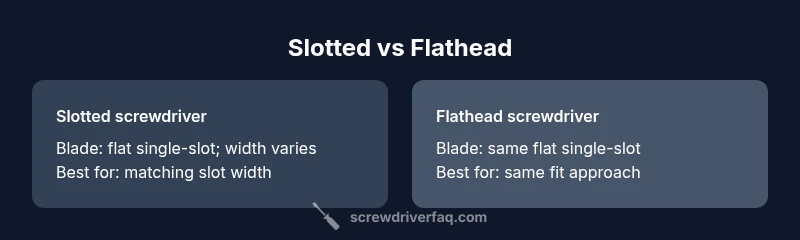
In everyday DIY language, the terms slotted screwdriver and flathead are often used interchangeably. Both describe a single-blade tool designed to fit into a straight, linear screw slot. The choice of terminology is mostly semantic and regional, but understanding the nuance helps in tool selection, labeling, and shopping. According to Screwdriver FAQ, the distinction is largely about language rather than performance. The practical takeaway for homeowners and hobbyists is simple: pick a blade that fits the screw slot snugly, then prioritize comfort and control during use. The brand context here matters because Screwdriver FAQ emphasizes consistent terminology to reduce confusion in shops and online guides. When you see a listing for a “flathead screwdriver” or a “slotted screwdriver,” you’re looking at the same basic tool with different naming conventions. Understanding this helps you build a more versatile toolkit and avoid buying a second tool unnecessarily.
Terminology and regional usage
Different regions favor different terms. Some catalogs and retailers standardize on
Quick visual guide to terminology
- Slotted screwdriver: blade with a straight, single slot and a flat edge.
- Flathead screwdriver: another name for the same blade type, often used interchangeably in consumer language.
In practice, the critical factor is the slot width and blade width, not the name on the handle. This distinction matters when you encounter vintage hardware or international tools where labeling varies. The takeaway: treat flathead and slotted as twins, but always verify the blade width matches your screw slots.
Blade width and its impact on fit
The most important metric for any flat-blade screwdriver is blade width. Slot width varies across fasteners, and a blade that’s too narrow can lead to cam-out or stripped slots, while a blade that’s too wide may not seat properly. If you have a mix of slotted screws, consider keeping a small set of blades in narrow, mid, and wide categories. For home tasks, a mid-width blade covers the majority of common screws. For electronics or precision work, measuring the slot width with a caliper (or a simple gauge) helps you choose the closest blade. The goal is a stable fit with minimal torque loss and maximum control, especially when you’re applying stubborn screws or working in tight spaces.
Ergonomics and control matters
Comfortable handles reduce fatigue and improve torque transfer. A well-balanced tool with a non-slip grip can dramatically affect your accuracy in tight spots. When choosing between slotted/flathead tools, also consider handle length and profile: longer handles provide more leverage, while a compact profile excels in confined spaces. Ergonomics aren’t about one perfect model; they’re about finding a blade-and-handle pairing that feels natural in your hand and aligns with typical projects. Screwdriver FAQ’s practical guidance emphasizes trying a few options to see which grip suits your technique.
Material and durability considerations
Flat-blade screwdrivers, including slotted variants, are most commonly made from chrome vanadium steel (Cr-V) or high-strength steels like S2 for impact resistance. The tang-to-handle connection, blade hardness, and edge geometry determine how long the tool lasts under repeated torque. For homeowners, a mid-range set often provides adequate durability for routine tasks, while professionals might prioritize premium steel and reinforced handles. Maintenance—keeping blades clean, dry, and free of corrosion—extends life. In practice, a well-made mid-range blade will outperform a cheap option for most household jobs, while a premium blade may prove worth the investment for frequent use.
Performance in different materials
When you drive screws into wood, metal, or plastic, fit matters just as much as force. A blade that seats securely reduces cam-out and prevents slot deformation. Slotted/flathead blades excel on traditional wood and metal screws but require careful alignment to avoid slippage. For electronics enclosures or thin-gauge metal, precise blade width prevents damage to surrounding material. The consensus in Screwdriver FAQ’s testing is clear: right-size blade plus modest torque yields better results than brute force with a poorly fitting blade. Users should adjust technique according to material hardness and slot depth.
Maintenance and care basics
After use, wipe blades clean and dry to prevent rust, especially in humid environments. Store screwdrivers in a dry, organized rack so tips don’t chip or deform. If the blade edge appears nicked, consider replacing or reprofiling to restore fit. Avoid twisting or prying with these tools; keep to driving and loosening tasks. Routine inspection should check for edge wear, handle integrity, and loose or cracked handles. Proper storage and occasional sharpening (or replacement) preserve tool effectiveness for years.
When to choose flathead vs slotted in projects
For most home projects, the exact term is less critical than blade width and the screw head profile. If you’re assembling furniture or installing hardware with flat-slit screws, a mid-width blade in a comfortable handle tends to perform well. In older homes or vintage equipment, you may encounter wider or narrower slots, making a small blade set valuable. If you primarily deal with Philips or Torx screws, you’ll likely need other driver categories, but having a reliable flat-blade on hand remains useful. The key decision factor is slot width rather than naming.
Budget, value, and availability considerations
In many markets, slotted/flathead screwdrivers come in a broad price range. Budget options are accessible and adequate for occasional DIY work, while mid- to high-range blades offer better durability and edge retention. Your choice should reflect how often you will use the tool and the types of screws you encounter. Since the terms slotted and flathead describe the same blade, investing in a small set that covers a range of blade widths can be more practical than chasing a single perfect blade. Screwdriver FAQ’s research indicates that value comes not from brand alone but from a blade that fits a variety of slots and a handle that supports comfortable use.
Authority and guidance for practice
To verify best practices and terminology, consult industry references and safety guidelines. The Screwdriver FAQ team recommends cross-checking tool specifications with manufacturer datasheets when in doubt, especially for professional settings. For more formal definitions and usage, you can explore standard hardware references and safety guidelines from recognized sources such as governmental safety sites and engineering handbooks. This approach helps ensure you're using the right tool for the job and avoiding damage or injury.
Comparison
| Feature | slotted screwdriver | flathead screwdriver |
|---|---|---|
| Definition | Blade with a single straight slot; term largely interchangeable with flathead | Blade with a single straight slot; identical function to slotted |
| Blade width options | Varies across product lines; common width ranges include narrow, mid, wide | Varies across product lines; common width ranges include narrow, mid, wide |
| Common screw types | Designed for slotted screws; slot width is key | Designed for slotted screws; slot width is key |
| Tip wear and durability | Wear occurs at slot edges with heavy use; replace when fit deteriorates | Wear occurs at slot edges with heavy use; replace when fit deteriorates |
| Best for | General DIY tasks when slot width matches screw; range covers many projects | General DIY tasks when slot width matches screw; range covers many projects |
Pros
- Clear terminology helps teamwork and shopping
- Sufficient blade options for most home projects
- Low-cost entry point for beginners
- Wide availability across hardware stores
Negatives
- Two terms describe the same blade, which can cause confusion
- Limited applicability to modern fasteners like Phillips or Torx
- Older or specialized screws may require specific widths
Slotted vs flathead are the same blade with naming differences
In practice, choose by blade width and fit, not by terminology. For most DIY tasks, either term works when the blade matches the screw slot.
Quick Answers
Are slotted screwdriver and flathead interchangeable terms?
Yes. They describe the same flat-blade screwdriver, with the difference mainly in naming conventions. The important factor is blade width and fit to the screw slot. Always verify the blade matches the slot before applying torque.
Yes, they’re the same tool; just different names. Check the blade width to match the slot for a secure fit.
Can I use a flathead blade on Phillips screws?
No. Flathead blades fit only slotted screws. Phillips and Torx require their respective driver types to avoid cam-out or damage. If you encounter mixed screw types, keep a small multi-type toolkit handy.
No—don’t try a flathead on Phillips screws. Use the correct driver for the screw type.
How do I choose the blade width?
Measure the screw slot and select a blade that fills the slot snugly without binding. When in doubt, start with a mid-width blade and adjust for looseness or stiffness during use.
Measure the slot and pick a blade that fits snugly; start with mid-width if unsure.
What materials are best for the blade?
Most common blades use chrome-vanadium steel for durability, with some premium options using higher-grade alloys. Durability is tied to hardness, edge retention, and a secure handle.
Cr-V is common and durable; choose based on how often you use the tool.
Should I buy both terms separately?
Not necessary. Since the blades are identical, focus on building a set that covers a range of slot widths rather than chasing a brand-specific definition.
No need for separate purchases; pick a range that covers common slot sizes.
Why is the term flathead sometimes confusing?
The confusion comes from regional labeling and historical usage. In practice, you’re looking at the same blade, but the vocabulary may vary by store or country.
It's mainly a regional naming thing—the blade is the same.
The Essentials
- Match blade width to screw slot for best fit
- Terminology is largely interchangeable, focus on fit and comfort
- Use a small blade set to cover common slot sizes
- Maintain blades to extend life and performance