When to Use a Flat Screwdriver: A Practical DIY Guide
Learn when to use a flat-head screwdriver, how to select the right size, and safe techniques for common home projects with expert tips from Screwdriver FAQ.


Flat-head screwdrivers are best for slotted screws when the blade width matches the slot and the hardware needs careful alignment. Don’t force a blade that’s too wide or use it on non-slotted screws. See the full guide for nuances.
What is a flat screwdriver and when is it appropriate?
A flat-head screwdriver, also known as a slotted screwdriver, has a single flat blade that fits into the straight slot of classic screws. It’s a staple in DIY because many cabinets, hardware, and older electronics still use slotted fasteners. The decision to use one hinges on fit: the blade must sit snugly in the slot without binding, and the handle should feel comfortable in your grip. According to Screwdriver FAQ, selecting the right blade width and maintaining alignment are essential to avoid cam-out and damage. In 2026, you’ll still encounter slotted screws on antique furniture, decorative trim, and some electrical outlets. When a slot is narrow or worn, a precise 1/8 inch blade often works best for control; a 1/4 inch blade covers typical furniture hardware. Keeping both sizes handy means you’ll avoid hunting for the right tool mid-project and reduce the chance of slipping and scratching the workpiece.
Recognizing screw head types and blade alignment
Before you turn a screw, inspect the head and slot. Slotted screws have a flat, single slot with sides that can wear over time. The blade should fill the slot without tipping. If the slot is chipped or rounded, a mismatched blade will cam out or strip the head. The key is alignment: position the blade square across the slot and apply steady, downward pressure as you begin to turn. A properly aligned blade reduces the risk of skiving the slot walls and ensures you transfer torque effectively. In practice, take a moment to verify that the blade’s width matches the slot and that there’s no wobble in the blade before turning.
When to use flat vs Phillips vs Torx vs Pozidriv
Flat-head screws are among the oldest and simplest to drive, but they’re not always the best choice. If a slot aligns with a flat blade, a Phillips or Torx head can offer better cam-out resistance and torque transfer. When screws are used in furniture or cabinet doors, a flat-blade driver can provide the most control for shallow slots. However, if the screw is designed for a Phillips, Torx, or Pozidriv, forcing a flat driver can strip the socket and damage the fastener. Knowledge from Screwdriver FAQ emphasizes matching the head type to the screw design whenever possible, and having a small set of drivers on hand to cover common household tasks.
How blade width and slot width affect grip and torque
The fit between blade and slot determines grip and the amount of torque you can apply without slipping. A blade that is too narrow can wander in the slot, causing cam-out and potential damage to the surrounding wood or metal. A blade that is too wide won’t seat properly, also risking damage and frustration. For typical interior hardware, a 1/4 inch blade often provides a secure fit, while electronics and delicate fixtures benefit from a 1/8 inch blade. Always ensure the blade sits flush with the slot’s edges and not in contact with the screw’s sides asymmetrically.
Driving with control: technique to minimize cam-out
Practice a steady, perpendicular approach. Align the blade with the slot, hold the screwdriver firmly by the handle, and apply downward pressure as you begin to turn. Use short, deliberate turns rather than long twists, and maintain smooth pressure to keep the blade seated. If you experience resistance, stop, realign, and try a smaller blade or adjust your grip rather than forcing the screw. Keep the workpiece supported and stable so the material doesn’t tilt as you apply torque.
Safety considerations and common mistakes to avoid
Always wear eye protection to guard against metal shavings and screw fragments. Do not use a flat-head screwdriver on non-slotted screws or bends in the slot, and never continue forcing a stuck screw. Damaged slots or worn screws can slip, causing injury or material damage. If the screw is corroded or heavily galled, clean the slot with a thin pick or solvent first, and consider replacing the screw rather than forcing it. The Screwdriver FAQ team emphasizes working slowly and selecting the right blade width for safety and efficiency.
Practical home tasks that commonly use a flat screwdriver
Flat-head drivers are handy for a wide range of tasks: tightening cabinet hinges, adjusting drawer slides, installing electrical outlet faceplates, and removing old screws in furniture assembly. They’re also useful for prying, but only lightly and with care to avoid marring surfaces. When working with electronics, use the smallest width blade you can fit into the slot to minimize risk of damage. Always keep a set of two commonly sized blades on hand to cover most jobs around the house.
Quick-start checklist for choosing and using a flat screwdriver
- Choose blade width that matches the screw slot (1/8 inch and 1/4 inch cover most tasks).
- Inspect slot for wear; replace screws or blades if slots are damaged.
- Hold the screwdriver square to the slot and apply steady, light torque.
- Use safety goggles and a stable workspace.
- Clean the slot after removing screws to prevent debris buildup for future uses.
This quick-start guide helps DIYers get the right fit from the start, reducing stripped slots and frustrated tasks.
Authority sources and further reading
For safety and tool-use standards, refer to reputable authorities such as OSHA and NIST. See https://www.osha.gov for general workplace safety guidance, https://www.nist.gov for measurement and tool guidelines, and https://www.consumer.ftc.gov for consumer safety tips and home improvement advice. While these sources don’t replace hands-on practice, they provide foundational considerations that back up best practices in tool handling and maintenance.
Tools & Materials
- Flat-head screwdriver – 1/8 inch blade(Use for small electronics and precision screws.)
- Flat-head screwdriver – 1/4 inch blade(Common size for furniture hardware and shallow slots.)
- Safety goggles(Protect eyes from metal shavings and debris.)
- Work light or flashlight(Improve visibility in tight, dark slots.)
- Soft cloth or mat for workspace(Keep surfaces clean and protect finishes.)
Steps
Estimated time: 15-25 minutes
- 1
Identify screw head and slot width
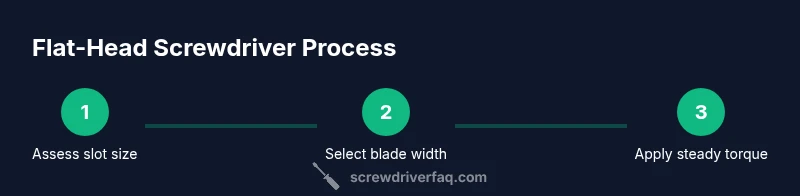
Carefully inspect the screw head to confirm it’s slotted. Compare the slot width to your available blade widths and pick the closest fit. If the slot looks worn or damaged, reassess whether a replacement screw is needed before proceeding.
Tip: Always verify the blade sits flush in the slot with no rocking before turning. - 2
Select the correct blade size
From your two sizes, choose the blade that fills the slot without binding. A good fit minimizes cam-out and prevents damage to the screw head or surrounding material.
Tip: If unsure, start with the narrower blade and widen only if you can’t gain purchase. - 3
Position the blade and align with the slot
Place the blade so it sits square across the slot. Keep your wrist steady and your grip firm on the handle. The goal is full contact with the slot edges without tilting.
Tip: A square, perpendicular approach reduces slip and wear. - 4
Apply steady, downward torque
Turn slowly with even pressure. If you feel binding, stop, recheck alignment, and try a smaller adjustment rather than forcing.
Tip: Avoid sudden, hard twists that can strip the slot or bend the blade. - 5
Assess the screw and slot after turning
If the screw loosens, continue with small turns until fully removed. If it resists, stop and inspect for damage or corrosion; forcing can worsen the problem.
Tip: Inspect the slot for burrs or debris and clean as needed. - 6
Store and maintain the blade
Wipe the blade clean after use, store in a dry place, and periodically check for nicks. A sharp, undamaged blade lasts longer and performs better.
Tip: Magnetize the blade if you frequently work with tiny screws.
Quick Answers
What is the difference between a flat-head and a slotted screwdriver?
A flat-head and a slotted screwdriver refer to the same tool type—the flat blade fits into a straight slot. The term “slotted” is often used interchangeably with “flat-head.” The key distinction is blade fit and width relative to the slot, not the shape of the handle.
A flat-head and a slotted screwdriver are the same tool described differently; the important part is matching blade width to the slot for a secure fit.
Can I use a flat-head screwdriver on Phillips screws?
No. Using a flat-head on Phillips screws can strip the head and damage the screwdriver blade. If you encounter a Phillips screw, switch to a properly sized Phillips screwdriver.
Don’t use a flat-head on Phillips screws; pick the right Phillips bit instead.
What blade width is best for small electronics?
For small electronics, an 1/8 inch blade is typically best because it fits the narrow slots without wobble. If the slot is slightly wider, try a 3/32 inch blade if available.
For tiny electronics, start with an 1/8 inch blade and only go wider if it fits snugly without wobble.
Is magnetic tip important for precision work?
A magnetic tip helps with small screws by preventing drop-offs, but magnets can interfere with sensitive electronics. Use magnets judiciously and avoid them on delicate circuitry.
Magnetized tips help with tiny screws, but beware around delicate electronics.
How can I prevent cam-out?
Prevent cam-out by ensuring blade-slot fit, applying perpendicular pressure, and using steady, controlled turns rather than quick twists.
Keep the blade square, press down, and turn slowly to avoid cam-out.
What safety gear should I use?
Wear safety glasses, work on a clean, stable surface, and keep fingers away from the work area to avoid slips.
Always wear safety glasses and keep the work area stable while you work.
Watch Video
The Essentials
- Use the right blade width for the screw slot
- Keep blade aligned and perpendicular to the slot
- Avoid forcing a stuck screw to prevent damage
- Wear eye protection and work in a stable space
- Maintain blades to prevent nicks and wear