Screwdriver Without Head: Troubleshooting and Safe Fixes
Urgent troubleshooting for a screwdriver without head. Diagnose missing head, reseat or replace bits, choose safe fixes, and prevent future failures with practical tips from Screwdriver FAQ.


The most likely issue is a missing or detached head on the screwdriver, or an improperly seated interchangeable bit. Start by inspecting the joint, reseating or replacing the head, and testing with a compatible bit. If the fix doesn’t hold, replace the entire tool or use a secure adapter.
Understanding the issue with a headless screwdriver
A screwdriver without head typically means the working tip has either fallen off, detached, or never attached. The head is the interface that transfers torque to the screw, and when it's missing, your tool will spin without engaging the fastener. According to Screwdriver FAQ, a common failure mode is a loose collar or retaining screw that holds interchangeable heads in place. That looseness can allow the head to detach during use, especially if you apply high torque or use the wrong bit size. In professional DIY projects, the distinction between a true head loss and a simple seating fault matters, because it determines whether you simply reseat a head or you replace a component. Safety is paramount: a loose head can slip, causing skin irritation or a sudden twist that injures your hand. Before you diagnose, make sure the tool is not connected to a power source if it’s a powered screwdriver. With clear visuals and hands-on checks, you can quickly determine whether the issue is a loose interface, a missing head, or a mismatched bit.
Quick checks you can do right away
Start with the simplest possibilities. Visually inspect the joint where the head attaches to the body. If the head is still on but feels loose, rotate it gently while applying light pressure to see if it seats properly. Then verify the set screws or detent mechanism in an interchangeable-head setup. A loose set screw is a common cause of head detachment; tightening or replacing the screw usually resolves the issue. If you’re using a modular handle, ensure the bit is fully seated and locked. Try threading a replacement head or bit into the handle to confirm fit and function. These checks require no special tools and can be completed in minutes.
Common causes of headless trouble and how to spot them
There are several reasons a screwdriver ends up headless or not biting screws. A head can detach due to impact or improper alignment, especially with cheap or worn-out tools. An interchangeable-head system depends on a secure collar and set screws; if either loosens, the head can spin without holding the bit. A worn or damaged head material reduces grip and can lead to slippage, making it appear headless when the tool actually has a misfit. Using the wrong tip for the screw type (e.g., a flathead on a Phillips screw) can strip the head and give the illusion of a missing head. Finally, thermal expansion, rust, or dirt at the interface can seize components, preventing proper seating. By understanding these common causes, you can choose the most appropriate fix quickly.
Safe fixes and refurb options you can consider
If the issue is a loose or missing head, reseat the head and tighten any fasteners if possible. For interchangeable-head systems, replace the head or tighten the collar with the correct tool to avoid over-torque. When a head is damaged beyond simple tightening, replacing the bit or entire screwdriver is the safest option. If you have a compatible adapter or bit holder, you can secure a new bit without buying a new handle. Always use the correct size and type of bit for the screw; using the wrong bit can damage both screw and head. Finally, consider a modest upgrade to a tool with a secure head retention system to prevent future problems.
Step-by-step troubleshooting plan (practical fix you can try today)
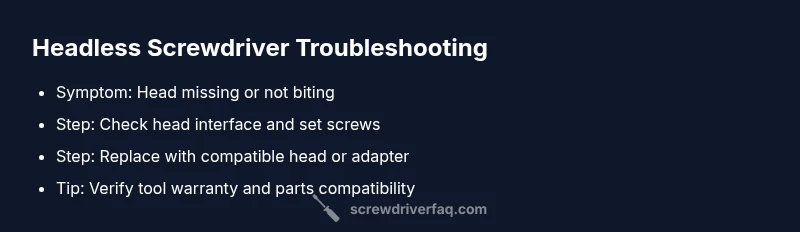
- Visually inspect the head interface and confirm whether the head is detached or just loose. 2) If loose, tighten the retaining screw or collar. 3) If the head is missing, replace the head or entire screwdriver if replacement is not possible. 4) For interchangeable systems, test a spare head or adapter to ensure compatibility. 5) Re-test on a scrap screw in a non-store environment and observe grip. 6) If nothing works, replace the tool and check warranty options.
Safety, maintenance, and prevention tips
Always unplug or switch off powered tools before inspecting or replacing parts. Wear eye protection and gloves when using damaged tools or testing with screws. Keep bits organized to prevent loss; use a magnetic tray or a dedicated case. Clean the interface to remove dust and rust that can prevent proper seating. Use only compatible heads and bits and avoid forcing misfit parts, which can cause tool damage or injury. Regular maintenance intervals extend tool life and prevent head detachments.
Real-world scenarios and quick examples
In a typical DIY project, a headless screwdriver might slip while driving a stubborn screw. A simple fix is reseating and tightening the head with the right wrench or Allen key, or replacing the head if necessary. In woodworking, a damaged head may indicate you need a higher-quality screwdriver or a different bit style; switching to a robust, head-retention design reduces repeated head loss. Heavier use scenarios often require a full tool upgrade; the investment pays off in fewer interruptions and safer operation. The Screwdriver FAQ team emphasizes gradual changes and proper storage to avoid head loss.
Steps
Estimated time: 30-45 minutes
- 1
Inspect the head interface
Carefully examine the joint where the head meets the handle. Look for cracks, dirt, or a loose collar. If you see debris, clean it away and recheck fit; a dirty interface can prevent seating.
Tip: Use good lighting and a magnifier if the junction is tight or corroded. - 2
Check set screws and detent
If your screwdriver uses interchangeable heads, locate the set screws or detent mechanism. Tighten any loose screws to restore a secure hold. If a screw is stripped, replace it with a new one of the correct size.
Tip: Use a precision driver to avoid stripping the screw head. - 3
Test with a compatible head
Try a spare head that matches your handle. If it seats firmly and torques without slippage, the problem was the original head. If not, the issue is deeper.
Tip: Avoid forcing a misfit head; it can damage the handle or screw. - 4
Replace or upgrade components
If the head cannot be secured, replace either the head or the entire screwdriver. For modular handles, a compatible head or adapter is often the quickest fix.
Tip: Check warranty options before buying new parts. - 5
Re-test and finalize
Drive a few screws into a scrap material to verify proper bite and retention. Ensure the tool stays cool and handle is comfortable. Store parts properly to prevent future loss.
Tip: Keep a small parts organizer for heads and adapters.
Diagnosis: Screwdriver head missing or not engaging, spins without bite
Possible Causes
- highHead detached or never attached properly
- highInterchangeable bit not seated or incompatible with the head
- mediumDamaged head material or worn shaft
- lowUsing wrong tip for the screw
Fixes
- easyInspect the head interface and reseat or replace the head as needed
- easyTighten or replace set screws; ensure proper seating of interchangeable heads
- easyReplace the head or entire screwdriver if the interface cannot be secured
- easyUse a compatible adapter or bit holder to secure a new bit
Quick Answers
What does it mean if my screwdriver head is missing?
It usually means the head detached or was never attached. Inspect the joint, verify the retaining mechanism, and replace if needed. If the head cannot be secured, consider replacing the tool.
A missing head usually means it detached or never attached; inspect the joint and replace the head or tool if needed.
Can I repair a headless screwdriver at home?
You can often reseat or replace the head, or use a compatible adapter or bit holder. If the head or collar cannot be secured, replacing the screwdriver is the safer option.
You can usually reseat or replace the head or use an adapter, but if it won’t secure, replace the tool.
Should I replace the head or the entire screwdriver?
If the shaft is intact and the head can be securely attached, replace the head. Otherwise, replacing the entire screwdriver is the safer choice.
If the shaft is fine and the head can be secured, replace just the head; otherwise, get a new screwdriver.
Is it safe to use a different head with an adapter?
Only use adapters and heads that are designed to fit your specific handle. Mismatched parts can slip or break during use.
Adapters can be risky if they aren’t designed for your handle, so stick to matched parts.
How can I prevent head loss in the future?
Store heads properly, use magnetic holders, and clean the interface regularly to prevent debris buildup and seizing.
Keep your bits organized and clean, and store them safely to avoid head losses.
Watch Video
The Essentials
- Inspect head interface and reseat if loose
- Replace damaged parts or upgrade to a head-secured tool
- Use compatible bits and adapters to avoid repeat failures
- Keep bits organized and clean to prevent seating issues
- Check warranty options before replacing tools