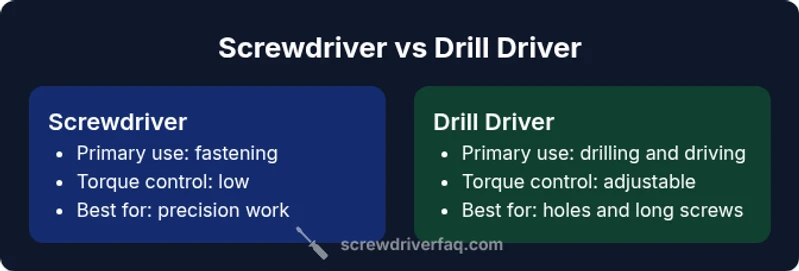
Screwdriver vs Drill Driver: An Analytical Comparison for DIYers
An analytical comparison of screwdriver vs drill driver to help DIYers choose the right tool for fastening, drilling, and project versatility.


Core Distinctions: What Sets Them Apart
At its core, the screwdriver and the drill driver are designed for different jobs. The screwdriver is optimized for turning screws with precision and minimal damage to delicate workpieces. The drill driver pairs a drill with a screwdriver-like clutch, enabling drilling and driving with controlled torque. For many DIY projects, you will reach for the screwdriver for assembly tasks and for fastener-driven installations, while the drill driver handles holes and longer screws. According to Screwdriver FAQ, understanding these fundamental differences helps homeowners allocate your tool budget effectively and reduces the chance of buying the wrong device for a given job. In practice, you’ll notice differences in grip, balance, and feel when you switch from one tool to the other. The goal is to map tasks to capabilities so you avoid forcing one tool into a role it isn’t optimized for. The takeaway: selection should be driven by the task, not by brand hype or storage convenience.