Screwdriver or Allen Key: A Practical Comparison for DIYers
A thorough, analytical comparison of screwdriver vs. Allen key options, covering fastener compatibility, torque control, ergonomics, price, and practical scenarios for DIYers and homeowners.


When you’re deciding between a screwdriver or an Allen key, consider the fastener type, space constraints, and torque needs. This comparison guide helps DIYers understand when each tool shines, so you can assemble a toolkit that covers most household tasks without overpaying.
screwdriver or allen key: quick primer
The phrase screwdriver or allen key frames a common DIY dilemma: which hand tool best handles typical home fasteners? In practice, most projects rely on either a standard screwdriver set or a hex-key (Allen key) set, depending on the screw head design and space available. For homeowners and hobbyists, the distinction matters for speed, control, and risk of damage to fasteners. According to Screwdriver FAQ, reputable tooling choices should balance versatility with specialization. The broader takeaway is simple: both tools belong in a well-rounded toolkit, and your choice should reflect the predominant fasteners you encounter in your projects. As you read, keep in mind the goal of building a flexible kit that reduces trips to the toolbox.
How to read this comparison: key questions to ask
In this section we frame the core questions that guide tool selection: What kinds of fasteners appear most often in your projects? Do you work in tight spaces where reach and leverage matter? Is torque control or precision critical for delicate components? Do you need a compact kit you can carry to multiple rooms or vehicles? Answering these questions helps map screwdriver or allen key needs to your work, reducing tool clutter and wasted money. Screwdriver or allen key decisions hinge on real-work scenarios rather than theoretical advantages.
Fastener compatibility: what each tool handles best
In daily DIY, you’ll see a spectrum of fasteners: Phillips and slotted screws, Torx, Pozidriv, and occasionally square drives. A conventional screwdriver excels across this range, especially when paired with a broad bit assortment. By contrast, hex keys are specialized for hexagonal recesses common in furniture, bicycles, and some appliances. Some users mistakenly push hex keys into non-hex slots, which can strip the screw head or damage the tool. The optimal approach is to stock both tools and choose the one that matches the fastener without forcing fit. The Screwdriver FAQ team notes that a balanced kit covers most household tasks without specialized hardware.
Torque, leverage, and control without complexity
Torque control matters when dealing with sensitive components or delicate plastics. A good screwdriver offers controlled turning with a comfortable grip and a variety of bit types that adapt to numerous screws. Hex keys provide excellent torque concentration for hex fasteners, especially in tight spaces where turning circles are restricted. The curved handle of some screwdrivers enables fine-grain control, while the L-shaped hex keys deliver linear leverage that can prevent cam-out in hex sockets. In practice, many repairs involve both tool types depending on the fastener geometry and the space you’re working in.
Ergonomics: comfort for longer jobs
Ergonomics influence your speed and accuracy. A well-designed screwdriver handle supports a natural grip, distributing load across the palm and reducing fatigue during extended assembly or disassembly. For hex work, some professionals prefer T-handle or ball-end hex keys that provide a more stable grip in awkward angles. The ergonomic difference becomes noticeable in furniture assembly, appliance repair, and bikes where repetitive turning is common. Investing in quality handles and a magnetized tip system can mitigate dropped-fastener mishaps and tool loss.
Durability and maintenance: extending tool life
Durability depends on steel quality, tip geometry, and how you maintain tools. High-carbon steel bits resist wear for screwdrivers across many common fasteners, while magnetized tips reduce slip and drop-offs. Hex keys are typically robust, but repeated bending or forced entry can deform hex tips and reduce bite. To prolong life, keep tools dry, store them in their proper racks or pouches, and replace worn bits promptly. Cleanliness matters: oil or dust inside a recess can degrade grip and increase wear over time. Regular inspection and modest maintenance save money in the long run.
Pricing, value, and what to buy first
Price is a practical concern for most DIYers. A basic screwdriver set with multiple bit types and sizes is commonly affordable, while hex-key sets vary widely in price, especially when including metric and imperial ranges. The value comes from coverage: if your tasks primarily involve hex fasteners, a quality hex-key set can be a wiser investment than a low-cost screwdriver-only kit. That said, many homeowners benefit from a mixed approach: a mid-range screwdriver set for everyday tasks and a compact hex-key set for hex-driven hardware. Avoid the trap of buying the cheapest options if you anticipate frequent use; better tools pay for themselves through reduced wear and higher success rates on stubborn fasteners.
Real-world scenarios: when to pick which tool
Consider a typical furniture assembly project: you’ll encounter Phillips or Torx screws, which a versatile screwdriver set handles well. If you’re mounting a bike rack or assembling a metal bookshelf with internal hex bolts, hex keys become essential. In vehicle maintenance or electronics, hex-headed screws often appear, making Allen keys the faster path. For a homeowner with modest repair needs, a combined tool kit is the most practical solution, letting you switch quickly between screwdrivers for external hardware and hex keys for internal fasteners. The key is recognizing patterns in your projects and stocking accordingly.
Storage, portability, and keeping your toolkit organized
Organization saves time and reduces tool loss. A compact case with labeled compartments for each bit and hex size helps you avoid digging through drawers. Magnetic tip screwdrivers avoid dropping fasteners in tight spaces, while an organized hex-key set keeps sizes accessible in a slim pouch. For travel or on-site work, choose light-weight, corrosion-resistant tools with ergonomic handles. A small set that covers a broad range is often more effective than a large set with many rarely used bits.
Common mistakes and how to avoid them
One frequent error is forcing a tool into a fastener when the size isn’t right, which mucks the head and damages the screw or tool. Another mistake is neglecting maintenance, letting rust or dirt accumulate on bits. Finally, relying on a single tool for all tasks leads to inefficiency and more wear on your hardware. Always select the correct bit or hex size for the job, verify the fit, and maintain your tools by cleaning and drying after use. Keeping focused on the correct size relative to the fastener will reduce stripping, slipping, and cross-threading.
Quick-start decision guide and checklist
To tailor your toolkit, start with a modest, high-quality screwdriver set and a compact hex-key set. Check the most common fasteners in your home projects, and ensure you have sizes that fit those heads. Include a few specialty bits for outliers, like Torx or Pozidriv, and maintain a small, magnetized tray for quick pickup. Periodically review your toolkit to retire worn bits and add sizes that reflect your evolving DIY tasks. This approach minimizes waste and maximizes readiness for immediate repairs.
Putting the pieces together: a practical workflow
A practical workflow begins with identifying the fastener type, then selecting the appropriate tool. If you’re unsure of the fastener, inspect the head and try to infer its design before forcing a tool. If the head shows a recognizable cross pattern, a Phillips or slotted screwdriver is often safest. If you see a hexagonal recess, reach for the Allen key. As you gain experience, you’ll notice how these decisions influence project time and outcomes. The ultimate goal is to maintain a balanced toolkit that reduces decision friction and improves repair quality.
Comparison
| Feature | Screwdriver | Allen key (Hex key) |
|---|---|---|
| Common fastener compatibility | Phillips, slotted, Torx, and many head types | Hex socket/Allen screws across metric and imperial ranges |
| Torque control and leverage | Moderate torque with broad bit options and comfortable handles | High torque potential with long hex keys; risk of bending if forced |
| Ease of use in tight spaces | Versatile in constrained spaces with varying bit types | Hex keys require hex recess alignment; can be less forgiving in tight spots |
| Price range | Typically $5–$40 for sets | Typically $2–$25 for hex-key sets, higher for multi-size kits |
| Durability and maintenance | Tip wear; replaceable bits common in quality sets | Hex keys are robust but can bend or wear hex corners |
| Storage and portability | Compact cases with magnetized tips and bit organizers | Small, flat packs; many sizes can be organized in pouches |
| Best for | General repairs, electronics, furniture assembly | Hex-heavy hardware, bikes, machinery, and tight-space work |
Pros
- Versatile across a wide range of fasteners (Phillips, slotted, Torx, etc.)
- Often lower upfront cost for basic starter kits
- Broad availability of spare bits and accessories
- Allen keys deliver strong torque for hex fasteners in confined spaces
Negatives
- Allen keys cannot drive non-hex fasteners
- Cheaper sets wear and slip; higher quality options add cost
- Screwdrivers can cam-out or slip on stubborn fasteners
- Tool quality varies; cheap options wear quickly and reduce reliability
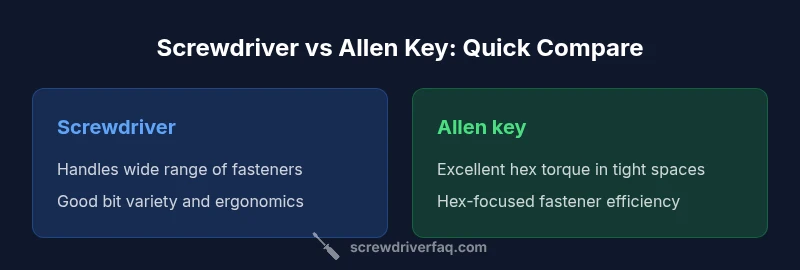
Screwdriver wins for versatility; Allen key excels for hex-focused tasks.
For most DIY tasks, a versatile screwdriver set covers more fastener types and offers better value. A dedicated hex-key set shines for hex-driven hardware in tight spaces. A combined toolkit is the safest bet for homeowners who want broad capability with lean investment.
Quick Answers
When should I choose a screwdriver over an Allen key for a project?
Choose a screwdriver when the fastener has a Phillips, slotted, Torx, or Pozidriv head, or when you need broad bit versatility. For hex-only fasteners, an Allen key is often faster and provides greater torque control.
Pick the screwdriver for general tasks; switch to hex keys for hex bolts or hex socket screws.
Can I use an Allen key to drive screws with a hex socket?
Hex sockets are designed for hex keys of the correct size. Forcing an Allen key into a non-hex head or using an incorrect size can strip both the screw and the key.
Only use the right-sized hex key for hex sockets to avoid damage.
Are insulated screwdrivers worth it for electrical work?
Insulated screwdrivers are worth considering for electrical work because they provide protection against shocks within their rated range. Ensure the tool meets relevant safety standards for your region.
If you work with electricity, insulated tools improve safety.
What should I consider when choosing a hex key set?
Look for a comprehensive size range (both metric and imperial), comfortable handles, and features like ball-end tips or magnetic retention. A good set resists bending and has durable finishes to prevent rust.
Pick a broad-size set with solid ergonomics.
Do I need both tools in a homeowner's kit?
Yes. A combined toolkit covers most home projects: screwdrivers handle a wide range of fasteners, while hex keys manage hex-driven hardware common in furniture and bikes.
Having both saves trips to the store and speeds up repairs.
What maintenance helps extend tool life?
Keep bits clean and dry, store tools properly, replace worn tips, and avoid bending hex keys. Regular inspection prevents unexpected failures during tasks.
Keep tools clean, dry, and organized for longevity.
The Essentials
- Assess fastener types before buying tools
- Invest in a versatile screwdriver set with multiple bits
- Add a hex-key set for hex-focused work in tight spaces
- Prioritize tool quality to minimize wear and slippage
- Organize tools for quick, on-demand access to both types