Impact screwdriver vs impact wrench: Which to choose for your project
A thorough, evidence-based comparison of impact screwdrivers and impact wrenches for DIYers and homeowners. Learn about torque, speed, use cases, safety, and maintenance to pick the right tool for light fasteners or heavy-duty bolts.


The best choice depends on your project: an impact screwdriver is compact and ideal for light, on-demand fasteners, while an impact wrench delivers high torque for demanding bolts. For most home DIY tasks, choose the impact screwdriver for daily screw driving and reserve the impact wrench for heavy-duty assembly and removal.
What Are Impact Screwdrivers and Impact Wrenches?
Impact tools sit at the intersection of speed and power, designed to tackle fasteners with controlled impulsive torque. In this article, we compare the impact screwdriver vs impact wrench to help DIYers decide which tool fits their workload. The term impact screwdriver vs impact wrench often prompts a quick judgment: one is for light screw driving, the other for heavy bolt work. However, understanding the specifics—torque delivery, speed, bit interfaces, and typical applications—helps you apply each tool correctly and safely. According to Screwdriver FAQ, selecting the right tool starts with your most common fasteners and the space you work in. For many homeowners, a lightweight, battery-powered impact screwdriver is enough for cabinets, hardware updates, and assembling furniture. In contrast, the impact wrench handles automotive fasteners, construction bolts, and stubborn fittings that resist hand tools. Throughout this guide, we’ll break down the core differences, focusing on performance envelopes, use-case scenarios, and practical buying considerations so you can confidently pick between these two distinct impact tools without overpaying or risking damage to materials.
How They Deliver Torque: Mechanics and Specs
Both tools rely on an impulse-driven mechanism to apply torque beyond what a normal drill or driver can supply. The impact screwdriver uses a smaller hammering action and a compact chuck interface designed for bits and small sockets. The impact wrench uses a more robust hammer mechanism and often a larger drive, capable of delivering much higher peak torque and fastenings at higher speeds. In practice, the term impact screwdriver vs impact wrench refers to how each tool channels force: the screwdriver emphasizes control, quick inserts, and delicate material surfaces, while the wrench prioritizes raw torque and dramatic fastener breakaway performance. The drive systems differ as well: fastener engagement points are compatible with hex bits or sockets that match standard sizes, but the wrench typically accepts larger sockets and adaptors. Battery chemistry also influences performance: premium models use high-capacity packs that maintain torque under load, whereas cheaper options may sag as the battery drains. For most DIY tasks, you’ll get consistent results from a well-chosen cordless screwdriver; for heavy-duty work, a pneumatic or high-torque electric wrench will handle the job more reliably.
Size, Weight, and Ergonomics
Size and weight directly impact control and fatigue during extended sessions. The compact form factor of an impact screwdriver typically translates to a lighter tool with a shorter grip circumference, making it easier to maneuver in tight cabinets, furniture assemblies, and confined spaces. By contrast, an impact wrench emphasizes robustness and a longer grip to absorb vibration from heavy fasteners, often resulting in a heavier tool. Ergonomics matter when choosing between the two: a well-balanced tool reduces wrist strain during repetitive tasks, and rubberized handles improve grip in dusty or oily environments. If you frequently twist screws in cramped corners or must assemble components at knee level, the screwdriver is more forgiving. For automotive work, frame bolts, or structural hardware, the wrench’s heft can be beneficial—provided you’re comfortable with the extra weight and the space needed to swing it.
Speed, RPM, and Torque Delivery in Real Work
Torque and speed shapes the outcome of any fastener project. The impact screwdriver provides rapid, controlled bursts that help drive screws quickly without marring finished surfaces. However, it delivers far less peak torque than an impact wrench, which is designed to break free stubborn bolts and start threaded fasteners threaded into dense materials. In real-work terms, you’ll notice faster installation with the screwdriver for light-duty tasks, while the wrench will reduce manual labor on heavy jobs, such as automotive lugs, lag bolts in decking, or structural anchors. The key takeaway when evaluating impact screwdriver vs impact wrench is that speed is not the sole predictor of performance—torque capacity and control are equally critical for predictable results.
Fastener Compatibility and Material Considerations
Not all fasteners are created equal, and the right tool depends on the fastener size and type. Impact screwdrivers pair well with smaller hex bits, Phillips and slotted bits, and light-duty sockets for cabinet hardware or furniture assembly. They excel on soft woods and plastics where excessive torque could cause damage. Impact wrenches, on the other hand, accommodate larger sockets and impact-rated bits, enabling reliable tightening of bolts and studs in metal-to-metal joints or frame assemblies. The material being fastened also matters: wood, drywall, and soft metals benefit from the precision of a screwdriver, while steel, concrete, and automotive components demand the higher torque and misalignment tolerance of a wrench. When selecting between the two tools, consider both fastener size and the anticipated resistance of the joint.
Use-Case Scenarios: DIY Projects vs Professional Settings
For a homeowner tackling cabinet installation, deck screws, curtain rods, or furniture assembly, the impact screwdriver is often the better fit due to its size, precision, and comfort during long sessions. It complements a standard drill and a basic screwdriver set for fast project turnover. In contrast, commercial maintenance crews, automotive shops, or construction sites frequently rely on impact wrenches to disassemble or assemble heavy equipment and structural components. In these environments, the high torque and reliability under load are critical to meeting deadlines and safety standards. The decision becomes straightforward when you map tasks to tools: light-duty screw driving and alignment tasks lean toward the screwdriver; heavy-duty bolt work and high-torque fixes favor the wrench.
Safety Considerations and Best Practices
Both tools demand respect: kickback, bit slippage, and damaged fasteners are common hazards when used improperly. Always wear eye protection and gloves as needed, secure the workpiece to prevent movement, and select the correct bit or socket for the fastener. Start at a low torque setting and increase gradually to approach the target tightness, especially when working with unfamiliar fasteners. Maintain a clean workspace to avoid slipping on debris, and check for hidden fasteners before drilling or driving. Be mindful of cord management for pneumatic models and battery retention for cordless models. Regularly inspect bits for wear, ensure proper chuck seating, and replace worn components to preserve performance and safety over time.
Maintenance and Longevity
Regular maintenance prolongs tool life and preserves performance. Clean the exterior after use to prevent dust ingress, and inspect the anvil, hammer mechanism, and drive chuck for wear. For cordless tools, follow battery maintenance guidelines: avoid complete discharges, store at moderate temperatures, and replace aging packs before they fail under load. Use manufacturer-recommended lubricants only if specified for the tool, and avoid over-lubrication which can attract dust. Keep ventilation clear on pneumatic tools and regularly service connectors and hoses. Proper storage in a dry, organized toolbox reduces the risk of damage from accidental drops or impact. By prioritizing routine checks, you’ll preserve tone, responsiveness, and torque delivery for both impact screwdriver and impact wrench over the long term.
Cost, Availability, and Value
Cost considerations for impact tools reflect the balance between capability and durability. Entry-level models typically offer essential torque and a basic set of bits for light fixtures and simple projects, while higher-end tools provide longer runtimes, more consistent torque under load, and better ergonomics. Availability is influenced by battery ecosystems, brand support, and service networks. While the initial purchase price is important, consider long-term value: a tool’s efficiency, reliability, and how often you’ll rely on it for critical tasks. If your projects span occasional furniture assembly and routine home maintenance, a mid-range impact screwdriver often delivers the best value. For heavy-duty work or professional use, investing in a robust wrench with spare sockets and a high-capacity battery can prove cost-effective over time.
How to Choose Between Them: A Decision Framework
To decide between an impact screwdriver vs impact wrench, start with your typical fasteners and workspace. Create a quick matrix: list the most common fastener types (screws, bolts, lag bolts), the material you work with, and the required torque level. If the majority of tasks involve small screws and wood fasteners, the screwdriver is the logical choice. If you frequently encounter large bolts or automotive fasteners, the wrench is the pragmatic option. Consider your workspace constraints: tight corners, battery life, noise tolerance, and the ability to handle the heavier tool. Finally, assess compatibility with existing tool ecosystems; many users prefer to standardize on one battery platform for convenience. This decision framework enables a data-informed selection rather than guessing based on torque alone.
Common Pitfalls and Myths Debunked
A common misconception is that more torque automatically means better performance for any task. In reality, excessive torque can damage fasteners, material surfaces, or the tool itself. Another pitfall is assuming cordless models always suit heavy-duty work; while modern cordless tools are capable, very high-torce environments may benefit from pneumatic options or dedicated high-torque electric models. Some DIY shooters believe that all impact tools are interchangeable for all fasteners; in practice, hex sockets, bits, and drive interfaces vary, and wrong combinations can strip heads or create dangerous kickback. Lastly, shoppers may focus only on peak torque ratings, ignoring sustained performance under load and battery endurance. A balanced assessment considers torque envelope, ergonomics, bit availability, and reliability across common tasks.
Comparison
| Feature | Impact screwdriver | Impact wrench |
|---|---|---|
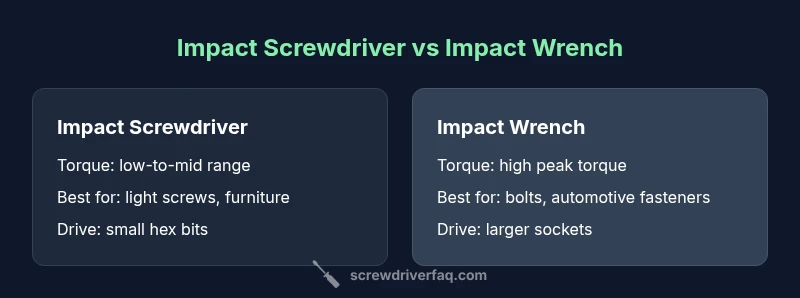
| Torque delivery | Low-to-mid torque for small fasteners | High torque for large bolts and stubborn fasteners |
| Weight and ergonomics | Lighter, compact design | Heavier, more rugged build with enhanced vibration control |
| Power source | Cordless battery-powered (typical consumer models) | Cordless or pneumatic (professional/industrial models) |
| Common applications | Screw driving, light assemblies, cabinetry | Bolting, automotive fasteners, structural connections |
| Best for | Fine, precision work and quick installs | Heavy-duty assembly and disassembly in tight spaces |
Pros
- Better control for light screws and rapid installations
- Compact form factor fits tight spaces
- Lower cost for basic tasks than high-torque alternatives
- Reduced risk of damaging delicate materials with appropriate use
Negatives
- Limited torque for heavy bolts and seized fasteners
- Not suitable for high-torque, prolonged loads
- Potentially higher cost per useful torque when compared to specialized wrenches
Impact screwdriver wins for most home DIY tasks; impact wrench excels in heavy-duty work
For frequent light screw driving and furniture assembly, the screwdriver is the more practical choice. For automotive work, structural bolts, and stubborn fasteners, the wrench provides the necessary torque and reliability.
Quick Answers
What is the main difference between an impact screwdriver and an impact wrench?
The main difference is in torque delivery and intended fasteners. An impact screwdriver targets light screws and small fasteners with quick, controlled bursts, while an impact wrench is built for high-torque bolt tightening and removal. Both use an impact mechanism, but their performance envelopes differ.
The screwdriver handles light screws with control; the wrench tackles heavy bolts with high torque.
Can I use an impact screwdriver for heavy-duty bolts?
Not recommended for heavy bolts or seized fasteners. You risk stripping the fastener head or overloading the mechanism. Reserve the impact wrench for large bolts and demanding jobs.
Avoid heavy bolts with a screwdriver; use the wrench for tough bolts.
Are these tools battery-powered or pneumatic?
Most consumer models are cordless battery-powered for portability, while professional setups may use pneumatic (air-powered) models for constant torque. Each power source has trade-offs in runtime and maintenance.
Cordless is convenient; pneumatic is built for continuous high-torque work.
What safety steps should I follow?
Wear eye protection, secure workpieces, and use appropriate bits. Keep loose clothing away from rotating parts, and start with low torque to avoid kickback when starting a fastener.
Protect yourself and start light to avoid kickback.
How do I maintain these tools?
Follow the manufacturer’s guidance: regular bit maintenance, keep vents clear, and recharge or replace batteries when performance drops. Clean after use and store in a dry location.
Clean and inspect bits and batteries for longevity.
Cordless vs pneumatic: which is better?
Cordless models offer mobility and convenience for most home projects, while pneumatic tools excel in continuous, high-torque work where power outlets are plentiful. Your choice depends on workload and space.
Cordless for flexibility; pneumatic for heavy-duty tasks.
The Essentials
- Match fastener size to tool: screws with screwdriver, bolts with wrench
- Prioritize torque envelope and ergonomics for comfort
- Use the right drive interface (bits vs sockets) for reliability
- Consider battery life and runtime in cordless models
- Safety first: proper PPE and controlled starts to avoid kickback