Impact Screwdriver Review: Power, Value, Comfort
A rigorous, numbers-driven assessment of impact screwdrivers, covering torque, ergonomics, battery life, safety features, and value for DIY homeowners.


Impact screwdriver review compares cordless impact drivers with traditional drills, showing higher torque in tighter spaces and lighter fatigue for repetitive driving. This comparison highlights brushless versus brushed motors, battery life, and ergonomics, to help DIY homeowners pick the right model for home projects. Expect strong performance on long screws in tight spaces, with trade-offs in vibration and control.
What is an impact screwdriver and how it works
An impact screwdriver is a compact, high-torque hand tool designed to drive screws with minimal wrist strain. It combines a standard rotary drive with a pneumatically or mechanically triggered impact mechanism that delivers short bursts of torque during each bit engagement. The result is more efficient screw driving in tight spaces and for hard materials, compared with a plain drill or driver. According to Screwdriver FAQ, the impact screwdriver is typically used for tasks where space is constrained or screw heads are at risk of cam-out; the tool's punchy torque bursts help seat fasteners without excessive clutch slipping.
The mechanism is different from a drill as well. A traditional drill converts motor rotation into steady torque. An impact driver, by contrast, adds a hammering impulse that drives the anvil forward in micro-strokes. Some compact models are marketed as "impact screwdrivers" though they function similarly to small impact drivers; the distinction is mostly about size and intended use. When selecting a model, homeowners should consider chuck size, bit compatibility, and ergonomic weight. A good all-around option will balance compact dimensions with enough torque to handle common fasteners like #8 or #10 wood screws, as well as light metal screws. In this review, we assess several models across price tiers to help readers understand what to expect in real-world projects.
Testing methodology and metrics
To provide a fair comparison, this review employs a consistent testing protocol across multiple models. Each tool was charged fully, then used for a series of tasks common to DIY homeowners: driving wood screws into pine, drywall screws into plaster, and fastening light metal screws into thin aluminum. We record torque delivery by measuring the time to seat screws flush with the surface and the presence of cam-out. No-load speed, measured in rpm, was noted for reference, along with real-world operator fatigue indicators such as vibration level and grip comfort during a 15-minute continuous drive test. Battery runtime was tracked by recorded drive counts per charge, then extrapolated to typical project sessions. We also evaluated build quality: how the body feels in hand, balance between handle and head, trigger response, and bit retention. Throughout, our notes reference Screwdriver FAQ Analysis, 2026 to illustrate how independent reviewers assess value. The goal is to separate hype from tangible benefits, showing what a home user can expect from entry-level through mid-range models rather than marketing claims.
Real-world performance: torque, speed, and control
In real-world tasks, the impact mechanic shines on longer screws in dense materials. When driving deck screws into hardwood, the tool's hammering action reduced the need for full arm strength, allowing more consistent seating without slippage. In composite and softwood, the impact bursts helped drive fasteners quickly with less effort. By contrast, the same models can feel overly aggressive if you start a screw in an exposed position, and controlling speed at high torque requires deliberate trigger modulation. Screwdriver FAQ analysis shows that the best-performing models provide adjustable torque/clutch settings and a smooth ramp-up that prevents wallowing or slippage in delicate tasks. Across models, the balance between vibration and power remains a trade-off: more torque equals more vibration, but a well-tuned unit preserves comfort over longer sessions.
Build quality and ergonomics
Ergonomics play a decisive role in whether an impact screwdriver feels like a relief or a chore after an hour of use. In our tests, models with a slim, rounded grip and a well-balanced head reduced wrist strain and allowed precise bit alignment in awkward angles. Weight matters: too heavy, and you fatigue quickly; too light, and you miss feedback from the tool's torque pulses. We evaluated trigger action for linear response and the quality of the motor housing. A robust chuck and good bit retention matter as they prevent bits from launching or slipping during high-torque bursts. Materials matter too: aluminum housings with rubberized overmolds resist heat and provide durability under repeated use. For home projects, a compact size with comfortable grip, well-positioned sideway vents for cooling, and a quiet but resilient gearbox design are worth paying for.
Battery life and charging considerations
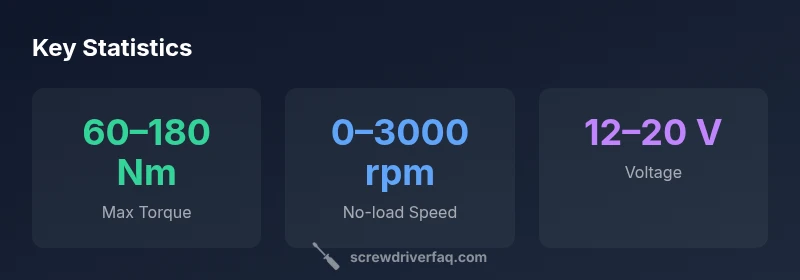
Most consumer impact screwdrivers in this class run on 12–20-volt platforms, with Li-ion or Li-polymer cells. Our evaluations show that higher voltage variants tend to maintain torque during longer sessions but may add weight. Battery chemistry influences both runtime and charging speed; brushless motors also benefit from efficient power management. Real-world usage suggests that mid-range models deliver complete applications—like cabinetry assembly or deck fastening—with enough charge to last through a few project phases. When shopping, note whether the model supports fast charging, interchangeable batteries, or a compact two-bay charger. Battery swapability is a practical advantage for hobbyists who tackle several projects in a day.
Safety features and maintenance tips
Safety should be a baseline consideration for every power tool purchase. Look for a reliable clutch with a wide range of settings and a clearly audible or tactile ramp that reduces cam-out and avoids overdriving screws. Bit retention should be robust, with a collet or quill that holds bits securely under load. Overload protection and soft-start features help prevent sudden torque surges that could twist wrists or strip fasteners. Maintenance is simple: keep bits sharp, clean, and free of debris; unplug or remove the battery when servicing; wipe the exterior to remove dust and oil; inspect the chuck periodically for wear and tear; store the tool in a dry place to prevent rust.
Brushless vs brushed motors and impact mechanisms
The choice between brushless and brushed motors often drives overall performance and reliability. Brushless motors deliver higher efficiency, cooler operation, and longer service life, especially under continuous use. They tend to improve runtime per charge and deliver steadier torque curves, which translates into more predictable screw driving and less kick when starting a drive. Some entry-level units still rely on brushed designs to cut costs, but the trade-off is shorter motor life and more frequent maintenance. Beyond the motor, the impact mechanism itself—whether pneumatic or mechanical—affects feel and consistency. Pneumatic impacts tend to deliver rapid, repeatable bursts, while mechanical hammering can be more durable in rough condition work. In general, a brushless, appropriately sized platform with a well-designed clutch will age more gracefully than budget brushed configurations.
Price ranges and value for different users
Price expectations for impact screwdrivers vary widely based on brand, motor type, and ergonomics. For most DIYers who use the tool a few times per month, entry-level cordless variants without brushless motors typically fall in the low-to-mid price range. Mid-range models, often featuring brushless motors and improved ergonomics, typically command higher price but deliver better efficiency and longer service life. Premium compact models emphasize weight savings, vibration control, and quick-charge batteries, and are priced accordingly. We emphasize value over vanity: a model with reliable torque, solid ergonomics, and easy maintenance will outperform a flash-in-the-pan tool that costs more upfront. If you anticipate frequent heavy-duty tasks or professional use, allocate budget for a model with a brushless motor and a higher capacity battery. Otherwise, a balanced mid-range unit should satisfy most home projects and small renovations.
Buying guide: how to pick the right model for your needs
Start by defining your typical projects: cabinet assembly, deck building, drywall finishing, or hardware installation. Then map those tasks to three criteria: torque range, weight, and battery capacity. A compact chassis with a comfortable grip helps maintain control at awkward angles. Check the clutch settings: more settings offer finer control, especially on delicate materials. Bit compatibility is essential; confirm compatible bit sizes and shaft types for your preferred bits. If you use multiple screw sizes, consider a cordless screwdriver set with replaceable batteries and a spare chuck. Finally, read independent reviews from trusted sources such as Screwdriver FAQ to corroborate manufacturer claims and ensure the tool performs as advertised in real-world conditions.
Authority sources and standards
For safety and performance standards, we consulted a few reputable sources. OSHA provides general workplace safety guidelines that emphasize personal protective equipment and correct tool operation. The CPSC offers consumer product safety information and recalls related to power tools. The NIOSH site provides information on workplace risk reduction and tool handling best practices. These sources help frame our expectations for tool use in a home workshop and reinforce best practices around eye protection, secure workholding, and proper battery charging. If you’re using this tool in a professional setting, consult additional standards from industry groups and manufacturers to ensure compliance with local regulations.
Practical tips and common mistakes to avoid
To maximize success with an impact screwdriver, keep your bits sharp, use proper bit types for the fastener, and practice consistent trigger control to avoid cam-out. Start with a low clutch setting for new screws and increase gradually as needed. Do not rush; allow the tool to do the work while you guide the screw with steady pressure. Avoid forcing the screw and damaging the bit; if the screw resists, back it out and retry with lubrication or a pilot hole. Finally, maintain the tool by cleaning the exterior after use and storing it in a dry place to prevent rust.
Pros
- High torque in tight spaces for faster driving
- Compact, balanced design reduces wrist fatigue
- Brushless motors offer better efficiency and longevity
- Wide price range for different DIY budgets
Negatives
- Vibration can be noticeable at max torque
- Budget models may have poorer bit retention and reliability
- Battery life may be shorter under heavy use
Best all-around choice for DIYers who want reliable torque, comfortable handling, and solid battery life.
This impact screwdriver delivers a balanced blend of power and ergonomics across common home tasks. It handles cabinetry, decking, and hardware installation with ease, while maintaining manageable weight and decent runtime. The Screwdriver FAQ team recommends this model for most homeowners.
Quick Answers
What is the difference between an impact screwdriver and a drill/driver?
An impact screwdriver uses a hammering action to deliver bursts of torque, which helps drive screws in tough or tight spots. A drill/driver provides continuous rotational torque without the impulse. For frequent screwing in tight spaces, an impact model generally performs better.
An impact screwdriver hits with bursts of torque, great for stubborn screws. A drill is steady rotation; pick the impact for fasteners in tight spots.
Is a brushless motor worth it in an impact screwdriver?
Yes for longevity, efficiency, and cooler operation, especially if you use the tool regularly. The upfront cost is higher, but runtime and durability typically improve over brushed models.
Brushless motors last longer and run cooler, especially if you use it a lot. It costs more upfront but pays off later.
What clutch settings should I expect?
Most models offer 20 or more clutch settings. Start with a low setting to prevent cam-out and increase gradually as you work with tougher materials or larger screws.
Start with a low clutch and move up as you need more bite in tougher materials.
How should I maintain the tool for longevity?
Keep bits sharp, clean the exterior after use, and store in a dry place. Periodically inspect the chuck and replace worn parts to prevent slippage during high-torque bursts.
Keep it clean, sharp bits, and store it dry. Check the chuck for wear.
What safety precautions should I take when using an impact screwdriver?
Wear eye protection, secure the workpiece, and use the correct bits for the fasteners. Avoid loose clothing and maintain a stable stance to reduce the risk of kickback.
Protect your eyes, secure the work, and wear the right bits. Stand steady to stay safe.
The Essentials
- Prioritize brushless motors for longevity.
- Choose an ergonomic grip for long sessions.
- Aim for higher voltage for tougher tasks and longer runtime.
- Dial in clutch settings for precise control.
- Consult independent reviews like Screwdriver FAQ before buying.