What to Do If You Don’t Have a Torx Screwdriver: A DIY Guide
Learn practical, safe ways to handle Torx screws when you don’t have a Torx screwdriver. Borrow, improvise, or substitute with household tools—plus when to call a pro.


If you don t have a torx screwdriver, you can still proceed with careful substitutions: borrow a Torx driver, use a compatible multi-bit screwdriver, or improvise a temporary holder while applying minimal force. This quick guide outlines safe alternatives, risk considerations, and steps to avoid damage to screws or tools.
What to do if you don t have a torx screwdriver: the quick reality check
When you face a Torx screw without the proper driver, you’re up against a common DIY hurdle. The key is to stay patient and avoid forcing any tool into the head. According to Screwdriver FAQ, the safest path is to identify what you have on hand, borrow or acquire a Torx driver if possible, and apply controlled, minimum-force techniques. In this section, we’ll map out practical options, explain why certain substitutes work or don’t, and help you decide when to switch strategies. By understanding your options, you reduce the risk of cam-out, stripped heads, or damaged fasteners. Remember, not every substitute is appropriate for every Torx size, particularly security Torx with a center pin. The goal is to complete the task without compromising the fastener or the toolset you rely on for future projects.
Torx basics: sizes, variants, and what to look for when substitutes seem tempting
Torx screws come in a range of sizes, usually labeled T5 through T50 for common consumer hardware. The six-point star shape provides excellent engagement and reduces cam-out compared to traditional slotted or Phillips screws. There are also security Torx screws that include a central pin, which prevents standard Torx bits from seating properly. When you don t have a torx screwdriver, the first question is whether a substitute bit can engage the screw without damage. If the screw is not a security Torx, a close-fitting Torx bit from a multi-bit set is sometimes enough to turn it. However, mismatched bits can strip the head quickly. If you suspect a pin is present, do not press a regular Torx bit into the hole, as it will fail to engage and could scratch the surface or push the pin out of alignment. The safer approach is to explore alternatives or borrow the correct driver.
Safe alternatives you can use today (no specialized tools required)
There are several practical options you can consider when you don t have a torx screwdriver. A common solution is to borrow a Torx driver from a neighbor, friend, or local hardware store’s tool library. If you own a multi-bit screwdriver, locate a Torx bit that matches the screw size—start with the smallest Torx size that fits snugly and test gently. A secure fit minimizes cam-out and prevents head damage. If you don’t have any Torx bits available, you can sometimes use a tightly fitted hex (Allen) or even a very snug flathead or Phillips in a pinch, but only if the fit is precise and the screw is not already damaged. Be aware that forcing a non-Torx bit into a Torx screw can strip both the bit and the screw head, making the situation worse. In general, proceed slowly, use light pressure, and stop if the bit won’t seat cleanly.
Practical improvised methods: using household tools safely
In some scenarios, household tools can create a temporary engagement without causing harm. Wrap a strip of painter’s tape or blue painter’s tape across the screw head to help keep a substitute bit from slipping, then apply steady pressure while turning. Another tactic is to use needle-nose pliers or locking pliers to grip the screwdriver head for delicate control, especially when access is tight or the screw head sits flush with the surface. If you’re dealing with a burnished or corroded head, applying a small amount of penetrating oil and letting it sit for a few minutes can loosen the threads and improve bite. Always test on a scrap piece or an inconspicuous screw head first to build confidence before tackling the actual fastener.
When to borrow, buy, or rent a Torx driver and why it matters
If you find yourself repeatedly working with Torx screws, investing in the right tool is a wise move. Borrowing is a low-cost option to complete a one-off task, but if you anticipate frequent use, consider purchasing a compact Torx bit set or a versatile multi-bit screwdriver with a broad range of Torx sizes. Renting tools can also be a practical mid-term solution for longer projects. The essential idea is to ensure you have a proper Torx bit size that matches the screw you’re working with, as the mismatches lead to deterioration of the head. A properly sized Torx bit reduces damage and increases repair quality in electronics, automotive, and DIY projects.
Weighty caution: risks of improvising and how to avoid them
Improvised methods carry inherent risks. A poorly seated bit can slip, causing injury or damage to surrounding components. Using too much force can strip the head, ruin the screw’s threading, or damage the driver’s bit. Always wear eye protection and work on a stable surface. If you’re unsure about the screw type or encounter resistance, stop, reassess, and seek the correct tool. The goal is to complete the task safely and leave the workpiece in a state that won’t require costly fixes later. In many cases, delaying the job until you obtain or borrow the proper Torx driver saves time and money in the long run.
Tools & Materials
- multi-bit screwdriver with interchangeable bits(Should include Torx sizes in the common range (e.g., T5–T40).)
- Torx bit set(Useful if your driver is modular; look for common sizes that match your project.)
- flathead and Phillips screwdriver(Optional fallback tools if a precise fit is found for a non-Torx substitute.)
- needle-nose pliers(Helps grip and rotate if head is accessible but slot is shallow.)
- locking pliers (vise grips)(Beneficial for extra torque when the screw head sits proud or flush.)
- screw extractor kit(Only if the screw is already stripped or severely damaged.)
- penetrating oil or lubricant(Small amount can ease stubborn threads after a few minutes of dwell time.)
- safety glasses(Protect eyes from springs, debris, and slips during improvisation.)
Steps
Estimated time: 20-40 minutes
- 1
Identify Screw Type and On-Hand Tools
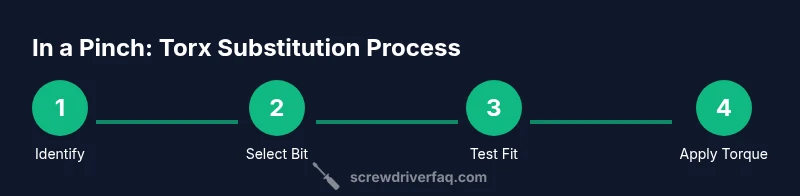
Inspect the screw head to confirm it’s Torx (star-shaped) and determine if you have any Torx sizes in a multi-bit driver or a separate Torx bit set. If you’re unsure, avoid forcing any tool into the head and assess available substitutes. This step reduces the risk of damaging the fastener.
Tip: Take a moment to compare the screw size with the throw of the nearest bit—too large or too small increases the chance of slippage. - 2
Choose the Best Substitute Bit
From your available toolkit, pick the Torx bit that best matches the screw size. If your driver accepts multiple bits, secure the bit firmly before attempting to engage the head. If no Torx bit matches, pause and consider borrowing or purchasing the correct size.
Tip: Do a quick dry-fit on a scrap piece to verify engagement without applying torque to the actual fastener. - 3
Set Up for a Gentle Test
Place the bit into the screw head and apply light pressure to seat it. Keep your wrist straight and aligned with the screw to minimize cam-out. If the bit won’t seat or slips immediately, stop and switch strategies rather than forcing.
Tip: Use a marker or tape on the bit to ensure you can tell if it’s slipping or lifting away from the head. - 4
Apply Controlled Torque
Turn slowly with steady, even pressure. If the screw begins to slip, stop and reposition rather than forcing through. Short bursts of torque can strip the head more effectively than a steady, aggressive turn.
Tip: Never hammer the tool; force can damage both the screw and the surrounding material. - 5
If Slippage Occurs or the Head is Damaged
If the head begins to strip or the bit cannot engage, stop and consider using a screw extractor or alternative fastener removal method. For heavily damaged screws, seek professional help sooner rather than later.
Tip: Resist the urge to yank; extractor kits require careful alignment for a clean grip. - 6
Clean Up and Prepare for Reassembly
After removal, inspect the screw hole, apply a small amount of lubricant if needed, and clean any debris. When reassembling, use the correct Torx size to prevent future head wear. Store spare bits for quick access on future projects.
Tip: Wipe threads with a dry cloth to remove residue that could hinder future engagement. - 7
Document the Experience and Plan Ahead
Note which substitute worked, what didn’t, and which tools you borrowed or bought. Keeping a small kit with key Torx sizes ensures you’re never caught without a proper driver in the future.
Tip: Create a simple checklist to expedite tool readiness for next time.
Quick Answers
What is a Torx screw and when do I need a Torx screwdriver?
A Torx screw uses a star-shaped socket and requires a matching Torx driver for reliable engagement. Using the wrong bit can strip the head or slip, especially with smaller screws. If you encounter a security Torx with a center pin, a standard Torx bit won’t seat correctly.
A Torx screw needs a matching Torx bit; using the wrong driver can strip the head, and security Torx may require a special bit.
Can I use a Phillips or flathead instead of Torx?
Only if the screw head and substitute bit happen to fit perfectly, which is rare for Torx and can damage both the screw and tool. In most cases, avoid non-Torx bits and seek the proper Torx size.
Phillips or flathead can damage a Torx screw; use them only if the fit is exact and there’s no other option.
What should I do if the Torx head is stripped?
A stripped Torx head often requires a screw extractor kit or specialized tools. If you’re not experienced, it’s safer to replace the screw or consult a professional to avoid further damage.
If the head is stripped, you may need an extractor kit or professional help.
Where can I borrow a Torx screwdriver?
Check with neighbors, friends, or local hardware store tool libraries. Many communities offer borrowing options or small tool rental programs that include Torx drivers.
Ask neighbors or local tool libraries for a Torx driver to borrow.
What is a security Torx and why is it harder to substitute?
Security Torx has a center pin that prevents standard Torx bits from seating. You’ll need a matching pinless bit or a specialized driver to engage safely without damage.
Security Torx needs a pinless bit or special tool to fit.
Are there safety risks when improvising tools?
Yes. Improvised tools can slip and cause injury or damage. Wear eye protection, work on a stable surface, and stop if the tool doesn’t seat properly.
Improvising can slip or cause injury; protect yourself and stop if unsure.
Watch Video
The Essentials
- Keep a Torx bit set accessible for quick fixes.
- Test any substitute bit on non-critical screws first.
- Avoid forcing non-Torx bits into Torx screws to prevent damage.
- Borrow or buy the correct Torx driver when possible for best results.
- Plan for future projects by assembling a small, dedicated Torx toolkit.