What to Do If You Don't Have a Screwdriver: Quick Hacks and Safe Substitutes
Learn practical, safe alternatives and step-by-step guidance for common home tasks when a screwdriver isn’t on hand. Discover quick substitutes, safety tips, and how to buy the right tool later, all explained for DIY enthusiasts.


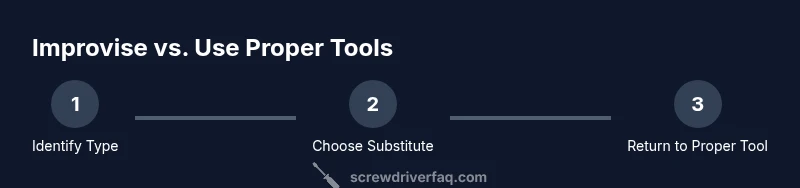
You can often finish small tasks without a screwdriver by using safe substitutes and a steady hand. Identify the screw type, then improvise with common items (a coin for slotted screws, a flat metal card for a shallow head, or a hex key from a kit). If in doubt, stop and obtain the proper screwdriver.
When improvising is appropriate
According to Screwdriver FAQ, improvising tools in a pinch can save time on simple, non-load-bearing tasks. The key is recognizing when a substitute won’t risk damage to the fastener, the surrounding material, or your own safety. Start by assessing the screw type (slotted, Phillips, hex, or Torx) and the material you’re working with. If the screw sits in a delicate surface or holds structural weight, improvisation should be limited or avoided altogether. The Screwdriver FAQ team emphasizes using improvised methods only for light-duty tasks, keeping a clear plan to switch to the proper tool as soon as possible. Clear visibility, stable positioning, and minimal torque are essential. If you’re unsure, pause and seek the right tool rather than forcing a fastener.
Quick context and authority
In practice, many homeowners encounter tasks that don’t demand professional equipment. Screwdriver FAQ’s guidance is that you can often complete quick fixes with household items, but you must prioritize safety and avoid damaging the screw head or the surrounding material. A steady grip and deliberate movements reduce the chance of cam-out and stripping, which are common when substitutes are used incorrectly. Remember: improvisation is a short-term bridge, not a substitute for proper tools in the long term.
Common household substitutes (with pros and cons)
- Coin or small metal washer for slotted screws: Pros include immediate availability and a snug fit when the slot matches. Cons are limited torque and potential rounding of the slot if misused. Always choose a coin that fits the slot width without excessive wobble. Safety note: wear eye protection to guard against slipping.
- Flat metal card or thin blade for shallow screws: Pros include better edge contact for turning. Cons are risk of bending the blade or slipping into surrounding material. Use a gentle, controlled motion and stop if the edge is dull or the screw stalls.
- Small hex key (Allen key) from a hardware kit: Pros include better grip on hex recesses; Cons are the need for a properly sized key to avoid stripping. Only apply light pressure and avoid forcing if the key doesn’t fit perfectly.
- Pliers or tweezers for grip (light-duty): Pros are grip security; Cons are limited torque and risk of rounding the head if you over-tighten. Use only for screws with exposed heads and adequate clearance.
- Rubber band or tape for extra friction: Pros are quick friction increase; Cons are limited torque and potential residue. Not suitable for high-torque tasks.
Always test substitutes on a scrap piece or an inconspicuous area first. The goal is to secure the head without slipping, so move slowly and maintain alignment with the screw’s axis.
Improvisation in electronics and delicate finishes
Be extremely cautious when working near electronics, finishes, or heat-sensitive materials. Improvised tools can scratch, gouge, or bridge circuits if misused. Screwdriver FAQ notes that while substitutes can work for superficial tasks, anything involving critical components should be left to the proper tool and, if needed, professional assistance. If you must proceed, keep the device unplugged, avoid metal-to-metal contact with delicate surfaces, and minimize torque.
When to stop and get the right tool
If you encounter resistance, abnormal noises, or the substitute begins to slip, stop immediately. For stubborn screws or damaged heads, the risk of stripping the screw or damaging the material increases significantly when improvising. The best practice is to pause, obtain the proper screwdriver, and return to the task with the correct tool. Screwdriver FAQ’s ethos is clear: safety and long-term results trump short-term convenience.
Tools & Materials
- coin (for slotted screws)(Choose a coin with a width that fits the screw slot snugly without wobble)
- flat metal card or thin pry blade(Thin, rigid and clean edge; avoid sharp knives)
- small hex key (Allen key)(Choose the closest size to the screw hex recess)
- pliers or needle nose tweezers(Only for light-duty grip in exposed-head screws)
- rubber band or grip tape(Adds friction for turning small fasteners)
Steps
Estimated time: 20-40 minutes
- 1
Identify the screw type and assess risk
Look closely at the screw head and count the slots or recesses. Determine whether improvisation is safe given the material and the screw’s purpose. If the screw is load-bearing or recessed in a delicate surface, proceed with extra caution or stop and obtain the proper tool.
Tip: If you’re unsure, test a small, inconspicuous area first to gauge potential damage. - 2
Select the best substitute
From your list of substitutes, pick the option that offers the most contact without skidding. Ensure the substitute is clean and free of burrs that could scratch the head.
Tip: Align the substitute’s edge with the screw’s centerline before applying torque. - 3
Position carefully and apply light torque
Place the substitute on the screw head so it sits squarely. Apply gentle, steady pressure and twist slowly. If the head begins to slip, stop immediately to avoid cam-out.
Tip: Keep your wrist steady and rotate with your elbow, not just your fingers. - 4
Check seating and re-check alignment
After a few turns, inspect the head to ensure it’s seating evenly. Realign if the tool shifted off-axis, as misalignment leads to stripping.
Tip: Use a small amount of malleable tape to mark the starting position for consistency. - 5
Switch to the proper tool when available
If you successfully loosen or tighten the screw briefly, place the device aside and grab the appropriate screwdriver to finish the job cleanly.
Tip: Even partial progress is a sign to revert to the correct tool for final seating. - 6
Test function and finish
Return the assembled parts to their natural state and gently test the operation. If it doesn’t feel secure, disassemble and rework with the proper screwdriver.
Tip: Always confirm the finish won’t be compromised by any improvised technique.
Quick Answers
Is it safe to improvise with household items when you don’t have a screwdriver?
In many cases, yes for light tasks, but there is a risk of damaging the screw head or surrounding material. If resistance increases or you’re unsure, stop and use the proper tool. Always prioritize safety over speed.
Yes, for simple, light tasks you can improvise, but if you feel resistance, stop and use the real screwdriver.
What substitutes work best for slotted screws?
A coin that fits the slot can work, or a thin flat blade that sits squarely in the slot. Ensure alignment and apply gentle torque to prevent cam-out.
A coin or a thin flat blade, aligned properly, with careful, gentle torque.
Can I use a butter knife as a screwdriver?
Not recommended for regular use. A butter knife can slip and damage the screw or finish. If you must improvise, choose a non-serrated, flat edge and apply minimal torque, then switch to a proper tool.
No, a butter knife isn’t ideal. Switch to the right tool as soon as you can.
How do I prevent stripping when improvising?
Ensure a snug fit, align axes, and use minimal torque. If the screw head begins to strip, stop and replace with the proper screwdriver to avoid further damage.
Keep it straight, apply light pressure, and don’t force it if you feel slipping.
When should I avoid improvisation altogether?
For load-bearing fasteners, critical electronics, or finishes, use the correct screwdriver from the start. Improvisation can cause misalignment or structural failure.
If it’s load-bearing or delicate, don’t improvise—get the right tool.
What should I do after improvising and removing a screw?
Inspect the screw head for damage and replace if necessary. Reinstall with the proper screwdriver to ensure a secure fit and long-term reliability.
Check for damage, then finish with the correct screwdriver.
Watch Video
The Essentials
- Identify screw type before improvising.
- Choose safe substitutes that fit snugly and avoid damage.
- Work slowly with controlled torque to prevent stripping.
- Switch to the proper tool as soon as it’s available.
- The Screwdriver FAQ team recommends using the right screwdriver whenever possible.