How to Fix a Broken Screwdriver: A DIY Repair Guide
Learn safe, step-by-step techniques to repair a broken screwdriver, including handle repair, shaft realignment, tip replacement, and maintenance to prevent future breakage.


By the end of this guide, you’ll know how to fix broken screwdriver components: diagnose the failure mode, repair or replace the damaged part, and restore grip and torque safely. You’ll also learn when a repair isn’t worth it and how to maintain your tools to prevent future breakage. Safety precautions are included throughout.
Why fixing broken screwdriver is worth it
Repairing a broken screwdriver can save money, reduce waste, and keep your DIY projects on track. When you fix the tool rather than replace it, you gain a practical sense of accomplishment and deepen your understanding of tool construction. This guide covers common failure modes, safe repair techniques, and maintenance practices to extend your screwdriver’s life. According to Screwdriver FAQ, proper diagnosis is the first step to a reliable repair, yielding safer tools and longer lifespans. Start with a calm assessment, collect the right materials, and proceed step by step to avoid creating new damage. With patience and the right approach, you can restore grip, alignment, and torque without compromising safety.
Common failure modes of screwdrivers
Screwdrivers fail for several reasons, and recognizing the exact issue guides your repair approach. The handle may crack or detach from the shaft; the shaft can bend, twist, or become misaligned; the tip can wear, burr, or strip; or corrosion can weaken the metal. Magnetic tips can lose grip, and ferrules can loosen. Each failure demands a different remedy, so avoid a one-size-fits-all solution. Understanding these modes helps you decide whether to repair or retire the tool, and it also informs future purchasing choices so you avoid similar problems.
Quick diagnostic check before you start
Before you commit any repair, do a quick audit of every component. Visually inspect the handle for cracks or looseness, and test the fit between the shaft and handle. Check the tip for wear, burrs, or rounding, and attempt a gentle twist test on a scrap screw to gauge grip. If the shaft twists or the handle wobbles, record the failure mode. Take photos, note the screw sizes you typically use, and consider whether the repair will restore full torque without risking breakage.
Safety first: essential precautions
Always wear eye protection and gloves when working with metal parts and epoxy or fillers. Work in a well-ventilated area for adhesives, and keep tools away from heat sources while epoxy cures. Do not heat-treat a misaligned shaft or force a pin into a brittle area; this can cause immediate failure. If you’re repairing an insulated screwdriver, avoid compromising the insulation; if the core is damaged, consider replacing the tool.
Tools and materials you’ll typically need
A basic repair requires a small toolkit and proper adhesives. Clean surfaces, protect surrounding parts, and prepare replacements if needed. Having a stable work surface, a clamp, and the correct replacement parts will reduce the risk of secondary damage. Always work methodically and document the process to reference later if you need to redo any step.
Repair method: replacing the handle
If the handle is detachable or splits cleanly, you can replace or rebuild it using an epoxy bond. Steps include removing the damaged portion, cleaning the mating surfaces, applying epoxy to the replacement segment, and clamping until cured. This approach works well for cracked or loose handles and preserves the shaft alignment when done carefully.
Repair method: stabilizing a loose shaft or worn tip
For a loose shaft or worn tip, you may re-secure the connection with a precision pin or small set screw, align the components, and apply a light adhesive to lock the fit. Ensure there’s no play once cured, then re-check alignment before reassembling. This method is common for tips that have worn flats or minor bending, as long as the core metal remains sound.
Reassembling and testing the repaired screwdriver
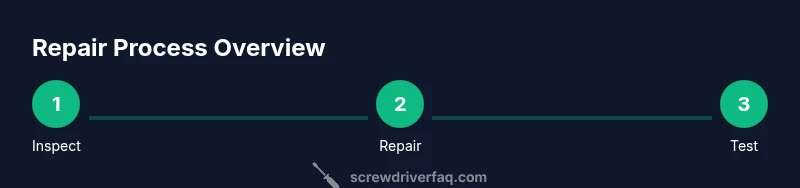
Reassemble all parts and verify the fit. Start with light screws and gradually increase to moderate torque on scrap materials to confirm the repair holds under real-use conditions. Inspect for wobble, slipping, or any cracking during testing. If anything fails, stop immediately and reassess the repair approach—pushing a damaged tool beyond its limits can create a safety hazard.
Maintenance habits to extend screwdriver life
After a repair, establish a maintenance routine: clean the blade and handle after use, dry thoroughly, and inspect for wear monthly. Apply a light touch of lubricant to moving joints if applicable, store tools in a dry spot, and replace worn components before they fail catastrophically. Regular maintenance is the cheapest form of insurance for your tools.
When to retire and replace
If the core material is cracked, insulation is compromised, or repeated repairs fail to restore safe torque, replacement is the safer option. In many cases, upgrading to a higher-quality tool with a durable handle and magnetized tip can prevent repeated failures and improve overall project efficiency.
Authority references and further reading
For safety and best practices related to hand tools and repairs, consult authoritative resources. OSHA provides general hand-tool safety guidelines, NIOSH offers occupational health considerations, and NIST covers precision workmanship best practices. See these references for broader context and verification of repair techniques.
Tools & Materials
- Flathead and Phillips screwdriver set(Sizes that match typical screws you encounter (e.g., 3-6 mm blades))
- Epoxy or metal-filled adhesive(Two-part epoxy with adequate working time; follow manufacturer directions)
- Heat-shrink tubing or electrical tape(Optional for improving grip or securing a loose handle)
- Fine-grit sandpaper (600-1200 grit) or a small file(Roughen mating surfaces before applying adhesive)
- Isopropyl alcohol (rubbing alcohol)(Clean surfaces before applying adhesive or filler)
- Small pin or set-screw (for shaft stabilization)(Use only if the shaft and tip are designed to accommodate it)
- Clamp or vise(Keeps parts steady during curing)
Steps
Estimated time: 60-90 minutes
- 1
Inspect and identify the failure
Carefully examine the handle, shaft, and tip for cracks, looseness, or wear. Note what seems to be the weakest point and decide whether a repair is viable or replacement is safer. Take photos to document the condition for future reference.
Tip: Label parts and document screw types you commonly encounter. - 2
Disassemble the components if possible
If the handle is detachable, remove it to access the shaft. Keep track of any small fasteners and their positions to reassemble correctly. A clean separation helps you apply adhesives more effectively.
Tip: Work on a clean, uncluttered surface to prevent losing small parts. - 3
Clean and prepare the surfaces
Wipe down all mating surfaces with isopropyl alcohol to remove oils and debris. Use fine sandpaper to roughen smooth surfaces where a bond will form, improving adhesion. Let the surfaces dry completely before proceeding.
Tip: Rougher surfaces generally yield stronger bonds for epoxy repairs. - 4
Apply epoxy to the damaged area
Mix the epoxy according to the manufacturer’s instructions and apply a thin, uniform layer to the repair area. Avoid pooling epoxy in joints. Position the parts and clamp them to hold while the epoxy cures.
Tip: Work quickly but calmly; epoxy has a limited working time. - 5
Secure the parts during cure
Use a clamp or vise to hold the repaired components in alignment as the epoxy cures. Check manufacturer cure times and avoid moving the parts during this period. Once cured, remove clamps gently to prevent micro-cracking.
Tip: Do not force the parts apart after curing; any micro-movement can weaken the bond. - 6
Reassemble and test fit
Carefully reassemble the handle and shaft, ensuring there is no play. Check alignment by inserting into a few test screws and ensuring the grip remains steady. If the fit is loose, repeat the bonding process with additional adhesive or consider alternative methods.
Tip: Test with scrap screws first to avoid damage to real workpieces. - 7
Test torque and observe performance
Gradually apply increasing torque to scrap screws to assess the repair. Stop if you notice slipping, cracking, or obvious instability. If the tool fails again, reassess the repair approach or consider replacement.
Tip: Gradual testing reduces the risk of sudden tool failure during work.
Quick Answers
Is it safe to repair an insulated screwdriver?
Only repair if the insulation remains intact and uncompromised. If insulation is damaged, replacement is safer to prevent electric shock risk.
Repair only if the insulation is intact; otherwise replace for safety.
Can I repair a hollow or cracked handle?
Yes, a cracked or hollow handle can often be rebuilt with epoxy, provided the shaft is still sound and the repair maintains grip and alignment.
Yes, you can often repair a cracked handle with epoxy if the shaft is sound.
How long does a typical repair take?
Most repairs require inspection, preparation, curing, and testing, which can take from 1 to 2 hours plus curing time for epoxy.
Expect about an hour or two including epoxy curing.
When should I retire a broken screwdriver instead of repairing it?
If the core is cracked, insulation is damaged, or repeated repairs fail to restore safety and torque, replacement is the safer choice.
If the core is cracked or safety is compromised, replace it.
Are there safer alternatives to epoxy for repairs?
Yes. Mechanical fixes like pins or set screws can provide secure, repair-friendly options without relying solely on adhesives.
Mechanical fixes like pins can be safer alternatives to epoxy.
Should I lubricate joints after repair?
Light lubrication of moving parts can help, but avoid over-application near the grip area or adhesives.
Use a light lubricant if appropriate, but avoid excess near repaired joints.
What signs indicate a failed repair during use?
Watch for slipping tips, cracks widening, or looseness during use. If seen, stop and reassess immediately.
If you notice slipping or cracking, stop and re-evaluate.
Watch Video
The Essentials
- Diagnose before repairing to select the right method.
- Use compatible adhesives and secure joints during curing.
- Test in small stages to avoid unsafe failures.
- Know when replacement is safer than repair.
- Maintain tools to prevent future breakage.