How to Fix Screwdriver Tip: A DIY Guide
Learn a safe, proven method to repair bent or worn screwdriver tips. This step-by-step guide covers tools, techniques, maintenance, and safe testing to extend tool life and improve performance.


This guide explains how to fix a screwdriver tip that’s bent, mushroomed, or slipping. You’ll assess wear, reshape or sharpen the tip, magnetize it, and test on scrap screws. Gather basic hand tools and a small file set for a safe, quick repair that extends tool life. If wear is severe, replacement is wiser.
Introduction and scope
If you’ve ever struggled with a stubborn screw or noticed your screwdriver tip slipping out of the screw head, you’re likely dealing with a worn or damaged tip. Learning how to fix screwdriver tip issues can save you money, improve torque, and extend the life of your tool. This guide focuses on non-destructive repair methods you can perform with common hand tools, emphasizing safety and practical outcomes. Throughout this article, we’ll use the exact phrase how to fix screwdriver tip to help you align expectations with search intent and ensure you get the precise guidance you need.
According to Screwdriver FAQ, many homeowners encounter tip wear after heavy use, especially with frequently abused fasteners. The good news is that most mild to moderate wear can be corrected with careful reshaping, deburring, and magnetization, avoiding unnecessary replacements. The Screwdriver FAQ team emphasizes methodical inspection, a clean workspace, and protective gear to prevent injury or accidental damage to the tool or project.
Wear patterns and how to identify problems
Tip wear comes in several forms: rounded or mushroomed tips from over-torque, nicked edges from misaligned entry into fasteners, and bent shafts that deflect and slip. The most telltale signs are a loss of grip on Phillips or flathead screws, frequent cam-out, and visible tip distortion under light. Before you start, inspect the tip with a magnifier or close visual check; if you see cracks in the tip or severe bending, stop and consider replacement to avoid rounding out screw slots or injuring yourself. Understanding the wear type helps you select the right repair approach and avoid wasting time on an ineffective fix.
Repair options explained: reshape, sharpen, or magnetize
When the wear is minor, reshaping and sharpening can restore a functional tip geometry. For magnetic tips, restoring magnetism can improve hold during driving. In more severe cases, a combination of reshaping, deburring, and magnetizing is used. If the tip is mushroomed or cracked, replacement is usually the safer, long-term choice. This section outlines how to decide between these paths and what outcomes you can realistically expect.
Safety first: preparing your workspace and gear
Working with metal edges requires gloves, eye protection, and a stable workspace. Keep a clean bench, use a small vise or clamps to secure the tool, and work in good lighting. Never rush or apply excessive force; improper technique can ruin the tip or cause injury. A safety mindset also means using the right grit files and avoiding abrasive tools that generate heat buildup that could anneal or weaken the steel.
Tools and materials overview: essential items for most repairs
Gather a narrow set of hand tools: fine files (flat and round), precision sandpaper (600-1200 grit), a small metal file or needle files, a magnetizer (optional but helpful), a spare clean cloth, and a magnifying glass for inspection. A vise or bench clamp is recommended to hold the screwdriver steady during reshaping. Having these items on hand makes the process smoother and reduces the risk of slips or misalignment during shaping.
For maintenance after repair, consider a light oil for lubrication and a magnetizing step to restore grip. Note that the exact technique may vary slightly depending on tip type (Phillips, flathead, or specialty shapes) and the scale of wear. The goal is to return a tip that fits snugly and transfers torque predictably.
Common mistakes to avoid and care tips
Rushing the repair can produce uneven edges or heat damage that weakens the steel. Avoid using heavy power tools on small tips; heat buildup can permanently alter the temper of the metal. Never grind too aggressively along the edge, which can dull the tip or create a flat spot that reduces contact with screws. Always deburr after shaping and test on scrap material before resuming work on real fasteners.
A regular maintenance routine—cleaning, light lubrication, and occasional re-magnetizing—extends tip life and reduces the likelihood of rust or corrosion. Remember, prevention is often simpler than correction: use the correct screwdriver size for each screw and replace worn bits before they fail in the middle of a job.
How to test your repaired tip and what to expect
After you finish the repair, test the tip on scrap screws that mimic your usual fasteners. Check for secure seating, minimal cam-out, and consistent torque transmission. If the tip still slips or slides out, reassess alignment and consider another round of sharpening or, if necessary, replacement. A successful test confirms that the tip geometry matches the screw head and that magnetism is sufficient to hold the bit during engagement.
Maintenance and long-term care: keeping tips in top shape
To maximize lifespan, inspect tips before each use and clean them after work to prevent built-up debris. A quick deburr when you notice slight roughness can prevent further wear. If you magnetize, do so gently to prevent over-magnetization, which can make the tip stick to metal unintentionally. Store tools in a dry, organized space to minimize rust and bending potential.
Conclusion and next steps: when to replace vs repair
If the tip shows cracks, significant bending, or mushrooming after multiple repairs, replacement is the most reliable option to ensure performance and safety. For casual DIY tasks, the outlined repair steps should help you extend tool life and improve results. Remember, ongoing maintenance and correct tool usage are the best investments in keeping your screwdriver performing well over time.
Tools & Materials
- Safety goggles(Protect eyes from metal chips during reshaping)
- Fine precision files (flat and round)(Choose fine-grit files (600-1200 grit) for shaping)
- Fine sandpaper or emery cloth (600-1200 grit)(For deburring and polishing edges)
- Needle files or small jewelers files(Optional for intricate shapes or tight tolerances)
- Magnetizer (optional)(Restore magnetism after reshaping)
- Bench vise or clamp(Secures the screwdriver during shaping)
- Clean microfiber cloth(Wipe away metal dust and debris)
- Isopropyl alcohol or metal cleaner(For quick cleaning before repair)
Steps
Estimated time: 60-75 minutes
- 1
Assess tip wear and secure workspace
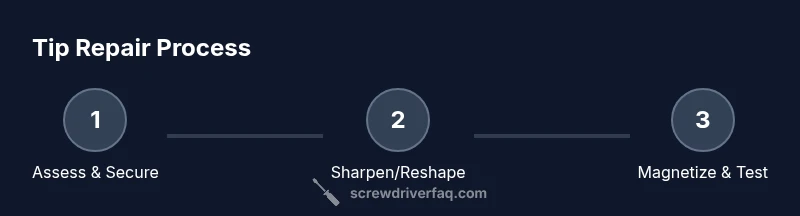
Place the screwdriver in a stable vise or clamp. Inspect the tip under good light for rounding, mushrooming, chips, or bending. Identify whether the wear is repairable with reshaping or if you should replace the tip.
Tip: Take photos before starting to track changes and ensure symmetry after repair. - 2
Safety prep and tool selection
Put on safety goggles and organize your files and sandpaper. Choose the correct file or combination of files for the tip shape (flathead vs Phillips) and prepare a small workspace with a clean cloth nearby.
Tip: Secure the screwdriver firmly to avoid slips that could gouge the edge. - 3
reshape the tip edge
Carefully file along the edge to recreate a sharp, flat contact face. For Phillips tips, adjust the geometry to the intended cross shape; for flatheads, reestablish a flat edge with a consistent width.
Tip: Work in small, controlled strokes and frequently wipe away dust to check progress. - 4
deburr and smooth the edges
Use fine sandpaper or a tiny file to deburr the edge and refine the corner radii. The goal is a smooth, consistent edge that seats well in the screw head without tearing.
Tip: Avoid rounding corners—preserve edge geometry for better grip. - 5
check fit and symmetry
Test the tip against a similar screw in a scrap piece. Look for even seating and consistent bite without cam-out. Repeat minor refinements if needed.
Tip: If alignment seems off, re-center the tip’s edge and verify straightness. - 6
magnetize and test grip
If you practice magnetizing, run the tip along a magnetizer in short passes. Wipe clean and test with a magnetized screw to ensure it holds.
Tip: Be gentle—over-magnetizing can cause the bit to stick unintentionally. - 7
final cleanup and storage
Clean the tip with isopropyl or metal cleaner, dry, and lightly oil if desired. Store in a dry case with other bits to prevent corrosion or misplacement.
Tip: Label the tip type to avoid confusion during future repairs. - 8
evaluate next steps
If the tip can no longer hold or seats poorly, plan for replacement. For occasional projects, a periodic refresh may be enough to extend life without buying new tools.
Tip: Keep a routine check every few months if you use the screwdriver frequently.
Quick Answers
Can I fix a bent screwdriver tip with a file?
Yes, mild bending can sometimes be corrected with careful reshaping. If the bend is severe, the risk of misalignment increases and replacement is often safer.
You can fix mild bending with careful reshaping, but severe bends may require replacing the tip.
Is it safe to use a drill to repair a screwdriver tip?
Power tools generate heat and can remove temper from the steel. Manual filing and controlled reshaping are safer for small tips.
Using a drill can heat and deform the tip; prefer manual tools for safety.
How long does a typical tip repair take?
Most repairs take 40-75 minutes depending on wear and the tip type. Plan additional time for testing and adjustments.
Usually around 40 to 75 minutes, depending on wear and tip type.
Should I magnetize a tip after repairing it?
Magnetizing after reshaping can restore grip on screws, especially for small fasteners. Do so gently to avoid over-magnetization.
Yes, magnetize after repair to improve grip, but do it gently.
What signs indicate I should replace the tip instead of repairing it?
Cracks, significant mushrooming, or repeated failure after repairs indicate replacement is the safer choice to prevent damaging fasteners.
If you see cracks or heavy mushrooming, replace the tip.
How can I prevent tip wear in the future?
Use the correct screwdriver size, apply steady pressure, and avoid over-torquing. Regular cleaning and occasional re-magnetizing extend life.
Choose the right size, press steadily, and don’t over-torque; clean and magnetize as needed.
Watch Video
The Essentials
- Inspect tip wear before attempting repair
- Use proper, fine grit tools for reshaping
- Magnetize after reshaping for better grip
- Replace when wear is severe or edges crack
- Test on scrap screws before returning to work