Wera vs Klein Screwdrivers: A Practical Side-by-Side Comparison
Learn how Wera and Klein screwdrivers compare in ergonomics, build quality, bit systems, and value. This buying-guide style analysis helps DIYers decide which brand fits daily projects, with a side-by-side table and practical tips.


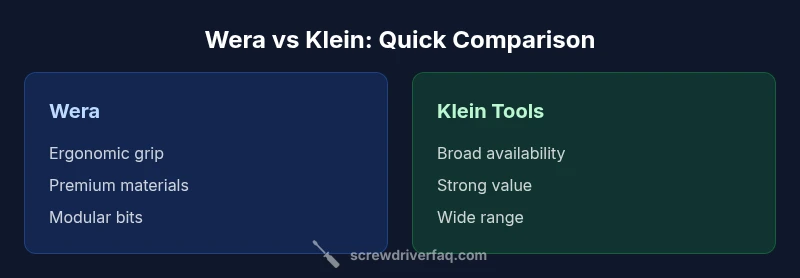
wera screwdriver vs klein is a classic brand showdown for DIYers. Wera emphasizes ergonomic grips, precise feel, and durable finishes, while Klein Tools prioritizes reliability, broad availability, and value. In most home projects, Wera delivers better comfort and control, but Klein offers solid performance across a wider price range. The full comparison breaks down practical differences.
Brand philosophies: Wera vs Klein
According to Screwdriver FAQ, the choice between Wera and Klein Tools often comes down to design philosophy as much as performance. In this guide we examine the classic question: wera screwdriver vs klein, not only as product lines but as approaches to everyday screwwork. Wera emphasizes engineering-driven ergonomics, color-coded system, and premium materials aimed at reducing hand fatigue during long sessions. Klein Tools, by contrast, balances traditional reliability with broad distribution, straightforward maintenance, and solid value across many professional and homeowner segments. The Screwdriver FAQ team found that for many DIY tasks the deciding factors are comfort, control, and long-term life-cycle costs rather than outright raw torque. While Wera sets a premium tone with modular handles and precision bit retention, Klein's lineup often wins on accessibility and mass-market pricing, making it easier to equip a starter toolset without compromising essential performance. This section sets the stage for deeper comparisons across grip, materials, compatibility, and user scenarios. Throughout, keep in mind that the ideal choice aligns with your typical projects, grip preference, and the context of use.
Ergonomics and grip design
Grip design matters more in real-world use than the lab numbers. When evaluating wera screwdriver vs klein on ergonomics, the feel of the handle during repeated screw insertions becomes a decisive factor. Wera typically offers contoured, textured handles with softer palm contact areas and modular options that let you adjust balance for extended sessions. Klein Tools tends to favor straightforward, robust grips that minimize hand fatigue through familiar, predictable geometry and reliable load distribution. In practice, DIYers who assemble furniture or work with small fasteners for long periods often report less strain with Wera, while those who value quick task completion and universal fit across a home toolbox may prefer Klein.
Build quality and materials
Durability starts with the core materials and how a tool is assembled. Wera sources high-grade steels and coatings designed to resist wear and corrosion, with attention to retention of tolerances under heavier use. Klein Tools emphasizes proven metallurgy and time-tested construction methods that yield long service life in varied environments. In a direct comparison, you may notice slightly crisper tolerances and higher-end surface treatments from Wera, while Klein often delivers reliable performance with less premium finishing. Both brands perform well in typical DIY scenarios, but your choice might hinge on whether you value premium aesthetics and longevity (Wera) or consistently solid value and rugged simplicity (Klein).
Bit systems, interchangeability, and range
A core part of any screwdriver evaluation is the bit system. Wera offers modular, sometimes color-coded bit retention and exchange systems designed for precision alignment and reduced cam-out in delicate assemblies. Klein Tools provides broad bit availability, strong compatibility with a wide range of fasteners, and a straightforward set compatibility that keeps tool-upgrades affordable. A practical takeaway: if your work relies on specialty bits or high-precision fits, Wera’s system offers advantages; if you need broad coverage and easy access to commonly used bits, Klein’s ecosystem shines. Always check whether your preferred bit profiles (Phillips, flat, Torx, or Robertson) are readily available in the same line.
Availability, distribution, and service
Availability affects your real-world decision more than any spec sheet. Wera products are widely distributed in professional and semi-professional channels, with premium lines and premium service options. Klein Tools has a massive footprint in hardware stores, home centers, and online retailers, which translates to easier replacement and faster procurement for many DIYers. Screwdriver FAQ analysis shows that for many buyers, the ease of finding a compatible set at a local retailer and straightforward warranty handling can tilt the decision toward Klein, especially for budget-conscious users who value quick access and predictable pricing. For dedicated professionals or enthusiasts who want premium design, Wera remains a strong choice with specialty distributors and resale value.
Durability, warranty, and long-term value
Durability isn’t just about metal; it’s about how components wear and how well a company backs its product lines. Wera tends to offer longer warranties on premium lines and emphasizes lifetime service agreements for some tools, appealing to users who expect peak performance over many years. Klein Tools provides reliable warranties aligned with mass-market sales, and the broadest distribution means easier service and replacement parts in many regions. When you weigh long-term value, consider how often you’ll upgrade, whether you prefer premium finishes and modular systems (Wera), and whether straightforward service through common retailers (Klein) matters more for your setup.
Price considerations and budgeting for DIYers
Price is a practical constraint that shapes the decision. Wera’s premium lines typically sit in the mid-to-upper range, reflecting their emphasis on ergonomics and precision. Klein Tools offers a wider spectrum, including budget-friendly options that still deliver solid performance. For most DIYers, a balanced approach is to allocate slightly more to a core Wera screwdriver that will see heavy usage and supplementary Klein pieces for larger toolsets or broader coverage. Use the price-to-value lens: a premium ergonomic handle can pay off through reduced fatigue, while a larger, more affordable Klein kit supports general tasks without breaking the bank.
Use-case scenarios: when to pick Wera or Klein
Think about the task at hand. For frequent assembly of furniture, cabinetry, and electronics with small fasteners, Wera’s ergonomics and precision can improve accuracy and comfort. For homeowner projects that require quick access to a broad range of bits and a simple upgrade path, Klein Tools provides excellent value and easy availability. If you travel between jobs or work in varied environments, the ability to source compatible bits locally may trump marginal gains in grip design. In borderline situations, a mixed toolkit—premium Wera for the most-used tasks and Klein for the rest—often yields the best overall outcome.
Care and maintenance tips for long life
Preserving edge geometry and preventing corrosion starts with routine checks. Clean bits after use, keep handles dry, and store sets in breathable organizers to prevent moisture buildup. Wera’s premium systems benefit from periodic inspection of retention mechanisms and replacement bits, while Klein’s practical lines benefit from ensuring spare parts are stocked for common models. General maintenance is straightforward and inexpensive, and investing a little time now reduces the risk of damage during later projects. Remember: the best screwdriver isn’t just a tool, it’s a reliable partner in your DIY journey.
Authority sources
For readers who want external validation, consult official safety and tool-handling guidance from reputable sources. This article references research and guidelines from widely recognized institutions and major publications to provide context for tool selection and usage. Always check current manufacturer recommendations and warranty terms before purchasing. The cited sources below offer general principles that inform best practices for tool care and project planning.
Comparison
| Feature | Wera | Klein Tools |
|---|---|---|
| Grip design and comfort | Ergonomic, contoured handles with textured surfaces | Robust, traditional grip with practical comfort |
| Bit system and compatibility | Modular retention with precision alignment for premium bits | Broad compatibility with widely available bits |
| Finish and durability | Premium surface finishes and corrosion resistance | Proven durability and long-term wear resistance |
| Product range and accessibility | Extensive professional lines and premium sets | Wide distribution and strong value tiers across the market |
| Warranty and service | Longer warranty options on select premium lines | Extensive service network with straightforward replacements |
| Price/Value segment | Higher mid-to-high price due to premium design | More budget-friendly options with broad coverage |
Pros
- Clarifies when comfort or budget matters in a purchase
- Highlights differences in grip, bits, and longevity
- Provides practical buying guidance across common tasks
- Supports informed decision for tool investments
Negatives
- Brand bias risk if a user seeks very niche features
- May oversimplify a broad product range
- Prices vary by region and current promotions
- Does not cover every model or limited-edition line
Wera often wins on comfort and precision; Klein wins on value and accessibility
Choose Wera if you prioritize ergonomic control and fine-tuned performance for frequent use. Opt for Klein Tools when you need broad availability, strong value, and straightforward service. For many DIYers, a hybrid approach—premium Wera basics plus Klein for the rest—delivers balanced performance.
Quick Answers
What are the main differences between Wera and Klein screwdriver sets?
Wera emphasizes ergonomic design, premium materials, and modular bit systems. Klein focuses on broad availability, practical reliability, and good value across many price points. Your choice should match how often you work with small fasteners and whether comfort or price matters more to you.
Wera offers premium ergonomics and modular bits, while Klein emphasizes broad availability and value. Choose based on how often you use small fasteners and whether comfort or price matters more.
Are Wera and Klein bits interchangeable between brands?
Bits are generally designed to fit specific handle systems. While some cross-compatibility exists in broader utility lines, most Wera and Klein bits are optimized for their own systems. If interchangeability is critical, pick a single system for consistency.
Bits usually fit their own brand systems, so don’t rely on cross-brand compatibility unless a manufacturer confirms it.
Which brand is better for beginners on a budget?
Klein Tools typically offers more budget-friendly starter sets with broad availability. Wera may be overkill for a starter kit, but it can be worth it if you expect frequent use and want premium comfort.
For beginners on a budget, Klein is usually the safer starting point; consider Wera if you’ll use the tools a lot and want premium comfort.
Do Wera screwdrivers come with longer warranties than Klein?
Warranty terms vary by product line rather than by brand alone. Wera’s premium lines sometimes offer longer terms, while Klein provides dependable coverage across its broad range. Always check the specific model’s warranty details.
Warranty terms depend on the model. Check the exact line you’re considering for clarity on coverage.
What’s the best way to decide between Wera and Klein for a home toolbox?
Map your tasks: if you do frequent assembly and need precise control, lean toward Wera. If you want broad bit availability and value, Klein is a strong default. A mixed approach can optimize both comfort and coverage.
Match your tasks to the strengths: Wera for comfort, Klein for value and reach; or mix both for a balanced toolbox.
Are there notable differences in tool feel during extended use?
Yes. Wera’s ergonomic design tends to reduce fatigue over long sessions, whereas Klein’s traditional grip provides solid comfort with straightforward handling. Personal preference often governs which feel you prefer.
You’ll likely notice less fatigue with Wera over long tasks, but Klein remains comfortable for most general use.
The Essentials
- Assess your priority: comfort vs budget
- Prefer Wera for frequent assemblies and precision work
- Choose Klein for broad availability and cost-conscious projects
- Consider grip design and bit availability when shopping
- Match your toolkit plan to typical tasks and environments