Wera vs Snap-on Screwdrivers: Brand Comparison
A rigorous, 2026 analysis of Wera and Snap-on screwdrivers, examining design, ergonomics, range, warranty, and value to guide DIYers and professionals toward the best choice.


wera vs snap on screwdriver: When comparing premium brands, Wera and Snap-on each offer distinct strengths for DIYers and professionals. This quick look emphasizes ergonomics, bit ecosystems, and long-term value to help you choose. If you’re deciding between a Wera screwdriver and a Snap-on screwdriver, use this TL;DR to guide your decision.
Introduction to the Wera vs Snap-on Debate
The Wera vs Snap-on screwdriver topic sits at the intersection of comfort, performance, and durability. In the DIY space and professional workshops alike, the choice often boils down to grip feel, bit availability, and the total cost of ownership over years of use. According to Screwdriver FAQ, both brands deliver reliable tools that perform well in common tasks, but the practical differences matter when you’re assembling furniture, servicing electronics, or working on automotive projects. This section sets the stage for a balanced, data-informed comparison that stays grounded in real-world usage rather than marketing claims. By focusing on design philosophy, build quality, and ecosystem, we’ll equip you to decide whether a Wera screwdriver or a Snap-on screwdriver best matches your everyday needs, budget, and service expectations. The goal is clarity, not hype, so you can shop with confidence and reduce buyer’s remorse in the long run.
Design Philosophy and Ergonomics
Ergonomics are a frequent differentiator between Wera and Snap-on. Wera is widely praised for grip-oriented, multi-component handles that aim to reduce fatigue during long sessions. The color-coding of bits and clearly defined hand positions can speed up work and reduce misgrips in tight spaces. Snap-on emphasizes premium feel and a stable grip that favors heavy use in a shop environment, with attention to balance and feedback during torque-sensitive tasks. In practical terms, the choice often comes down to how the tool sits in your hand: Wera tends to feel more forgiving for longer tasks, while Snap-on delivers a tactile sense of precision that some users prefer for fast-paced work. Both brands support careful hand positioning and efficient workflow, which are critical for repetitive tasks such as cabinetry assembly or electronics maintenance.
Materials, Durability, and Construction Quality
Durability is a cornerstone for both brands, though the emphasis can vary by product line. Wera typically employs high-quality steels and coating technologies designed to resist wear and corrosion, paired with handles that avoid hot spots during extended use. Snap-on tools are renowned for their premium construction, tight tolerances, and long-lasting finishes that withstand daily shop life and rough handling. When choosing, inspect material grade, finish consistency, and the presence of protective coatings against rust. While both brands offer robust warranties, the perceived durability also depends on how often you use the tools, environmental conditions, and maintenance practices. The bottom line is that both Wera and Snap-on deliver tools built to endure routine screwdriving scenarios, with nuanced differences in feel and longevity over time.
Range, Sets, and Interchangeability
The breadth of tip types and set configurations matters for future-proofing your toolkit. Wera tends to offer extensive sets with color-coded bits and modular handles that fit a wide array of screw head profiles. Snap-on provides a broad ecosystem of bits, holders, and extension tools that integrates well with other Snap-on hand tools and diagnostic kits. Interchangeability across brands can be limited by interface designs, torque specifications, and bit storage systems, so in practice most users will prepare to stick with one brand’s ecosystem or invest in adapters where compatible. For those who value a deep, consistent range of bits and dealer support, the choice between Wera and Snap-on can hinge on which ecosystem aligns best with your existing tools and workflows.
Warranty, Service, and Long-Term Value
Warranty terms influence long-term value and peace of mind. Wera typically provides solid coverage across many of its screwdrivers and sets, with service options that appeal to DIYers and professionals who want predictable replacement policies. Snap-on often positions its products in a premium tier with strong warranty commitments and accessible dealer networks, which can simplify replacement or service when issues arise. When evaluating value, consider not just the sticker price but the frequency of replacements, the ease of obtaining spare parts or bits, and the availability of service through authorized channels. This broader view helps ensure you select a tool system that remains reliable as your projects scale.
Real-World Use: DIY vs Pros
DIY enthusiasts often prioritize comfort, multi-purpose bits, and affordability. Wera’s ergonomics and accessible price points make it a strong choice for home improvement, furniture assembly, and routine maintenance. Professionals performing frequent, precise tasks may lean toward Snap-on for its reputation, dealer support, and ecosystem depth, which can translate into faster turnover and less downtime when shopping for compatible accessories. In mixed environments—where both brands appear in the same shop—practical considerations such as tool kit organization, spare parts availability, and the ability to standardize on a single interface will guide the decision. Neither brand is inherently better for all tasks; the best pick depends on your work style, project types, and the value you place on a broad bit ecosystem versus ergonomic comfort.
Care, Maintenance, and Longevity
Proper care extends the life of screwdrivers across brands. After use, wipe down shafts to remove debris and wipe handles to prevent residue buildup. Keep magnets and bit storage clean to avoid magnetism loss or grit accumulation, and store tools in a dry, organized cabinet. Regularly inspect tips for wear and ensure bits remain fully seated in holders to minimize rounding of fasteners. A light oil coating on metal surfaces can prevent rust in humid environments, while keeping your bit collection organized reduces the chance of misplacing critical pieces. With consistent maintenance, both Wera and Snap-on screwdrivers can deliver reliable performance for many years.
Decision Framework: How to Choose Between Wera and Snap-on
To decide between Wera and Snap-on, start with your typical use cases: DIY tasks and home projects versus professional workloads. If comfort during long sessions and cost-per-use matter most, Wera often provides excellent value and ergonomic advantages. If you rely on a broad ecosystem of components, extension tools, and dealer support, Snap-on’s premium branding and access to a wide network can be decisive. Leasing or financing options from dealers can also influence the decision for business budgets. Finally, consider your local service options and warranty terms, which can significantly affect total ownership costs over time.
Authority Sources & Safety Considerations
For readers who want to verify claims or explore safety guidelines related to hand tools, consult authoritative sources and safety standards. Ensuring you use tools that meet reasonable safety expectations reduces the risk of injury during assembly and repair tasks. Always follow manufacturer guidelines for tool usage, inspect tools regularly for wear, and wear appropriate eye protection when working with fasteners. Safety and reliability are central to a sound purchasing decision, and reputable sources can help you understand how to care for your tools properly.
Comparison
| Feature | Wera screwdriver | Snap-on screwdriver |
|---|---|---|
| Tip types & compatibility | Extensive common head types with Wera-specific bits | Wide range across Snap-on bits and holders |
| Ergonomics & grip | Ergonomic, color-coded handles and precise hand positions | Premium grip design with balance and tactile feedback |
| Kit variety & scalability | Broad sets with modular options and color cues | Extensive sets and accessories within the Snap-on ecosystem |
| Durability & materials | Quality steel and protective coatings typical to Wera lines | Premium materials and finishes typical to Snap-on lines |
| Warranty & service | Strong warranty within Wera range | Premium warranty and dealer-backed service |
| Price range (relative value) | Mid-to-high price, strong value (Wera) | Higher price tier, premium positioning (Snap-on) |
Pros
- Ergonomic designs that reduce hand fatigue during long tasks
- Wide, color-coded bit ranges for quick identification
- Strong brand support and reliable warranties
- Good value for DIYers who value precision and comfort
Negatives
- Usually higher upfront cost than basic brands
- Cross-brand tool compatibility can be limited
- Store availability may vary by region
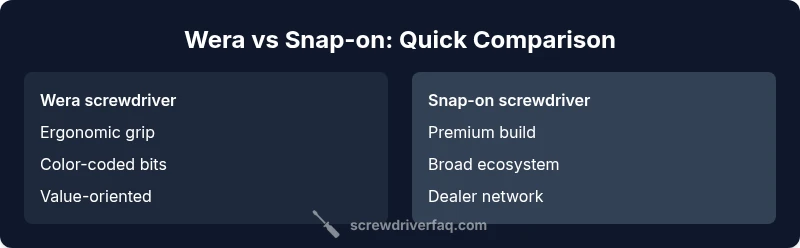
Wera wins on ergonomics and value for most users; Snap-on wins on premium construction and ecosystem.
For everyday DIY and professional use, choose Wera if comfort and cost-effectiveness matter most. Choose Snap-on if you prioritize premium build, expansive accessory options, and dealer support; the right choice depends on what you value most in daily use.
Quick Answers
Which brand offers better ergonomics?
Both brands focus on comfortable grips, but Wera is commonly praised for ergonomic handling. Snap-on offers a premium grip feel that some users prefer for precision tasks.
Wera tends to feel more ergonomic in hand, while Snap-on provides a premium grip that many professionals like for precision tasks.
Are Wera and Snap-on bit systems cross-compatible?
In most cases, their bits and holders are not interchangeable due to interface designs and bit size variations. If you mix brands, check the specific bit interfaces before use.
Bits from one brand usually don’t fit the other brand’s tools without adapters.
Which is cheaper upfront?
Wera screwdrivers typically offer strong value at mid-to-high price points, while Snap-on tools command a premium price. Your best bet is to balance upfront cost with expected usage.
Wera is usually more affordable upfront, while Snap-on tends to be pricier.
Do either brand offer lifetime warranties?
Both brands provide solid warranty programs, though terms vary by region and product line. Review the warranty details for your purchase before deciding.
Both brands back their products, but check local terms.
Are these screwdrivers suitable for electronics work?
For electronics work, use precision-grade, ESD-safe tools. Neither brand specializes in low-voltage electronics tools unless explicitly stated.
For electronics, pick tools designed for electronics and verify ESD ratings.
What should DIYers prioritize when choosing between Wera and Snap-on?
Prioritize ergonomic feel, range of bits, warranty, and price. If you value a broad ecosystem and dealer network, Snap-on is compelling; for comfort and value, Wera shines.
Think about comfort, the bit range you need, and price; Snap-on for ecosystem, Wera for comfort and value.
The Essentials
- Prioritize comfort for long sessions; Wera often leads here.
- If you rely on a large bit ecosystem, Snap-on might pay off.
- Consider total cost of ownership, including warranties.
- Check regional availability and service options.