Wiha screwdriver vs Klein: Brand comparison for DIYers
A comprehensive, analytical comparison of Wiha and Klein screwdrivers for DIY enthusiasts. We evaluate build quality, ergonomics, tip options, warranties, and value to help you pick the right brand for your projects.


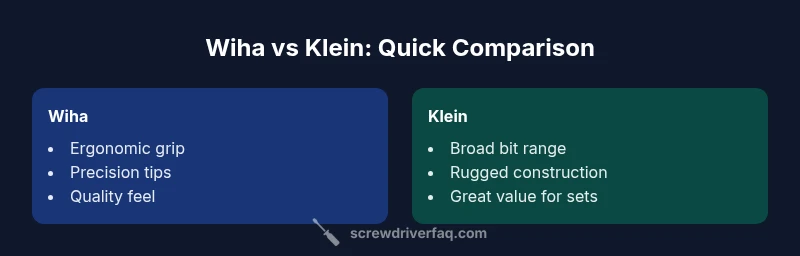
Wiha and Klein each bring strengths to the DIY toolkit. In a wiha screwdriver vs klein comparison, Wiha tends to excel in ergonomics, tip quality, and precision for finer tasks, while Klein offers broad bit selection, rugged build, and strong value for larger projects. Neither brand dominates across all tasks; your choice should align with your typical jobs and budget.
Why the brand debate matters for DIYers
According to Screwdriver FAQ, the wiha screwdriver vs klein debate matters because most DIYers rely on reliable tools daily. The choice between these brands often hinges on subtle differences in grip, tip precision, and kit breadth rather than a single best model. In the wiha screwdriver vs klein comparison, you’ll discover how ergonomics, material quality, and service support shape long-term value. For homeowners tackling assembled furniture, electronics, and routine maintenance, understanding these nuances helps you avoid buying the wrong setup for your workflows and hand size. The decision is rarely about a single feature, but about how all the pieces—comfort, durability, and accessibility—work together over months or years of use.
Key criteria when choosing between Wiha and Klein
When you compare brands like Wiha and Klein, certain criteria consistently matter for DIYers. First, consider ergonomic design and feel in the hand; second, assess tip precision, consistency, and compatibility with common fasteners; third, review the breadth of bit varieties and set options; fourth, examine durability and the availability of replacement tips; finally, factor in price, warranty coverage, and after-sales service. With these criteria, you can map your typical projects—electrical work, furniture assembly, or electronics repair—and see which brand aligns best with your needs. The right choice often becomes clear once you align features with your most frequent tasks.
Build quality and materials
Build quality sets the tone for tool longevity. Wiha typically emphasizes high-grade steel, careful heat treatment, and precision-machined tips that resist wear and cam-out during delicate tasks. Klein, meanwhile, emphasizes robust construction, knurling on handles for grip security, and coatings designed to resist slipping in tough environments. For DIY users, the balance between steel hardness, edge retention, and ease of sharpening matters. A screwdriver that maintains tip geometry after repeated use reduces the need for constant replacements. In practice, you’ll notice that both brands prioritize consistent fit, reduced tip wobble, and reliable alignment with fasteners across most common sizes and profiles.
Ergonomics and comfort in hand
Ergonomics drive long sessions. Wiha tends to prioritize molded handles with softer touch surfaces and contoured grips that fit naturally in the palm, reducing fatigue during assembly or electronics work. Klein often deploys knurled or textured metal handles with pronounced cross-sections for a secure grip in oily or dusty conditions. The best choice depends on your hand size, grip strength, and the kinds of tasks you perform most. If you work with small screws or precision electronics, a smoother grip with tactile feedback can help you maintain control. For heavier, repetitive tasks, a rugged grip and balanced weight distribution can improve comfort and productivity over the course of the day.
Tip varieties and compatibility
Tip variety is a key differentiator. Wiha tends to offer highly refined tip geometries for precision fits, with consistent tolerances that minimize cam-out in delicate fasteners. Klein provides a broad spectrum of tip types across its lines, including several specialty profiles that cover a wider range of fastener standards. For home repair and renovation, you’ll benefit from sets that include both Phillips and slotted tips, plus Torx and sometimes PZ or hex options. Magnetic tips, chrome coatings, and tip retention features can influence ease of use. In practice, your decision should reflect the mix of fasteners you encounter most often and whether you value a compact, focused set or a broad kit.
Durability, warranty, and service considerations
Durability and support are central to total ownership cost. Wiha’s product lines are known for consistent performance and reliable replacements for worn tips in many markets, supported by straightforward warranty policies. Klein also offers solid warranties and a broad service footprint, which can be advantageous if you frequently need replacements or accessories. For DIYers, the practical impact is shorter downtime and lower long-term costs when you can source compatible tips quickly. Always check regional warranty terms, authorized service centers, and the availability of replacement bits to avoid delays when a specific item wears out.
Price considerations and value for money
Price is a practical driver. Wiha often sits in the mid-to-upper tier for individual drivers, with premium sets that emphasize fit, feel, and precision. Klein provides a strong value proposition in many regions, especially for larger kits and professional-grade lines, where the breadth of bits can replace several cheaper, mixed sets. The most cost-effective path usually involves assessing your typical projects and the likelihood of needing extra bits in the near term. If you expect to build a small, focused kit for routine home improvements, Wiha’s precision-oriented options may offer better long-term value; for broad coverage and economical high-volume purchases, Klein might be the smarter buy.
Brand ecosystems and accessory options
Both brands offer ecosystem components that extend beyond basic drivers. Wiha often emphasizes systematic bit sets, organized storage, and high-quality tip maintenance tools, making it easy to keep tools in good condition. Klein emphasizes a broad family of screwdrivers, multi-bit sets, and compatible accessories that cover a wide range of professional needs. For the DIYer, the right ecosystem reduces the time spent hunting for matches and minimizes mismatch risk. Consider whether you prefer a streamlined, tight family of tools or a comprehensive kit that can serve multiple rooms and projects without frequent reordering.
How to choose for specific projects: practical decision guide
Start by listing your most common tasks: furniture assembly, electronics repair, or home maintenance. If precision and fine handling dominate, lean toward Wiha’s ergonomic, precision-tuned options. If you repeatedly encounter a diverse set of fasteners and want broad coverage, Klein’s expansive line may serve you better. Create a small decision matrix: (1) frequency of use, (2) required tip types, (3) grip comfort, and (4) budget constraints. Then pick a core kit that balances these factors. For some DIYers, a hybrid approach—one compact Wiha precision set for delicate work and a Klein broad set for general tasks—offers the best overall value.
Maintenance tips to extend screwdriver life
Keep your drivers clean and dry after use; wipe away dust, oil, or metal shavings that can degrade grip or tip fit. Use a magnetizer or tip sharpener as needed to maintain tip geometry and reduce slipping. Store drivers in a dry, organized case to prevent corrosion and tip deformation. Periodically inspect handles for cracking or losing grip; replace worn components to avoid increased risk of slippage during use. With proper care, your Wiha and Klein drivers will serve for years and maintain consistent performance across a wide range of home projects.
Comparison
| Feature | wiha screwdriver | klein screwdriver |
|---|---|---|
| Tip precision and alignment | High precision, consistent fit | Broad range with varied geometries |
| Bit variety and compatibility | Curated selections for common fasteners | Extensive range across families and sizes |
| Grip and comfort | Ergonomic, soft grip ideal for long sessions | Rugged knurling with secure grip in tough environments |
| Material quality | High-grade steel with durable tips | Strong tool steel with coatings for durability |
| Warranty and service | Solid warranty and reliable tip replacement | Broad warranty with robust service network |
| Value for money | Premium price with premium ergonomics | Competitive pricing for larger sets and coverage |
Pros
- Wiha offers superior grip ergonomics for prolonged use
- Klein provides broader bit selection for diverse tasks
- Both brands maintain durable construction and reliable performance
- Quality control is strong in both, reducing frustration from slip-ups
Negatives
- Wiha can be pricier for small sets
- Klein’s specialized sets can be overwhelming for beginners
- Availability may vary by region and model line
Wiha generally shines in precision and ergonomics; Klein covers breadth and value.
If you prioritize hand comfort and fine-tuned tips, pick Wiha. If you need a wider kit and strong value, Klein is the pragmatic choice.
Quick Answers
What is the main difference between Wiha and Klein screwdrivers?
Both brands offer high-quality drivers, but Wiha typically emphasizes ergonomic design and precision tips, while Klein emphasizes breadth of bit types and rugged construction. Your choice should reflect whether you value comfort and precision or range and resilience more for your projects.
Wiha focuses on comfort and precise tips; Klein focuses on a wide selection and rugged build. Choose based on the kind of tasks you do most.
Are Wiha screwdrivers insulated by default?
Wiha offers insulated models in some lines intended for electrical work. Always verify the insulation rating and certification on the exact tool before use in live electrical tasks.
Check the product label for insulation ratings; only use insulated versions for appropriate electrical work.
Do Klein screwdrivers have a broader range than Wiha?
Klein provides a wide range of screwdrivers and sets, which can be advantageous for users needing many different tips. For precision-focused work, Wiha’s more targeted options may be preferable.
Klein covers more types overall; Wiha offers more precision-focused tools.
Is there a significant difference in warranty terms between the two brands?
Warranty terms vary by product line and region for both brands. It’s important to review the specific terms for the tools you own and consider how easy it is to obtain replacements.
Warranty details depend on model and region; check the exact terms for your set.
Should a beginner buy a specific brand for their first set?
For beginners, a balanced starter set from either brand that covers common fasteners is often ideal. If comfort and precision matter most to you, start with Wiha; if you want breadth and value, start with Klein.
Start with a balanced starter set from either brand based on your priority—comfort or breadth.
What should I consider when buying a set versus single drivers?
Sets offer convenience and cost savings for many common fasteners, while single drivers let you tailor a kit to your specific needs. Consider your typical projects and whether you’ll benefit from combination of both.
Choose sets for coverage and savings, or singles to tailor to your tasks.
The Essentials
- Prioritize ergonomic grip for long sessions
- Match kit breadth to project variety
- Leverage warranties when choosing sets
- Consider price/value balance for your work