Power screwdriver vs power drill: A practical comparison for DIYers
A thorough comparison of power screwdrivers and power drills, detailing torque, speed, efficiency, and use cases to help DIYers decide which tool to buy and how to use them effectively.


In most DIY scenarios, you’ll reach for a power drill for holes and heavy driving, and a power screwdriver for fast, controlled screw placement. The power screwdriver vs power drill distinction hinges on torque, chuck compatibility, and task scope. If you can only own one, choose a cordless drill with adjustable clutch and variable speed to cover both drilling and driving needs, plus add a separate screwdriver for long screws and delicate fasteners.
Quick orientation: power screwdriver vs power drill in everyday use
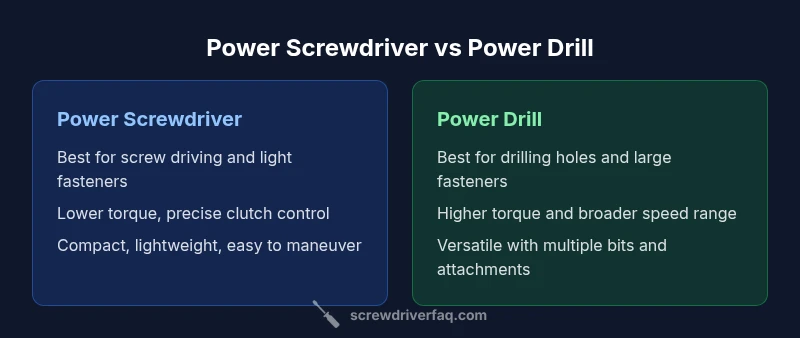
For many homeowners, the line between a power screwdriver and a power drill isn’t obvious at first glance. The two tools share a chassis, batteries, and a rotating bit, yet they are optimized for different tasks. According to Screwdriver FAQ, the key distinction lies in torque, chuck versatility, and speed control. A power screwdriver excels at rapid screwing with precise clutch control, while a power drill shines when you need to bore holes or drive larger fasteners. This section lays out the practical implications of that split so you can map tasks to the right tool and avoid forcing one tool to do the job of the other.
Why torque and control matter when choosing tools
Torque determines whether a screw drive ends cleanly without cam-out or stripping. A screwdriver typically provides lower, more consistent torque with a clutch that protects fasteners and material. A drill, by contrast, offers higher torque potential, which helps when drilling into wood, metal, or masonry with the appropriate bit. If you frequently drive long deck screws or work with soft woods, a tool with a reliable clutch will save time and reduce mistakes. For many DIYers, the trade-off is speed for control vs versatility for a wider range of tasks.
Chuck design and bit compatibility: the practical limits
The chuck is where the screwdriver and drill diverge most noticeably. A power screwdriver often uses a quick-change hex chuck or a dedicated bit holder optimized for screwdriver bits, which makes bit switching fast and convenient. A power drill commonly features a standard chuck (1/2" or 3/8") that accepts drill bits, spade bits, hole saws, and screwdriver bits when used with the appropriate attachments. If you expect to swap between small head screws and larger drill bits, plan for a drill with a robust chuck or invest in adaptors that maintain grip and concentricity.
Speed control and clutch: precision matters
Low RPM with a precise clutch helps prevent cam-out and damage to soft materials. A drill, however, often provides a wider range of speeds and a variable-speed trigger, which is essential for drilling different materials and for driving fasteners without overdriving them. For repeated screw-driving in cabinetry or furniture, you’ll benefit from a tool that offers smooth ramp-up and controlled torque. The right clutch settings protect both the workpiece and the bit, especially when working with hardwoods or aluminum.
Battery life and weight: comfort and endurance
Cordless tools balance power with portability. Lighter options reduce fatigue during long projects, but they may sacrifice torque and runtime. Heavier, high-torque drills deliver power for thick materials but can become tiresome in overhead work. Battery chemistry and capacity influence runtime; lithium-ion cells provide better weight-to-power ratios and faster charging. When comparing models, assess how weight and grip feel in your hand, particularly if you work at awkward angles or overhead.
One-tool vs two-tool approach: practical planning
If space, budget, and usage pattern permit, maintaining both tools is ideal for most DIYers. A versatile drill handles holes and large fasteners, while a screwdriver speeds up assembly tasks and livens up screwdriven projects. If you must choose one, prioritize a drill with adjustable torque, multiple speeds, and a high-quality clutch. You can often compensate with screwdriver bits and a light impact driver for some tasks, but the core differences persist.
Real-world tips: avoid common pitfalls
- Don’t use a drill bit in a screwdriver chuck; it won’t grip and may slip. - Use the clutch to prevent overtightening and damage. - When drilling into hard or dense materials, pause to clear debris and prevent stalling. - Invest in a few high-quality screwdriver bits and a compact bit set so you don’t need to swap constantly. - Regularly inspect batteries and replace worn-out packs to maintain consistent power.
What the data says about tool choices
While exact usage patterns vary, many DIYers report faster completion of screw-fastening tasks with a cordless screwdriver and higher versatility when using a cordless drill for mixed tasks. Screwdriver FAQ analyses emphasize matching tool capabilities to the predominant project type, rather than chasing the latest model. The aim is reliability, not novelty, especially for home projects that sit on a bench for months at a time.
Scenarios and task maps: quick guidance
- Light assembly (furniture, shelving): prefer a screwdriver or a drill with a low torque setting. - Framing or deck work: a drill with high torque and a broad bit range is more effective. - Tight spaces: a compact screwdriver with an adjustable clutch saves space and provides control. - Metalwork or masonry: you’ll usually need a drill with the right bit and drive settings, not a simple screwdriver.
Comparison
| Feature | Power screwdriver | Power drill |
|---|---|---|
| Primary use | Screw driving and light fasteners | Drilling and driving with larger bits |
| Torque range | Lower torque with clutch protection | Higher torque for holes and heavy fasteners |
| Chuck/bit system | 1/4" hex quick-change for fast screwdriver bits | 1/2" or 3/8" chuck for drill bits |
| Speed options | Controlled, lower speeds | Broader range incl. high speed |
| Weight | Light to moderate | Moderate to heavier depending on model |
| Battery type | Li-ion compact, long run not needed for heavy drilling | Li-ion, higher capacity and runtime |
| Price range | Lower to mid range | Mid to high range |
| Best for | Small fasteners, cabinetry, furniture assembly | General purpose drilling and driving, home improvements |
Pros
- Faster screw driving for small fasteners
- Compact and easy to maneuver in tight spaces
- Typically lower cost and lighter weight
- Simplified maintenance and fewer moving parts
Negatives
- Limited torque for heavy-duty drilling or large screws
- Chuck size restricts drilling bit options
- May require a separate bit set for versatile tasks
- Shorter runtime under heavy load on some models
Drill dominates for versatility; screwdriver excels in speed and control for screws
Choose a drill if you frequently drill holes and drive larger fasteners. Opt for a screwdriver when screwdriving is your primary task. For best results, consider owning both or a drill with strong torque and clutch control paired with a dedicated screwdriver set.
Quick Answers
Can I use a power screwdriver to drill holes?
Not effectively. A power screwdriver is optimized for screws and smaller fasteners and does not have the chuck or torque range for drilling larger holes. Use a drill with appropriate bits for any significant hole work and avoid forcing a screwdriver into drilling tasks.
A screwdriver isn’t meant for drilling. Use a drill for holes, and save the screwdriver for fasteners and assembly.
Should I buy one tool or two?
If you have the space and budget, two tools offer the broadest capability and efficiency. If you must pick one, a cordless drill with adjustable torque and a clutch is the most versatile option for many DIYers.
Two tools give you more flexibility, but one good drill can handle many tasks if it has adjustable torque.
What is a clutch on a power drill and why does it matter?
The clutch limits torque to prevent stripping or snapping screws and damaging the workpiece. A drill with a reliable clutch provides better control and reduces the chance of overtightening, especially with hardwoods and soft metals.
The clutch helps stop over-tightening and protects your work. Look for smooth, repeatable settings.
Can I upgrade a drill to include better screwdriving features?
Many modern drills include adjustable speed and torque presets that approximate screwdriver performance. For optimal screwdriving, pair the drill with a dedicated set of driver bits and consider a 2-speed gearbox for separate driving and drilling modes.
A good drill with adjustable settings can cover much of screwdriver work, but a dedicated bit set helps a lot.
What maintenance improves tool life?
Keep bits sharp, clean dust from the chuck area, lubricate moving parts per manufacturer guidance, and store tools in a dry place. Regular battery care extends life and performance.
Clean your bits, keep the chuck tidy, and charge batteries properly to extend tool life.
Are there safety considerations when switching bits?
Always unplug or remove the battery before changing bits. Use the correct bit type and size for the material, and ensure the workpiece is clamped to prevent movement.
Unplug the tool, pick the right bit, and clamp your work to stay safe.
The Essentials
- Identify your primary tasks: screws or holes
- Prioritize clutch control and torque for screws
- Seek a drill with adjustable speed and chuck compatibility
- Balance weight, comfort, and battery life
- Consider a two-tool approach for maximum flexibility