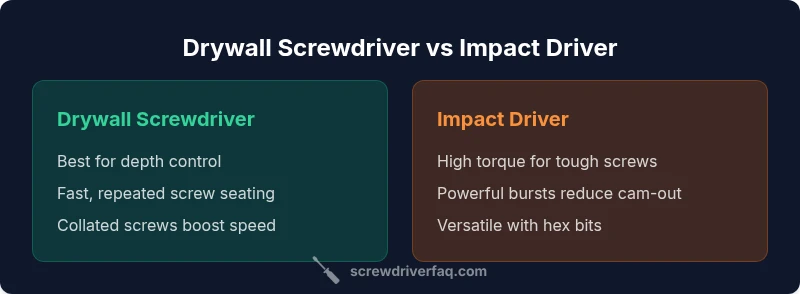
Drywall Screwdriver vs Impact Driver: A Practical Comparison
An analytical guide comparing drywall screwdriver vs impact driver: use cases, performance, and buying tips for efficient drywall installations. Learn when to choose each tool and how to maximize results.


For drywall projects, the choice often boils down to drywall screwdriver vs impact driver. According to Screwdriver FAQ, the drywall screwdriver excels at precise, rapid fastening of collated screws with controlled depth, while an impact driver offers higher torque for stubborn fasteners. In most installations, the drywall screwdriver provides speed and consistency; an impact driver is better for tougher materials or longer screws. Choose based on job scope.
Understanding the tools: drywall screwdriver vs impact driver
In the world of drywall installations, two tools dominate the fastener scene: the drywall screwdriver (often marketed as a drywall screw gun) and the modern impact driver. The drywall screwdriver is designed to drive screws quickly while keeping depth and seating consistent, a critical factor when hiding screws in gypsum board. The impact driver, by contrast, delivers rapid, high-torque bursts that can overcome friction and seating resistance, which is especially useful when working with hardwood studs or longer screws. For many DIYers and pros, the decision hinges on the trade-off between control and raw power. As noted by Screwdriver FAQ, the drywall screwdriver generally shines in speed and repeatable depth control for standard drywall work, while the impact driver excels in situations that demand high torque and versatility across materials. The goal is to pick the tool that minimizes rework, reduces wall damage, and keeps the project on schedule. When you first evaluate the drywall screwdriver vs impact driver, assess your typical projects, your preferred workflow, and how often you encounter dense materials or long screws. Consistency and speed tend to favor the drywall screwdriver in routine installations, but the impact driver remains invaluable for edge cases or more demanding tasks.
Design and mechanical differences that matter
The two tools diverge primarily in mechanism and control. A drywall screwdriver uses a clutch and regulated feed to seat screws with consistent depth, often paired with a collated screw magazine for rapid firing. This design prioritizes precision: you want the head to sit flush, not overdriven into the gypsum. An impact driver uses an impact mechanism that delivers bursts of torque, allowing it to drive screws with less pinching force and greater speed, but at the risk of overdriving or stripping if not controlled. The chuck and bit systems reflect this split: drywall screw guns typically use Phillips or star bits suited for drywall screws, with a focus on minimal wobble and steady seating; impact drivers rely on hex shank bits and quick-change chucks to swap fasteners quickly. The performance gap is visible in feel: a drywall screwdriver provides a steady, predictable bite, while an impact driver delivers a punchy, energetic feel that can surprise beginners. For DIYers learning the drywall screwdriver vs impact driver debate, understanding these core differences helps align tool choice with the task at hand and your comfort level with torque.
Scenarios where a drywall screwdriver shines
When you’re hanging standard gypsum board on wooden studs, a drywall screwdriver is often the faster, more forgiving choice. The key advantage is depth control: a calibrated clutch helps prevent overdriving screws, leaving the surface flush and ready for mudding. If you’re installing ceilings or overhead panels, the lighter, more controllable feel reduces fatigue and improves accuracy across many fasteners. Collated screws reduce hand fatigue and speed up the workflow, enabling consistent seating across a large sheet. Drywall screw guns also tend to be quieter and generate less rebound than high-torque drivers, which matters in finish work where delicate screw seating matters for a clean texture. In short, the drywall screwdriver is best for routine drywall work where uniform screw depth and speed are the priority, and where you want to maximize throughput without sacrificing finish.
Scenarios where an impact driver shines
The impact driver is your ally when projects demand more torque than a drywall screwdriver can comfortably provide. Longer screws, harder materials like dense studs or metal framing, or stubborn fasteners benefit from the bursts of torque that reduce cam-out and wear on bits. If you’re installing backing for heavy shelves, anchoring into masonry, or tackling unconventional studs, the impact driver’s power offers clear advantages. It also proves valuable when you need to drive screws in less-than-ideal conditions, such as in humid environments where wood compresses and screw seating can bind. However, this power comes with a trade-off: less precise depth control, greater risk of overdriving, and a steeper learning curve for avoiding wall damage. When comparing drywall screwdriver vs impact driver for these tasks, it’s common to keep both tools on site, using each for the specific job to optimize efficiency and minimize mistakes.
Techniques for optimal results with each tool
With a drywall screwdriver, begin by setting the depth stop and selecting the correct bit for drywall screws. Hold the tool steady, let the clutch take control, and feed screws in a smooth, continuous rhythm. Maintain a consistent pressure and let the tool do the work; avoid forcing screws or applying excessive downward force, which can damage the sheetrock. For an impact driver, choose a bit with a hex shank for quick changes, and start with moderate torque settings. Use short bursts to overcome resistance, then ease off to avoid overdriving. In both tools, correct screw length is essential: use screws that are long enough to bite into the stud without penetrating beyond the backside. Practice on a scrap panel to calibrate feel, depth, and bite before moving to an actual installation. Finally, always wear eye protection and follow your manufacturer’s depth and torque recommendations to protect the work and your tool.
Common mistakes and how to avoid them
Most common errors arise from misjudging depth, torque, or bit selection. The drywall screwdriver’s strength is its depth control, so override warnings are a frequent misstep when users push too hard or misinterpret the clutch setting. In an impact driver, beginners tend to push too long with too much torque, risking screw heads stripping or damage to surrounding material. A frequent pitfall is using the wrong bit: drywall screws require appropriate drywall bits or star bits, while impact drivers demand hex shank bits designed for high torque. Another misstep is failing to align screws properly; crooked screws can compromise the finish layer and require retaping and mudding. To avoid these issues, use depth stops, select the correct bit for the fastener, practice on scrap material, and adopt a deliberate, controlled workflow. Keeping your work area clean and your bits sharp also reduces resistance and improves results.
Budgeting, buying tips, and value
When evaluating drywall screwdriver vs impact driver, consider both upfront and long-term value. Budget models may start in a lower price range but often come with limited battery life and fewer features, while mid-range and premium options deliver longer life, better ergonomics, and smarter torque control. For purchasing strategy, think in tiers: a reliable drywall screwdriver in the mid-range for routine walls and a solid impact driver in the mid-to-high range for heavy-duty or dense materials. Look for features like adjustable depth control, a comfortable grip, and compatibility with common screw sizes. If you’re a homeowner tackling occasional projects, a high-quality drywall screwdriver may be sufficient; for frequent remodeling or professional work, an impact driver expands your capabilities. Remember to factor in batteries, chargers, and bits in your total cost and to evaluate tool compatibility with existing kits.
Maintenance and safety considerations
Maintenance extends tool life and safety. Regularly inspect the depth stop and clutch settings on the drywall screwdriver, and clean the bit shanks to prevent jamming. For impact drivers, ensure the battery is well charged, inspect the chuck, and use clean, sharp bits designed for high torque. Store bits in a dry environment to prevent rust, and keep the magazines or bit holders clear to avoid feed jams. Safety matters: always wear eye protection, secure workpieces, and keep hands clear of the fastener path. Use dust masks where appropriate to minimize drywall dust exposure. Finally, follow the manufacturer’s guidelines for lubrication, maintenance intervals, and replacement of worn parts to maintain consistent performance over time.
Real-world testing and field notes
In practice, most DIYers find the drywall screwdriver vs impact driver debate settles in favor of the drywall screwdriver for standard drywall installs, thanks to predictable depth control and rapid, repeated seating. However, when density increases or screws lengthen, the impact driver becomes indispensable. Field notes emphasize preparing a mixed toolkit: a reliable drywall screwdriver for the bulk of work and an impact driver as a backup for challenging sections. This approach minimizes mistakes and maximizes efficiency while keeping your finish clean and professional-looking. For many projects, the best solution is to switch between tools as needed rather than forcing one tool to do everything. The key is to understand your typical job profile and to tailor your equipment to that workflow.
Comparison
| Feature | Drywall Screwdriver | Impact Driver |
|---|---|---|
| Best Use | Fast, precise drywall screw seating with depth control | High-torque driving for long screws and tough materials |
| Power/Torque Profile | Low-to-moderate torque with controlled bite | High torque bursts for quick fastening |
| Drive Method | Clutch-based seating with consistent depth | Impact bursts reduce resistance and cam-out |
| Bit/Drive System | Drywall bits, typically Phillips/star with screw guns | Hex shank bits and quick-change chuck |
| Best For | Standard drywall installation and overhead work | Dense materials, long screws, and awkward angles |
| Cost/Value Perception | Generally optimized for speed and precision; mid-range options common | Versatile but can be pricier; requires power source |
Pros
- Faster installation for standard drywall tasks
- Excellent depth control for flush screw seating
- Ergonomic designs reduce fatigue over long sessions
- Reduced wall damage due to controlled seating
Negatives
- Less versatile for heavy-duty fasteners
- Higher upfront cost for dedicated drywall guns
- Overdriving risk with aggressive settings
- Requires magazines or proper storage for quick reloads
Drywall screwdriver is the better default for most drywall installations; the impact driver excels in tough, long-screw scenarios.
Choose the drywall screwdriver for speed and precise depth. Use the impact driver for density, long screws, or harder materials to maximize efficiency and minimize effort.
Quick Answers
Can I use an impact driver for drywall installation?
Yes, but it's best reserved for dense studs or longer screws. It can drive quickly but may overdrive or damage delicate drywall if not controlled. Use a separate drywall screwdriver for routine panels to maintain finish quality.
Yes, you can use an impact driver for drywall, especially for dense studs or long screws, but be careful to control torque to prevent overdriving.
What is a drywall screwdriver best used for?
The drywall screwdriver excels at fast, precise seating of collated screws with consistent depth. It’s ideal for standard drywall installations where finish quality and speed matter.
Best used for fast, precise screw seating with consistent depth in standard drywall installs.
Are drywall screw guns cordless?
Many drywall screw guns are available in cordless formats, often with battery-powered operation for mobility. Some models are pneumatic or corded, depending on the work site and preferred workflow.
Yes, you’ll find cordless drywall guns, though some models are pneumatic or corded depending on the setup.
What bits work best with drywall screwdrivers?
Use bits designed for drywall screws, typically Phillips or star bits compatible with the screw type. Ensure bits are sharp and properly seated to prevent cam-out and ensure flush seating.
Choose Phillips or star bits designed for drywall screws, kept sharp and properly seated.
Should I own both tools or just one?
For most homeowners and DIYers, owning both is ideal. The drywall screwdriver handles routine installs, while the impact driver covers tough spots and longer screws. If you must pick one, start with a reliable drywall screwdriver and add an impact driver as needed.
Generally, it’s best to have both: the drywall screwdriver for routine work and an impact driver for tougher tasks.
How can I avoid damaging drywall with these tools?
Set depth controls correctly, use appropriate bits, and practice on scrap panels. Start with lower torque settings on an impact driver and ensure the screw isn’t driven too deep. Maintain steady pressure and align the screw head with the drywall surface.
Set depth, use the right bits, practice on scrap, and start with low torque to avoid overdriving.
The Essentials
- Prioritize depth control with drywall screws for clean finishes
- Use an impact driver for density and longer screws
- Switch tools based on task complexity to save time
- Maintain proper bits and depth settings to avoid damage
- Practice safe handling and routine maintenance