Why is My Screwdriver Stripping Screws? A Practical Troubleshooting Guide
Learn why screwdrivers strip screws and how to fix it fast. This guide covers common causes, step-by-step fixes, prevention tips, and safety notes for DIYers and homeowners.


The most common reason screws strip is a poorly fitting or dull screwdriver tip that cam-outs the head. Quick fixes: (1) switch to the correct size and type for the screw (Phillips, square, or Torx) and ensure the bit seats fully; (2) apply steady, straight pressure; (3) back out damaged screws or drill and replace if needed.
Why Do Screws Strip? Causes and Mechanics
According to Screwdriver FAQ, stripping happens most often when the driver tip does not properly fit the screw head, causing cam-out and wear. A dull or worn tip will slip out of the recess under load, rounding the head instead of turning it. Mis-sized bits, cross-threading, and using the wrong drive type (Phillips vs. Pozidriv vs. Torx) amplify the problem. Temperature, material hardness, and lack of lubrication can also contribute. Recognizing cam-out — the bit skipping and the head becoming deformed — is the first step to choosing the right fix. With the right bit and controlled pressure, you can prevent further damage and regain control of the fastener.
This section sets the stage for practical fixes you can apply immediately, without specialized tools. By understanding the underlying causes, you’ll learn how to select the correct tip, reduce torque needed, and avoid repeating the same mistakes in future projects.
Quick Checks Before You Turn
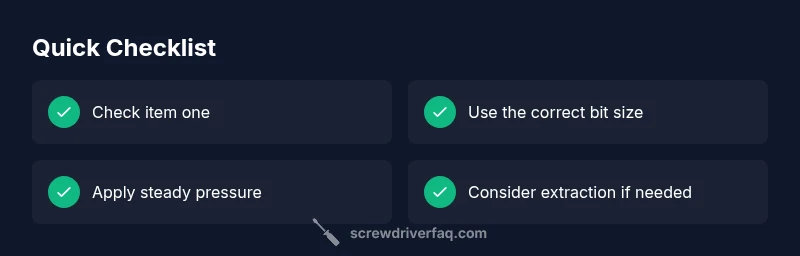
Before you twist again, run through a quick checklist to ensure you’re using the right approach. First, confirm the screw head type and size matches your screwdriver bit. Second, inspect the head for wear, rust, or missing portions. Third, assess the material into which you’re driving (wood, metal, or plastic) and whether you need a pilot hole or lubricant. Fourth, test the bit on a spare screw to verify fit. Fifth, ensure your work surface is stable and you’re applying straight, downward pressure. If the screw still resists, switch to a fresh bit with a different drive type if necessary, and consider lubrication or penetrating oil for rusty fasteners. Finally, avoid using power tools without proper torque control on delicate materials.
By following these checks, you can reduce cam-out risk and improve your odds of removing or driving screws cleanly.
Common Culprits in Your Toolbox
A wide range of everyday issues can cause stripping. A dull or nicked tip will not bite into the screw head, especially on Phillips or Pozidriv heads. Using the wrong size bit is a frequent offender; a bit that’s too small won’t seat deeply, while a bit that’s too large will skip and slip. Worn-out bits or damaged screw heads exacerbate the problem, as do rusted or painted-over screws that resist a clean bite. Tools vary in quality, and low-torque power drivers can over-torque a fastener if clutch settings are not adjusted. Finally, materials that are hard or dense require slower feeding and sometimes pilot holes to prevent cam-out. Regular maintenance — keeping bits sharp, cleaning heads, and using the appropriate bit for each screw type — dramatically reduces stripping.
Diagnostic Flow Overview (For Readers Who Want a Quick Path)
Symptom-driven checks help you quickly diagnose the root cause. Start with bit fit and head wear, then verify size and drive type, examine the screw head’s condition, and assess material hardness. If necessary, escalate to extraction tools or heat/penetrating oil for rust, and reserve drilling or screw removal as a last resort. This structured approach minimizes damage and leads to repeatable, reliable results.
Step-By-Step Fixes for Stripped Screws (Overview)
When a screw strips, you have several routes depending on the damage level. First, restore bite by replacing the bit and reseating fully. If the head is still damaged, consider using a screw extractor or drilling a pilot to remove the fastener. For stubborn corrosion or paint, apply a rust penetrant and wait a few minutes before retrying. Last, replace the screw with a fresh one, ideally prepped with a pilot hole in soft materials. The following STEP-BY-STEP section expands on these methods with actionable steps and tips.
Steps
Estimated time: 30-45 minutes
- 1
Assess the head and bit
Visually inspect the screw head for wear, rust, or damage. Check that your bit matches the screw type and size, and sit it firmly in the head. If the fit is poor, replace the bit.
Tip: Choose the smallest bit that fully seats to avoid unnecessary stripping. - 2
Seating and alignment
Position the driver squarely in the screw head and apply steady downward pressure before turning. Avoid wiggling or tilting the bit as this causes cam-out.
Tip: Clamp the workpiece or hold it firmly to prevent movement. - 3
First turn and test
Lightly attempt a turn to gauge bite. If the head starts to strip, stop and switch to a different bit or apply a penetrating oil if the head is corroded.
Tip: If the screw doesn’t bite after one attempt, don’t keep forcing it. - 4
Back out or remove
If the screw backs out, continue with moderate torque until fully removed. If it resists, move to extraction or drilling methods.
Tip: Turn counterclockwise slowly; rapid movement increases risk of head breakage. - 5
Repair or replace
Once removed, assess the hole and surface. Pre-drill a pilot hole for the replacement screw in hard materials and use a fresh screw to prevent re-stripping.
Tip: Use appropriate pilot hole size for the material to minimize future stripping. - 6
Post-fix check
Inspect the surrounding area for damage and ensure the new screw seats flush. Confirm proper torque with a manual driver or clutch-controlled drill.
Tip: Document your process to improve future projects.
Diagnosis: Screw head strips or cam-outs during turning
Possible Causes
- highDull or worn screwdriver tip not fitting screw head
- highUsing the wrong bit size or drive type for the screw
- mediumExcessive torque or twisting while driving
- lowCorroded, painted, or damaged screw head
Fixes
- easyReplace with a sharp, properly sized bit and ensure it seats fully in the head
- easyApply steady, straight pressure and avoid side-to-side twisting; test with a spare screw
- easyLubricate rusty screws or use a penetrating oil; let sit before reattempting
- hardIf head is damaged, use a screw extractor or drill out a small pilot and replace the screw
Quick Answers
Why does a Phillips screwdriver strip the screw head?
Phillips screws strip when the bit doesn’t fit the head correctly or the bit is worn, causing the corners to cam-out. Replacing with a properly sized bit and applying steady pressure usually fixes the problem.
A worn or wrong-sized Phillips bit causes cam-out and stripping; use the right bit and steady pressure to fix it.
Can I fix a stripped screw without using power tools?
Yes. Start with a manual screwdriver that matches the head, apply firm, straight pressure, and try to back out slowly. If it won’t budge, switch to an extraction method or drilling with care.
You can fix it by hand with the correct bit and careful pressure; if needed, use extraction tools.
What should I do if the screw head is already damaged?
If the head is damaged, you may need a screw extractor or to drill a small pilot to remove the screw. Once out, replace the fastener with a new one and consider pre-drilling for a smoother fix.
Use a screw extractor or drill out the damaged screw, then replace it with a new one.
Is penetrating oil a good solution for corrosion?
Penetrating oil can loosen rusted screws; apply and wait a few minutes before retrying. Do not force if the head continues to strip.
Penetrating oil helps with rusted screws; wait a few minutes and retry instead of forcing.
Should I pre-drill pilot holes to prevent stripping?
Yes, for hardwoods or hard materials, pre-drilling a pilot hole reduces resistance and minimizes stripping. Pair with a correctly sized bit for best results.
Pre-drill pilot holes for hard materials to prevent stripping.
Watch Video
The Essentials
- Match bit to screw head size and type
- Avoid excessive torque and cam-out with steady pressure
- Use extraction or drilling only as last resort
- Prevention saves time and material