Williams Screwdriver vs Snap-On: A Practical Comparison
An objective Williams screwdriver vs Snap-On comparison covering build quality, grip, bit compatibility, durability, and value to help DIY enthusiasts choose the tool.


Bottom line: Williams screwdrivers deliver solid value for home projects, while Snap-On offers premium, pro-grade quality. If you prioritize affordability and decent durability for casual tasks, Williams is a strong choice. If you need top-tier ergonomics, longer life, and a dealer network for service, Snap-On justifies the higher price. Consider your budget and scope.
Brand Landscape and User Needs
According to Screwdriver FAQ, the landscape for household and professional use tools often hinges on balancing upfront cost with long-term reliability. Williams screwdriver lines typically target value-conscious DIYers and hobbyists who want dependable performance without the premium sticker shock. Snap-On, by contrast, positions itself as a premium brand favored by professionals who demand consistency under heavy daily use. The choice between these brands usually comes down to how often you use the tools, the environments in which you work, and how much you’re willing to invest upfront for potential long-term gains. For beginners, Williams offers a lower-entry path to quality, while seasoned technicians may gravitate toward Snap-On for the guaranteed service network and extended warranties. This section will explore how client needs map to brand traits and why a calibrated evaluation matters for a given toolbox.
Key Evaluation Criteria for Screwdrivers
When reviewing Williams versus Snap-On, several criteria consistently determine long-term satisfaction. Build quality and material selection affect durability and tip retention; ergonomics influence comfort during extended sessions; bit systems determine interchangeability and availability; warranty terms and service networks help protect your investment; and price/value balance guides whether the tool remains a hobby accessory or a core daily driver. The Screwdriver FAQ team recommends weighing each criterion against your typical tasks—quick fix jobs versus routine cabinet assembly—and testing a couple of handles if possible. A clear framework helps DIYers avoid buyer’s remorse and ensures you’re buying for how you work.
Williams Brand Overview: Strengths and Limitations
Williams screwdrivers are known for delivering solid value without the premium price tag. In practice, builders and homeowners often cite reliable performance in light- to medium-duty tasks such as furniture assembly, electronics openings, and general fastener work. The grip geometry tends to be comfortable for most hands, and the available tip profiles cover the frequent Phillips and flathead needs, along with a handful of specialty sizes. However, compared with premium brands, Williams may show less long-term resistance to corrosion, slightly more wear on tips, and a shorter service life under intense professional workloads. For budget-focused projects, Williams is typically a smart first choice.
Snap-On Brand Overview: Strengths and Limitations
Snap-On emphasizes premium materials, precise manufacturing, and a robust service network. In professional settings, their screwdrivers are prized for consistency, comfortable ergonomics, and broad tip selections that support specialized tasks in automotive, manufacturing, and maintenance contexts. The brand’s higher price point reflects not just the tool itself but the dealer ecosystem, warranty commitments, and the potential for easier access to replacements or service. On the downside, the cost can be a significant barrier for homeowners or casual users who don’t require pro-grade performance every day. This section outlines when the Snap-On experience makes sense.
Build Quality and Materials: Steel, Handles, and Finishes
The core of any good screwdriver is the steel and the handle. Williams typically use mid-range chrome-vanadium or similar alloys with painted or plated finishes that resist everyday wear, but may not match the life cycle of premium steels. Snap-On often employs higher-grade alloys and polished finishes designed to reduce galling and increase tip life. Handle geometry tends to favor percussive grip and fatigue resistance across extended sessions. In practice, this translates to better tip retention and a smoother feel in the hand for Snap-On. Materials choices also influence corrosion resistance, which matters for tools stored in damp basements or garages.
Ergonomics and Grip Design: Comfort, Control, and Fatigue
Grip design matters more than many appreciate. Williams typically uses a classic, non-contoured profile that suits a broad range of hand sizes, offering predictable feedback and a secure feel in dry conditions. Snap-On emphasizes ergonomics with contoured, rubberized, or composite grips that aim to reduce hand fatigue after hours of use. The influence on control is tangible: higher-end grips can translate to better torque transfer and more precise placement of fasteners. For users with larger hands or those working overhead, the Snap-On grip often feels more natural, though the difference may be subtle unless you’re comparing side by side.
Bit Systems, Interchangeability, and Availability
Interchangeability is a key planning factor for tool users who own multiple bits. Williams’s bit sets cover common profiles (PH, SL, flathead) with a broad range of sizes, balancing variety and cost. Snap-On typically offers a wider array of specialty tips and a more integrated bit system that can simplify stocking and compatibility across different handles and drives. Availability through official channels means easy replacement, but it can also translate to higher prices for individual bits. If you depend on a full ecosystem of bits, Snap-On’s range often provides more options for specialized tasks.
Durability, Lifetime Value, and Maintenance
Durability is a function of both materials and how the tool is treated. Williams tools hold up well for home use and light shop tasks, but they may show greater wear after frequent, heavy use in demanding environments. Snap-On tools tend to withstand tougher daily use thanks to premium alloys, stronger finishes, and refined manufacturing. Maintenance—such as keeping blades clean, dry, and lightly oiled—extends life for both brands, though premium tools often benefit more noticeably from proactive care. In terms of lifetime value, Snap-On’s higher upfront cost can be justified if the tool outlives cheaper options and reduces downtime in a busy workshop.
Price, Value, and Budget Scenarios
Price is a major deciding factor. Williams lies in the mid-range, offering a favorable balance of cost and performance for DIYers who want reliability without premium pricing. Snap-On sits at the higher end of the market, reflecting the brand’s pro-focused positioning and service network. For a homeowner performing occasional tasks, Williams usually delivers adequate value with less financial commitment. In a professional shop with daily use, Snap-On’s durability and service footprint can justify the expense. The Screwdriver FAQ analysis shows that the best choice is often the one that fits your budget while meeting task requirements rather than chasing prestige.
Real-World Use Cases: Home Shop versus Pro Shop
Consider a typical home workshop: a few projects per month, modest torque needs, and a priority on cost control. Williams can handle most fastener tasks without requiring the user to invest in premium tools. Now imagine a pro shop with heavy assembly lines, multiple technicians, and strict uptime requirements. Snap-On’s toolkit integration, consistent build, and robust warranty become more valuable, reducing downtime and replacement frequencies. The decision is not a simple “good or bad” verdict; it’s about aligning the tool’s capabilities with your workflow, storage space, and maintenance habits.
How to Choose: Quick Start Checklist
- Define your typical projects (home DIY vs professional daily work).
- Consider the number of tip profiles you need and whether you value a broader ecosystem.
- Assess budget constraints and the importance of dealer support.
- Try a few handles if possible to gauge comfort and control.
- Look at warranty coverage and service options in your region.
- Evaluate overall value by factoring potential replacement costs over time.
Care and Maintenance to Extend Life
Store screwdrivers in a dry, organized space to minimize corrosion risk. After use, wipe blades clean and lightly oil the metal portions to reduce rust. Inspect handles for cracks and replace any tool showing significant wear. Periodically test tip fitment and ensure bits are aligned properly in the drive. Regular maintenance reduces fatigue and promotes consistent performance for both Williams and Snap-On tools.
Comparison
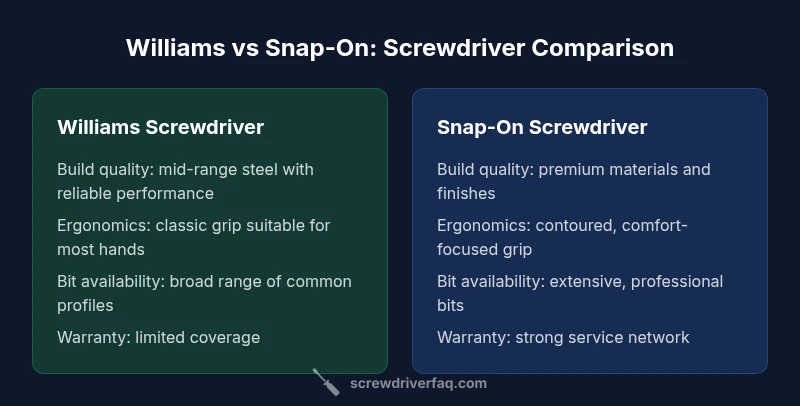
| Feature | Williams screwdriver | Snap-On screwdriver |
|---|---|---|
| Brand positioning | value-focused/mid-range | premium/pro-grade |
| Typical use case | home DIY, light to medium tasks | professional shop, high-usage environments |
| Handle ergonomics | classic, comfortable for most hands | contoured, rubberized grips for fatigue reduction |
| Bit availability | broad range of common bits | extensive, specialty and standardized bits |
| Materials/finish | mid-range steel with reliable performance | high-grade alloys and polished finishes |
| Warranty/service | limited coverage, dealer options | strong service network and guarantees |
Pros
- Williams offers strong value for budget-conscious DIYers
- Snap-On delivers premium build quality and better ergonomics
- Good availability of common tip profiles in both brands
- Solid support and warranty options for Snap-On in many markets
Negatives
- Williams may wear faster under heavy daily use
- Snap-On can be substantially more expensive for casual users
- Limited ecosystem depth for Williams compared to premium brands
Williams is the better all-around value for home use; Snap-On excels for pros who demand premium build and service.
For home projects, Williams balances cost and performance. For professional environments, Snap-On offers durability, comfort, and a broad service network that can justify the higher price.
Quick Answers
Which screwdriver is better for a home workshop, Williams or Snap-On?
For most home projects, Williams offers the best balance of cost and performance. Snap-On is preferred when you regularly work in demanding environments and want premium ergonomics and warranty support. Your choice should reflect usage frequency and budget.
For most home workshops, Williams delivers value. If you’re in a demanding professional setting, consider Snap-On for durability and service.
Do Williams screwdriver bits fit Snap-On handles?
Bit fit isn’t guaranteed across brands. Check the drive size and interface compatibility for each model. In general, Williams and Snap-On use different bit systems, so interoperability is not assumed.
Bits aren’t always interchangeable between Williams and Snap-On; verify drive size before mixing tools.
Are Williams screwdrivers covered by a warranty?
Williams tools typically include a limited warranty, with terms varying by line and region. Check the manufacturer’s policy for the item you buy and keep receipts for service requests.
Williams usually offers a limited warranty; review policy and keep your receipt for service claims.
What features matter most for ergonomic comfort?
Grip shape, handle material, and overall weight distribution affect comfort. Contoured, non-slip handles reduce fatigue and improve control during long sessions, especially when applying torque.
Look for contoured, non-slip handles for better comfort and control.
How can I extend the life of a screwdriver?
Keep blades clean and dry, oil metal surfaces lightly, and store tools in a dry space. Inspect for cracks or worn tips and replace as needed to maintain performance.
Store clean and dry, oil lightly, and replace worn tips when needed.
The Essentials
- Choose Williams for budget-friendly reliability.
- Opt for Snap-On when you need premium feel and long-term durability.
- Assess bit availability and dealer support in your region.
- Match tool choice to your typical tasks and workload.