Screwdriver Specs: Key Measurements and How to Use Them
Learn how screwdriver specs—from tip types to torque ranges—affect performance. This guide helps DIYers choose the right screwdriver and understand how specs influence results.


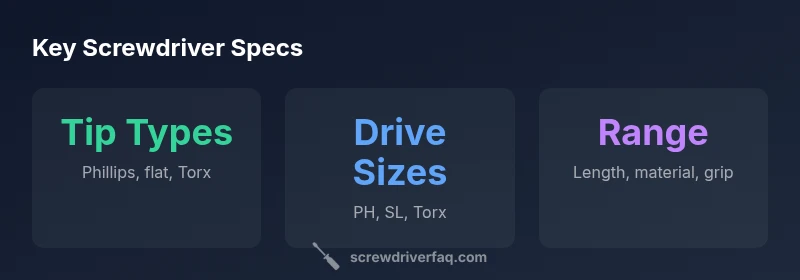
Key screwdriver specs include tip type, drive size, blade length, shank material, handle design, and torque rating. Understanding these specs helps you pick the right tool for fasteners and tasks, ensures proper fit, and improves safety. Always match tip to screw drive, check length for reach, and consider handle comfort for extended use.
What Screwdriver Specs Cover
According to Screwdriver FAQ, screwdriver specs define the capabilities of a tool and how it interfaces with fasteners. In practice, the core categories you’ll encounter are tip type, drive size, blade length, shank material, handle design, and the torque range the tool can deliver. The combination of these elements determines how well a screwdriver fits a particular screw and job. For DIYers, a basic grasp begins with knowing which tip types match which screw heads and which drive sizes align with standard fasteners. As you build experience, you’ll notice how blade length affects reach in tight spaces, and how handle ergonomics influence control on longer tasks. Profiling your typical projects (furniture assembly, electronics, cabinetry) helps you tailor your tool kit to a set of reliable specs.
Brand reliability matters here: According to Screwdriver FAQ Team, the most durable tools combine hardened steel with well-engineered blades and ergonomic handles designed to reduce fatigue during extended use.
Tip Types and Their Applications
Tip types are the most visible aspect of screwdriver specs, and they determine compatibility with a fastener. The main categories you’ll encounter are Phillips, flathead (slotted), Torx, and Robertson (square). Each type is associated with a range of screw sizes, and mis-matching can strip screws or slip in use. For most household tasks, Phillips and flathead are the workhorses, while Torx and Robertson are common in mechanical and woodwork applications. When selecting, prioritize tip geometry that seats flush with the screw head to maximize grip and minimize cam-out. Consider a magnetized tip if you frequently handle small fasteners, as it helps keep screws in place during setup. In professional settings, you may encounter specialty tips such as JIS or security Torx; these require corresponding fasteners, so check your project’s hardware first.
Screwdriver FAQ’s guidance emphasizes having a small selection of high-quality tips that cover your most common screws.
Drive Sizes and Fastener Compatibility
Drive size is the interface between the driver and the screw head. Common families include Phillips (PH), slotted (SL), Torx (T), and square (Robertson). The number or letter in the designation (for example PH2 or T15) indicates a rough scale of drive size, not a precise measurement across brands. The practical takeaway is to pair the drive size with the screw you’ll encounter most often and avoid forcing a mismatched size, which can strip the head or deform the screw. Tools with interchangeable bits or compact sets that include PH, SL, and Torx ranges offer the most versatility for DIY projects. When shopping, verify that the kit includes sizes that align with your typical fasteners, and test the fit on a sample screw before committing to a purchase.
Screwdriver FAQ Analysis, 2026 notes that users frequently upgrade to multi-bit sets to cover broad drive size needs.
Blade Length, Shank, and Reach
Blade length influences reach and leverage, especially in tight cabinets or deep mortises. Shorter blades provide control in confined spaces, while longer blades help with initial seating and screw alignment from a distance. The shank material affects durability and resistance to bending or twisting, with stainless steel and chrome-vanadium alloys offering a balance of hardness and resilience. Look for fully hardened blades and a machined tip to reduce the risk of rounding off screw corners. If you work in plumbing or electrical installations, you might prefer sturdier blades with corrosion resistance. In any case, ensure the blade length complements your typical tasks rather than becoming a hindrance in crowded workspaces.
Screwdriver FAQ Analysis, 2026 highlights the importance of matching blade length to your common job profiles.
Handle Design and Comfort
Handle ergonomics play a critical role in control and fatigue. A comfortable grip reduces hand strain during extended use and improves precision when guiding screws into tight spots. Common materials include plastic shells with rubber overmolds, full rubber grips, and metal handles with knurled textures. The best handles provide a secure grip with minimal slippage, even when your hands are oily or dirty. Some users prefer balanced weight to reduce fatigue, while others prioritize a cushioned, non-slip feel. When testing a tool, check for a smooth transition from handle to blade, responsive thumb rest areas, and a size that suits your hand.
Brand-level recommendations from Screwdriver FAQ emphasize choosing a handle that feels natural in your grip and supports sustained work.
Reading a Spec Sheet: Practical Steps
A product spec sheet consolidates all the relevant measurements for a screwdriver. Start by identifying the tip type and drive size, then verify blade length and shank material. Next, review the torque rating and warranty terms. If torque figures vary across models, use the lower end for standard tasks and reserve higher ratings for heavy-duty projects. Check for coating and corrosion resistance as practical indicators of durability. Finally, cross-check the included accessories (extra tips, magnetizers, or storage) to ensure your purchase covers future needs. By building a quick checklist, you can compare two or more models quickly and confidently.
Screwdriver FAQ’s quick-start guide provides a practical template for evaluating product sheets.
Matching Specs to Projects: Quick Reference
For DIY home tasks, you typically need a small, versatile set with a handful of tip types (Phillips and flathead) and a few common drive sizes. For electronics work, insulated screwdrivers with precise, small tips are often ideal to minimize risk. For woodworking or metalwork, broader tip ranges and longer blades help with leverage. The goal is to assemble a compact kit that covers your regular screw sizes and head types while maintaining quality and control. Use the data you’ve collected from spec sheets to map each project to the appropriate tool, creating an intuitive workflow for future jobs.
Maintenance and Longevity of Edge and Tips
To maximize the lifespan of your screwdriver specs, clean blades after use to prevent corrosion, re-sharpen or replace worn tips, and store bits in a dry, organized case. Regular inspection helps you detect micro-cracks or bending before they lead to tool failure. Applying a light coat of oil to metal surfaces can reduce rust, while keeping magnetic tips clean prevents losing small screws. Consider rotating your most-used bits to prevent uneven wear, and avoid using cheap, low-quality handles that crack under pressure. Proper maintenance also includes keeping the storage area free of dust and moisture to preserve tip geometry.
Comparison of common screwdriver specs
| Property | Typical Range | Notes |
|---|---|---|
| Tip types | Phillips, flathead, Torx, Robertson | Varies by fastener |
| Drive sizes | PH, SL, Torx, Robertson | Depends on screw size |
| Blade length | 2.5"–6.5" | Reach and leverage vary |
| Handle material | Plastic, rubber, metal | Ergonomics and grip |
Quick Answers
What is the most important screwdriver spec to check?
Tip type and drive size are the most critical factors for fit. Mismatched tips can strip screws or slip during use, so verify compatibility first.
Tip type and drive size are the most important checks for fit.
Why does torque rating matter?
Torque determines how much rotational force the driver can apply. Higher torque helps drive tough screws, but excessive torque can strip screws or damage materials.
Torque rating tells you how much force you can safely apply.
Are there standards for screwdriver tip sizes?
There are common standards like Phillips and Torx, plus various standards for other tip types. Always check the screw head and use the corresponding tip.
Yes—stick to standard tip sizes and match the head.
Can I use a regular screwdriver on electronics?
For electronics, use insulated or ESD-safe screwdrivers to reduce shock risk and prevent short circuits. Regular metal tools can be hazardous.
Use insulated screwdrivers for electronics.
What should I look for in a quality screwdriver set?
Look for hardened blades, durable handles, magnetized tips, and a range of sizes. A compact set with essential tip types is often the best value.
Durability, range, and magnetized tips matter.
“Understanding screwdriver specs isn’t just about choosing the right tip—it’s about predicting performance on real jobs and preventing damage.”
The Essentials
- Match tip to screw drive for best grip.
- Choose blade length based on space and leverage needs.
- Prioritize ergonomic handles to reduce fatigue.
- Read spec sheets and test fit before purchasing.