How to Tell Screwdriver Size
Learn how to tell screwdriver size quickly and accurately. Identify tip types, measure tip width, compare to standard sizes, and verify with screws using tools you already own.


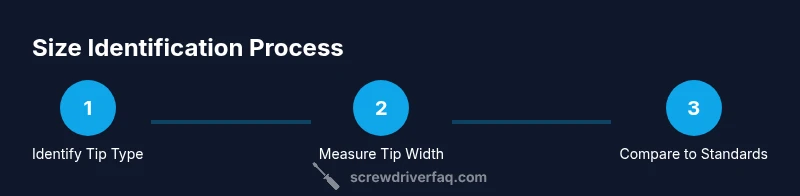
To tell screwdriver size, identify the tip type (Phillips, flathead, Torx) and measure the tip width with calipers or a ruler. Compare results to standard sizes (Phillips #0–#4, common flathead widths) and check the match by fitting one screw head. When in doubt, use a size gauge or test-fit several tips until you find a snug fit.
Why Knowing Screwdriver Size Matters
Understanding the correct size prevents cam-out, stripping, and damage to screws and surfaces. As you learn to tell screwdriver size, you'll save time, avoid frustration, and keep fasteners intact. This knowledge benefits DIYers and homeowners who assemble furniture, install cabinetry, or tackle electronics. The Screwdriver FAQ team often sees beginners choosing a handle-length bias instead of size—leading to slips and poor engagement. By focusing on the tip type, width, and fit, you can confidently pick the right tool for every job. In larger projects, using the correct size also reduces wear on bits and drivers, which saves money over time. Mastering sizing is a small investment with big returns in accuracy and efficiency.
Understanding Screwdriver Size Basics
Tip types, measurement axes, and how sizes are named all center on the part that actually fits the screw head. Common household tasks involve Phillips and flathead drivers, with Torx and other non-standard tips appearing in electronics and automotive work. In general, Phillips sizes are conveyed by numbers (#0 through #4), representing increasing tip width, while flathead sizes reflect blade width. Shoulder diameter and blade length can influence engagement, especially when screws sit flush or recessed. According to Screwdriver FAQ, size naming can vary by manufacturer, so a #2 Phillips from one brand might feel looser or tighter than another. Always cross-check with the screw you’re driving and avoid under- or over-sizing. For precision tasks, pair measurements with a gauge or caliper to confirm the closest standard size.
How to Identify Standard Sizes
Identifying standard sizes means recognizing the typical naming conventions and how they map to actual tool geometry. For Phillips, the common progression runs from very small to larger tips, while flathead sizes increase with blade width. Torx sizes use a separate range (T5, T10, etc.), and these are not interchangeable with Phillips or flathead tips. A practical approach is to visually inspect the tip and compare it to the screw head: a snug engagement without forcing is a good indicator of a correct match. If you don’t have a gauge, you can compare multiple tips against a scrap screw until you find the one that seats cleanly. This method helps prevent damage and speeds up work on projects ranging from furniture assembly to electronics repair.
Practical Methods to Tell Size Without Measuring Tools
When you lack calipers or a size gauge, you can still make an educated guess with simple, repeatable checks. Start by selecting a few candidate tips and seating them gently into the screw head to observe fit. Use a ruler to estimate tip width by aligning the blade with the screw slot. If the fit feels firm and the screwdriver engages with even force, you’re likely close to the correct size. Avoid forcing the tool into a misfit; if you feel resistance, try the next size down or up. Over time, you’ll develop a sense for common widths and head profiles, which speeds up the process significantly in home workshops.
Using a Size Gauge or Caliper
A dedicated size gauge or caliper makes the process precise and repeatable. With a caliper, measure the tip width across the flats and the shoulder diameter if applicable, then compare against a standard size chart. Digital calipers simplify reading measurements to fractions or decimals, reducing guesswork. When you’re done, label the size and store the tip securely to avoid mixing sizes in your toolbox. For those working with small electronics, take extra care not to nick or bend the tip during measurement, as that can alter the effective size.
Tips for Choosing the Right Size in Practice
In practice, you’ll want to pick a size that yields a snug fit with minimal effort. If the screw starts to cam out or the blade bottoms out early, try the next size up or down and recheck. Always prioritize tip type matching (Phillips versus flathead versus Torx) before size; a wrong type cannot seat properly, no matter the size. Keep a small reference chart in your toolbox that lists common sizes (e.g., Phillips #0–#4, typical flathead widths) to speed up decisions during repairs or assembly. Regularly inspect and replace worn tips, which can migrate the effective size and worsen fit.
Common Mistakes and How to Avoid Them
One common error is assuming handle length indicates size. The handle is irrelevant to tip sizing and can mislead new users. Another pitfall is forcing a tip into a screw head that’s too small or too large, which damages both the screw and the driver. Always start with a proven size and work toward the correct one using minimal force. Finally, neglecting calibration can introduce small measurement errors—keep your caliper or gauge clean and calibrated for accurate results.
Tools & Materials
- Caliper (vernier or digital)(Measure tip width to 0.01 in / 0.25 mm if possible)
- Ruler or flexible measuring tape(Useful for quick checks when calipers aren’t available)
- Size gauge (optional)(A dedicated tool for rapid matching)
- Screw sample set(Keep a few standard screws handy to test fit)
- Marker or label tape(Label sizes for quick retrieval)
- Clean cloth(Wipe tips clean before measuring)
Steps
Estimated time: 20-30 minutes
- 1
Identify tip type
Examine the screwdriver tip to determine whether it is Phillips, flathead, Torx, or another specialty type. Tip shape dictates which screws it should fit, and helps you choose the right measurement approach. This is the foundation for accurate sizing.
Tip: Start with a clear view of the tip against good lighting to avoid misidentifying the type. - 2
Prepare your measurement tools
Gather your caliper and ruler, and clean the tip to remove any debris. If you have a size gauge, have it ready for quick cross-checks. Proper preparation reduces measurement error and speeds up the process.
Tip: Zero your caliper before measuring to ensure accuracy. - 3
Measure tip width with caliper
Close the caliper jaws evenly on the flat faces of the tip to measure the blade width. Record the reading and repeat once to confirm consistency. For non-digital calipers, estimate to the nearest 0.05 mm or 0.001 in.
Tip: Measure at the widest part of the tip for consistency. - 4
Measure shoulder diameter (if needed)
If the tool has a pronounced shoulder, measure its diameter, as some brands use shoulder size to differentiate similar tips. This helps when the tip widths are very close between sizes.
Tip: Do not press the blade against the screw head during this step to avoid distortion. - 5
Compare to standard sizes
Match your measurement to the closest standard size. Use a size chart or your experience with common brands to guide the match. If your measurement falls between sizes, start with the smaller size and test.
Tip: When in doubt, test-fit with scrap screws to confirm engagement. - 6
Verify with a screw and label
Insert the screwdriver into a matching screw head to confirm a snug fit with even seating and no wobble. Label the size in your toolbox for future tasks, and store the tip with its matched screw type.
Tip: Keep a note of the brand and model if you frequently encounter sizing variations.
Quick Answers
How do I tell the size of a Phillips screwdriver?
Phillips sizes are numbered; measure the tip width and compare to standard sizes (#0–#4). If unsure, test against a scrap screw or use a gauge. Consistency across brands varies, so always verify with the actual screw.
Phillips sizes are numbered; measure the tip width and compare to standard sizes, then verify with a screw.
Can I tell if a screwdriver is too big or too small for a screw?
Yes. If the tip engages the screw head with significant play or does not seat evenly, it’s not the right size. A snug fit without excessive force indicates a good match.
If the tip doesn’t seat evenly or requires force, it’s not the right size.
Is handle length a good indicator of size?
No. The handle length has no reliable relation to tip size. Size refers to the tip width and profile, not the grip.
Handle length doesn’t indicate tip size; measure the tip instead.
What about Torx and other non-standard tips?
Torx and other non-standard tips use their own sizing system (e.g., T numbers). They are not interchangeable with Phillips or flathead sizes, so match the tip type first, then size.
Torx and other tips have their own sizing; don’t mix tip types.
Should I buy a set with multiple sizes?
A multi-size set is usually the best option for DIYers. It provides coverage for common screw heads and reduces the risk of forcing the wrong size.
A multi-size set is a smart investment for beginners and DIYers.
Watch Video
The Essentials
- Measure tip width accurately before matching.
- Phillips and flathead sizes vary by brand; correlate with the screw head.
- Use a gauge or caliper for precise confirmation.
- Label sizes to prevent tool-screw mix-ups.