How to Know If a Screwdriver Is the Right Size
A practical guide for DIYers to assess screwdriver size for safety, efficiency, and quality, with step-by-step checks, measurement tips, and common mistakes.


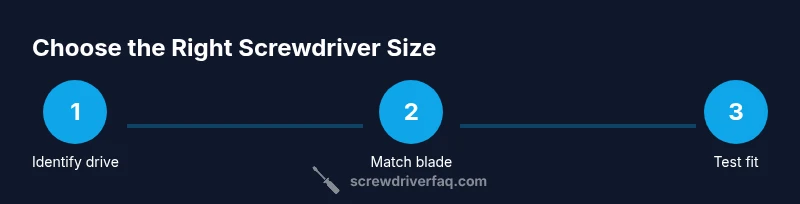
To know if your screwdriver is the right size, pick a blade that matches the screw head: the edge should sit fully in the slot and fill it without binding. The handle should feel comfortable, and the shaft length should reach the screw without forcing. Test on a scrap screw first.
Why the Right Size Matters for Quality & Safety
Choosing the wrong screwdriver size can strip screws, slip and damage surfaces, or injure your hands. The right size maximizes drive contact, minimizes cam-out, and gives you precise control. According to Screwdriver FAQ, many home projects stall because the driver and screw don't match. This mismatch can lead to damaged screw heads, gouged material, and wasted effort. By understanding how size affects fit, you’ll improve torque transfer, reduce wear on both tool and fastener, and finish projects with cleaner results. In practical terms, size affects three things: drive engagement (how well the blade sits in the head), torque transfer (how much turning force you can apply), and accessibility (whether you can reach recessed screws without contortions).
How to Identify Screwdriver Size by Drive Type
Drive type matters more than raw length when judging size. Phillips, slotted, Torx, square (Robertson) and other drive styles each have approximate blade width ranges. Start by matching the drive shape; then compare blade width to the screw head. A snug fit is essential: if the blade edge can touch both sides of the head at once, it's too large; if the blade leaves gaps, it's too small. The goal is full engagement with minimal wobble during turning. Remember that some screws tolerate a close fit, while others require precise alignment to avoid cam-out or slipping. If you’re unsure, test the candidate driver on a scrap screw to confirm engagement before working on your project.
The Visual Fit Test: Does the Blade Match the Screw Head?
A quick visual check helps you avoid misfits. Hold the screwdriver over the screw and align blade edges with the slot or recess. The blade should fill the slot with only a tiny margin on each side. The handle should sit comfortably without compromising wrist angle. If you notice binding, slippage, or if the blade seats unevenly, choose a different size or drive type. Testing on scrap screws is a safe, low-risk step. This simple check avoids forcing a mismatched driver into a stubborn screw and reduces the risk of rounded heads or stripped slots.
Measuring Tools and Quick Reference Methods
Use a caliper or a precise ruler to measure blade width at the tip and the shoulder where it meets the shank. Note the screw head size you most often encounter and keep a small reference chart in your toolbox. For everyday projects, rely on a practical rule: pick the size that fills the head slot without binding, and avoid forcing a larger blade into a tight head. When in doubt, compare against a known-good screw, and document the size in your tool log. A reliable measurement method minimizes trial-and-error and speeds up work on repairs and assembly.
Matching Screwdriver to Screw Range and Use Case
In general, you want a screwdriver whose blade width is just slightly smaller than the maximum width of the screw head slot. The handle should allow comfortable torque without causing fatigue. If you routinely work with small Phillips or slotted screws, keep a few sizes on hand, and avoid using a generic long blade for high-torque tasks. A consistent set improves accuracy and speed over time. For specialty projects (electronics, automotive, or cabinetry), consult the screw head’s drive type and refer to a size chart to ensure you’re choosing the closest match for both head and slot geometry.
Common Pitfalls and How to Avoid Them
Avoid using a blade that is too wide or too narrow for the screw head. A too-wide blade will strip the head; a too-narrow blade can cam out and slip, possibly injuring your hand. Never press hard to force a bad fit. If you can't find a matching size, switch to a compatible driver type or replace the screw. Screwdriver FAQ analysis shows size mismatches are a leading cause of stripped screws and tool damage. Regularly verify fit after tool changes and when you encounter unfamiliar fasteners. If a screw is damaged, it’s often better to replace the screw than to force a poor fit with the wrong size.
Maintenance and Long-Term Verification
Keep tools clean and dry, and inspect blades for wear that can alter fit. Rotate through your screwdrivers to distribute wear evenly. When replacing bits, verify the new size by re-testing on scrap screws before tackling a project. A quick periodic size check saves time and prevents damage. The Screwdriver FAQ team recommends keeping a compact size reference chart in your toolbox and rechecking fit whenever you switch to a different project category (e.g., moving from furniture assembly to electronics work).
Tools & Materials
- Screwdriver set with multiple sizes(Cover common drive types: Philips, slotted, Torx, Robertson, and hex.)
- Calipers or precise ruler(Measure blade width at the tip and the shoulder.)
- Scrap screws that match your project screws(Test fit and torque on these before working on actual screws.)
- Magnifier or bright light(Helpful for seeing fine drive recess details.)
- Marker or labeling tape(Label sizes for quick reference in the toolbox.)
- Size chart or gauge(Keep a compact reference for drive types and common widths.)
Steps
Estimated time: 15-25 minutes
- 1
Identify drive type
Examine the screw head to determine its drive shape (Phillips, slotted, Torx, Robertson, or specialty). This guides which blade profile to start with and narrows the size range you’ll test.
Tip: Match the drive shape first; a wrong profile is hard to compensate for with size alone. - 2
Select candidate sizes
From your screwdriver set, pick one or two sizes that visually appear to fit the head width. Don’t grab the first obvious match—choose a size that sits between too loose and too tight.
Tip: If you’re unsure, start with the smaller size and move up if the blade won’t engage. - 3
Test fit on scrap screw
Place the blade into a scrap screw head and attempt a gentle turn. Check for full engagement, no wobble, and no slipping.
Tip: Apply steady pressure while turning to mimic real-work torque without overdoing it. - 4
Check engagement and torque transfer
If the blade binds or cam-outs, adjust size and re-test. Ensure there’s no visible gap around the slot and the blade edge aligns with the drive sides.
Tip: Stop if you feel heat or unusual resistance; this indicates a poor fit or potential damage. - 5
Confirm comfort and reach
Hold the handle as you would during actual work. Ensure you can apply torque without wrist strain and that the shaft length provides adequate reach.
Tip: Ergonomics matter; a size that feels awkward leads to fatigue and mistakes. - 6
Document the size and reuse rule
Record the final size and drive type in your toolbox reference. This speeds up future projects and prevents mis-sizing.
Tip: Keep a small size chart in your toolbox for quick reference during repairs.
Quick Answers
How can I tell if the blade fills the screw head?
Look for full engagement with minimal slack; edges should align with the head, and the blade should not wobble. If there’s any gap or binding, try a different size.
Check for full engagement and no wobble; if it doesn’t fit snugly, choose another size.
Can a screwdriver be slightly smaller than the screw head?
A slightly smaller blade is preferable to a larger one, but too small can slip and damage the head. Aim for a snug fit that fills the head slot without binding.
Yes, a slightly smaller size is safer than too big, but avoid too small that slips.
What about metric vs imperial sizes?
Screw sizes are defined by the screw head and drive type, not a universal metric/imperial label. Focus on fit and drive compatibility rather than the measurement system.
Size by fit and drive type, not metric vs imperial.
How do I measure blade width accurately?
Use calipers for precise measurement or a ruler with fine subdivisions. Measure the blade’s widest point at the tip and the shoulder where it meets the shank.
Calipers give the clearest measurement; measure tip width accurately.
What should I do with damaged screws?
If the screw head is damaged, size alone won’t fix it. Consider replacing the screw or using a screw extractor designed for the drive type.
Damaged screws may need replacement or an extractor; size alone won’t fix the head.
Watch Video
The Essentials
- Check blade width against screw head for a snug fit.
- Match drive type first, then verify with a scrap screw.
- Test fit and torque transfer before real work.
- Maintain a toolbox size reference to speed future projects.