Which screwdriver should be used when a fastener is tight: a practical guide
Discover how to choose the right screwdriver for a tight fastener, with step-by-step strategies, safety tips, and buying guidance for DIYers and homeowners.


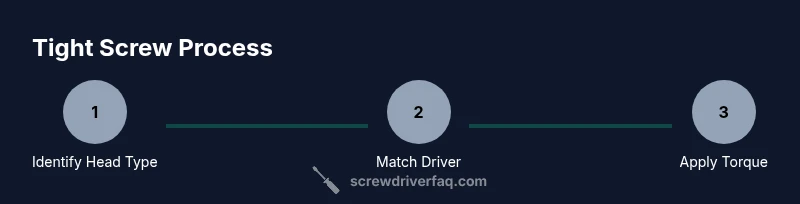
Goal: Determine the correct screwdriver and technique when a fastener is too tight. You’ll learn how to select the appropriate driver type (slotted, Phillips, Torx, or hex), how to inspect the screw head, when to lubricate or apply penetrating oil, and how to apply steady, controlled torque without stripping or cam-out.
Why choosing the right screwdriver matters when a fastener is too tight
A fastener that resists effort is more than a nuisance—it can damage tools, threads, and surrounding material. The question which screwdriver should be used when a fastener is to tight comes up frequently for DIYers, and the answer is head-type driven: the driver must perfectly seat in the head to transfer torque without slipping. According to Screwdriver FAQ, selecting the correct driver and using proper technique is the single biggest factor in avoiding cam-out, rounding of corners, and stripped threads. In this section we’ll explore head shapes, how to test fit, and how to plan your attack before twisting. You’ll also learn practical signals that indicate you may need lubrication, heat, or a different strategy altogether. By the end, you’ll know how to choose the right screwdriver with confidence and minimize damage to the fastener, the driver, and your project.
Screwdriver FAQ notes that early preparation reduces damage when a fastener is tight. To start, ensure you have a clean, dry head and a driver that fits snugly without lateral play. Always prioritize a conservative approach—pick the largest driver that fully seats in the head and avoid forcing a poor fit. In many common home tasks, a versatile bit set paired with a ratchet handle covers most head types. The goal is steady, controlled torque rather than brute force, especially if you’re dealing with soft woods, old screws, or fasteners in delicate assemblies. Applying this mindset saves time and preserves material integrity in the long run.
To summarize, the right screwdriver isn’t just about head shape; it’s about a precise fit and controlled action. If you’re uncertain, begin with a conservative fit and gradually increase torque only as the bit remains seated. For electronics or delicate components, consider insulated or non-marring bits to protect sensitive parts. The essential principle remains consistent: compatibility between driver and head minimizes cam-out and keeps threads clean and reusable.
Tools & Materials
- Appropriate screwdriver(s) or interchangeable-bit driver(Match head type (slotted, Phillips, Torx, hex, or Robertson) and size to the screw.)
- Penetrating oil or lubricant(Useful for corroded or seized screws; apply sparingly.)
- Safety glasses(Protect eyes from chips or splinters during extraction.)
- Ratcheting handle or torque-limiting driver(Helps maintain steady torque and reduces hand fatigue.)
- Magnetic bit holder(Keeps the screw aligned and reduces dropping, especially in tight spaces.)
- Hammer or mallet (light)(Only for gentle tap-twists on stubborn fasteners, not for driving torque.)
Steps
Estimated time: 25-40 minutes
- 1
Identify head type and choose the correct driver
Inspect the screw head and select a driver that fully seats with no wobble. A misfit increases cam-out and can strip the head. If the screw head is worn, switch to the closest matching size or a multi-bit set.
Tip: If you’re unsure, start with a snugly fitting bit and apply minimal pressure to test seating before torquing. - 2
Clean and test the fit
Wipe away any dust or debris from the screw head and driver. Try seating the bit firmly and twist very slightly to confirm it stays engaged. If the head is rounded, stop and reassess the bit choice.
Tip: A clean head is critical for transferring torque effectively; brushing with a small brush can help. - 3
Lubricate or treat for corrosion
If the screw is resistant due to rust or corrosion, apply a light drop of penetrating oil around the head and let it sit for a few minutes. Avoid over-lubricating, which can reduce friction and cause the bit to slip.
Tip: Only a small amount is needed; excess oil can attract dirt and worsen the fit. - 4
Apply steady, controlled torque
Position yourself for a straight-line pull, keep the wrist aligned, and apply steady pressure. Avoid rapid bursts or twisting the handle beyond the bit’s seating, as this increases cam-out risk.
Tip: Use a ratcheting driver if available to maintain consistent torque without finger fatigue. - 5
If resistance persists, consider alternate methods
For stubborn fasteners, gently tap the handle with a mallet to seat the bit, or switch to a longer-handle driver to gain leverage. Do not hammer the screw directly with the bit—aim for micro-movements that seat the head.
Tip: Avoid aggressive tapping; aim for small, controlled taps to seat the bit. - 6
Reassess and complete
After initial torque, reassess the fit. If the head remains intact and the bit is seated, continue with gradual torque until the screw loosens. If the head shows signs of wear, stop and replace the screw or bit.
Tip: If you can’t budge the screw after several attempts, stop to prevent further damage.
Quick Answers
What should I do first when a screw won’t budge?
Begin by verifying the driver matches the screw head and is fully seated. Clean any debris and test gentle torque before increasing pressure. If the head is damaged, switch to a new screw or driver type.
First, check the driver fit and clean the head. Test with light torque; if the head is damaged, replace the screw or driver.
Can lubricants damage certain materials?
Lubricants help reduce friction but can attract dust or contaminate some materials. Use sparingly and avoid over-lubrication around electronics or porous surfaces.
Lubricants reduce friction but use only a little and avoid electronics or porous materials.
Is an impact driver appropriate for tiny screws?
An impact driver can help with stubborn fasteners, but on small screws, use low torque settings and a compatible bit to avoid head stripping.
Impact drivers can help, but for small screws use low torque and the right bit.
How can I tell if the head is stripped?
A stripped head will not seat properly, will slip under torque, and show rounded edges. Replace the fastener or switch to a more suitable driver size if feasible.
If the head slips and edges look rounded, it’s likely stripped; consider replacing the fastener.
Should I drill out a stuck screw?
Drilling out is a last resort, as it may damage the surrounding material. Try extraction tools or a screw remover before drilling.
Only drill if extraction fails and you’ve ruled out safer methods.
How can I prevent fasteners from getting tight again?
Use proper pilot holes, correct torque specs, and threads appropriate for the material. Regular maintenance reduces future seizure and head wear.
Prevention comes from proper pilot holes, correct torque, and material-appropriate threads.
Watch Video
The Essentials
- Choose the correct head type for the fastener.
- Inspect fit and avoid forcing a poor match.
- Use lubrication or penetrating oil when appropriate.
- Apply steady, controlled torque to prevent cam-out.
- If stuck, switch to leverage or a longer handle.