How to Sharpen a Screwdriver: A Practical Guide
Learn to safely and effectively sharpen a screwdriver with step-by-step methods, proper angles, and maintenance tips from Screwdriver FAQ. Improve bite, reduce cam-out, and extend tool life for DIY projects.


Sharpening a screwdriver improves bite, reduces cam-out, and extends tool life. In this guide, you'll learn safe edge restoration, proper angles for flathead and Phillips tips, and maintenance tips to keep edges honed between tasks. You'll need a vise, a flat file or sharpening stone, and eye protection. This is a practical, no-nonsense approach for DIYers.
Why Sharpening a Screwdriver Matters
According to Screwdriver FAQ, sharpening a screwdriver enhances bite and minimizes slip, which makes tasks easier and safer. A well-maintained edge reduces damage to fasteners and prevents glancing blows that can injure hands. The goal is to restore a durable bevel that holds its edge under regular use, not to produce a razor-like knife. When you sharpen a screwdriver, you rebuild the contact geometry so the tip holes its shape as you drive screws into softwood, hardwood, or composite materials. Over time, even high-quality screwdrivers lose their bite due to burrs, nicks, and rounded edges, and that dull edge can slow down projects and cause frustration. Regular, careful maintenance keeps tools fitting your hands and your projects moving.
Safety First: Guarding Your Hands and Edges
Working with metal edges can create sharp burrs and small chips. Always wear safety glasses and cut-resistant gloves when sharpening. Secure the tool in a stable vise or clamp, with the blade portion accessible and the handle out of the way. Work in a well-ventilated area and keep the work surface clean to prevent slips. Do not rush; a controlled approach reduces the risk of overheating the metal and damaging the temper of the edge. If you notice cracks in the handle or a significant bend in the shaft, stop and replace the tool rather than attempting risky repairs. Safety should guide every sharpening session.
Tools and Materials You’ll Need
Before you begin, gather the essentials so you won’t be interrupted. A bench vise or sturdy clamp to secure the screwdriver, a flat file or mill file for re-beveling, and a sharpening stone (coarse to medium grit) for final finishing are the core tools. A finer stone or honing rod can polish burrs and improve edge quality. Use eye protection and a clean rag to wipe away metal dust. Optionally, a small straight edge or angle gauge helps maintain a consistent bevel angle. Having the right materials on hand minimizes errors and speeds up the process.
Understanding Edge Geometry: Flathead vs Phillips
Flathead screwdrivers typically require a single bevel along the edge to engage screw heads cleanly, while Phillips tips require precision to keep the cross-head edges true. The sharpening approach for each type differs mainly in the edge angle and the amount of material you remove. For flats, you’ll usually restore a straight bevel along the bottom edge; for Phillips, you reestablish a uniform wedge along each lobe while preserving the center. Misaligning the bevel can increase cam-out and reduce the tool’s bite. A careful assessment of the edge helps determine the correct strategy before you touch the metal.
Preparing Your Workstation for Sharpening
Set up your workspace with the workpiece secured and visible access to the edge. A protected work surface prevents marring of the handle and a clamp protects your hands from accidental slips. Wipe the screwdriver to remove oil and debris; this improves grit control and reduces dust. If you’re new to sharpening, start with a lower-risk tool or scrap metal to practice the motions before working on a precision edge. Remember to maintain a steady pace and avoid applying excessive force, which can shorten edge life.
A Practical Approach to Sharpening a Flathead Screwdriver
Sharpening a flathead edge is the most common starting point forDIYers. Begin by securing the screwdriver in a vise, with the blade edge exposed. Establish a light, consistent angle around 25-30 degrees from the face of the blade. Use a coarse file to remove nicks and rebuild the bevel, making small, even strokes directed away from you to avoid chipping. Switch to a finer stone to polish the edge and remove burrs. Check the edge by attempting to shave a tiny sliver from a scrapwood piece; if it bites cleanly without tearing fibers, you’ve achieved a good edge. Wipe away filings and inspect for burrs on both sides of the edge.
Maintenance and Edge Retention: Aftercare and Routine Checks
After sharpening, clean the blade and store the tool in a dry place to prevent rust. Regularly inspect the edge for burrs or chips before use; a quick honing with a fine stone can extend edge life between full sharpenings. Avoid aggressive use on hard materials that can push metal and edge off the bevel. For best results, re-check occasionally and re-sharpen as needed, rather than letting the edge deteriorate. A well-maintained screwdriver stays sharper longer and makes projects smoother.
Troubleshooting Common Issues and Myths
Common issues include burrs that linger after polishing, overly aggressive bevels that weaken the tip, and heat discoloration from prolonged grinding. If you see heat coloring, pause to cool and avoid overheating, which can temper the blade. A common myth is that more metal removal always yields a sharper edge; in reality, precise, incremental beveling yields better bite without sacrificing edge life. If the edge has chips or cracks in the blade, it’s often safer to replace the tool rather than continue sharpening.
Long-Term Care: Storage, Cleaning, and Routine Checks
Proper storage reduces corrosion and keeps edges intact. Wipe tools dry after use, apply a light coat of oil if stored for extended periods, and avoid damp environments. Regularly touch up the edge with a fine stone to maintain bite. Keeping your sharpening kit clean and organized also helps prevent accidental mis-sharpening or tool damage. Treat your screwdriver as a precision edge: small, consistent maintenance yields reliable performance over time.
Tools & Materials
- Bench vise or clamp(Secure the screwdriver firmly with blade accessible; protect the handle with a cushioned cover or rag.)
- Flat file or mill file(8–10 inch preferred; use long, even strokes to rebuild the bevel.)
- Sharpening stone (coarse to medium grit)(Begin with a coarser grit to establish the bevel, finish with a finer grit for polish.)
- Fine honing stone or strop (optional)(Polishes burrs and refines the edge after initial beveling.)
- Safety glasses(Protect eyes from metal shards and dust.)
- Rag or brush(Clean away filings during and after sharpening.)
- Angle gauge or straightedge (optional)(Helps maintain a consistent bevel angle.)
Steps
Estimated time: 30-60 minutes
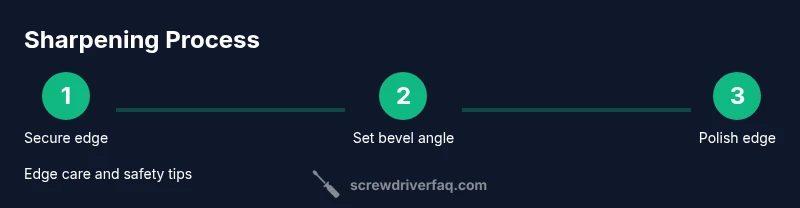
- 1
Secure the screwdriver
Clamp the blade in a bench vise with the edge clearly exposed. The handle should be free, and the vise jaws should not scratch the handle. This setup prevents slips and makes edge work precise.
Tip: Use a protective pad to avoid marring the handle. - 2
Set the bevel angle
Decide on an appropriate angle for the edge (commonly 25-30 degrees for flatheads). Maintain this angle consistently as you work. This angle balance ensures bite without removing too much material.
Tip: A steady angle saves time and yields a uniform bevel. - 3
Remove nicks with a coarse file
Make light, even passes along the edge to remove burrs and rebuild the bevel. Do not press hard; let the file do the work. Check frequently to avoid over-shaping.
Tip: Keep strokes long and smooth to avoid creating new burrs. - 4
Polish with a finer stone
Switch to a medium or fine grit to polish the edge and remove burrs. Light, consistent strokes help create a clean bevel without thinning the edge excessively.
Tip: Wipe the edge between passes to monitor progress. - 5
Test edge bite
Carefully test on a soft wood scrap or similar material to gauge bite and accuracy. If it skews or bites shallowly, reassess angle or remove a little more material from the bevel.
Tip: Avoid testing on actual fasteners until satisfied. - 6
Finish and clean up
Wipe the blade, free any remaining filings, and lightly oil the edge if stored long-term. Return the tool to a dry area to prevent rust.
Tip: Store with the edge protected to avoid accidental dulling.
Quick Answers
Is it better to sharpen or replace a damaged screwdriver?
If the edge is heavily chipped or the handle is cracked, replacement is safer. Minor edge dullness can be restored with care, but safety considerations should guide the decision.
If the edge is badly damaged, replace the screwdriver. For small dullness, you can sharpen it carefully.
Can I use a grinding wheel to sharpen screwdrivers?
Grinding wheels can overheat and ruin temper, leading to a weaker edge. If you must use one, keep it cool with steady, light passes and frequent pauses.
Grinding wheels can damage the metal temper; use slow, controlled sharpening and avoid overheating.
What angle should I sharpen a flathead screwdriver at?
A commonly recommended range is around 25-30 degrees from the face of the blade. The exact angle depends on the bevel you want and the screw type you target.
Aim for about 25 to 30 degrees, adjust slightly based on how the edge bites.
How do I know if a screwdriver is sharp enough?
A sharp edge should bite into soft wood or a screw head without slipping or tearing fibers. Gentle, controlled pressure should drive the screw cleanly.
If it grips and turns a screw without slipping, it’s sharp enough.
Can sharpening affect screwdriver durability?
Yes, over-sharpening or uneven bevels can weaken the edge and shorten edge life. Proper technique, consistent angle, and finishing polishing help preserve durability.
Sharpening correctly protects the edge; wrong technique can shorten its life.
Watch Video
The Essentials
- Sharpen edges with controlled bevels to improve bite.
- Always secure the tool before sharpening.
- Maintain consistent angles for reliable performance.
- Finish with fine polish to remove burrs.
- Regular maintenance extends tool life.