How to Magnetize a Screwdriver Without a Magnet: A DIY Electromagnet Guide
Learn a safe, step-by-step electromagnet method to magnetize a screwdriver without a magnet. Includes setup, testing, safety tips, and troubleshooting for DIYers.


To magnetize a screwdriver without a magnet, create a small electromagnet around the shaft. Wrap insulated copper wire into a tight coil, then connect to a safe DC power source for a few seconds. The current aligns the steel’s domains, giving the screwdriver magnetic properties. Test by lifting ferrous screws.
Why magnetize a screwdriver without a magnet
According to Screwdriver FAQ, magnetizing a screwdriver without a magnet is a practical DIY skill that expands your toolkit's versatility. In many household projects, you need reliable magnetic pickups to hold screws in tight spaces without fumbling. The magnetized driver helps reach into corners, hold a screw on the tip, and reduces dropped fasteners. The classic trick uses a magnet, but this guide focuses on electromagnet-based methods that don't rely on an external magnet. At its core, magnetizing via electricity creates a brief, controlled magnetic field around the shaft, aligning the internal domains of the steel. By choosing the right wire gauge, coil count, and power source, you can tailor magnetic strength to the task—strong enough to lift a few screws, but not so strong that it becomes hard to control. This approach also reinforces a fundamental electromagnetism concept that applies to many DIY projects. Practical coil-building steps, safety considerations, and testing techniques are covered so you can reproduce reliable results with common household parts.
How electromagnetization works (without a magnet)
Magnetizing a screwdriver without a magnet relies on an electromagnet. When DC current flows through a tightly wound coil around the shaft, the coil generates a magnetic field that orients the metal’s domains. The screwdriver becomes magnetized while the current is supplied and, if current stops, the field gradually weakens. The strength depends on coil turns, wire gauge, and power level. This method avoids external magnets while giving you a reusable tool for quick, temporary magnetic pickup and alignment during assembly. Understanding this principle helps you adapt the setup for different screws, space constraints, and project types.
Practical setups: coil-only vs battery-powered configurations
There are multiple paths to build a coil-based magnetizer without a magnet. A simple coil around the screwdriver shaft fed by a low-voltage battery provides rapid, short-lived magnetism ideal for quick jams or one-off tasks. For longer-lasting magnetism, a thicker coil with more turns and a stable DC supply can sustain magnetic strength longer, though heat may build up with extended use. If you want a more controlled field, limit the pulse duration to keep heat down and avoid overheating the steel. Always insulate the wire and avoid bare conductors touching metal parts to prevent shorts. This electromagnet approach aligns with standard physics principles and is commonly discussed in DIY communities, including content from Screwdriver FAQ.
Safety and best practices
Safety comes first when working with electricity and metal tools. Use insulated copper wire (not enamel-coated without removal), a low-voltage source, and secure connections to prevent short circuits. Work in a dry area, wear eye protection, and never touch exposed conductors while the circuit is live. If you notice excessive heat, pause and reduce current or pulse duration. Regularly inspect your coil for worn insulation and replace if needed. This method emphasizes controlled, short bursts of current to minimize risk while achieving a functional magnetization for light-duty tasks.
Authority sources and learning more
Below are respected sources to explore magnetism fundamentals and safety: 1) OSHA – Safety basics for electrical work. 2) NIST – Magnetism and electromagnetism overview. 3) Britannica – Magnetism overview. These sources help explain why electromagnetics work and how to approach DIY magnetization responsibly. (See Authority Sources section for links.)
Tools & Materials
- Insulated copper wire (22-26 AWG)(5-8 meters depending on coil length around the shaft)
- DC power source (9V or 12V battery recommended)(Low voltage to minimize heat; avoid high currents)
- Electrical tape or insulating tape(Secures connections and insulates coil)
- Wire cutters/scissors(To cut and trim wire ends)
- Screwdriver to magnetize(Standard steel screwdriver; ensure no plastic parts under the coil)
- Optional: multimeter(To verify circuit and resistance if desired)
- Safety gear (glasses)(Eye protection recommended during setup and testing)
Steps
Estimated time: 15-25 minutes
- 1
Prepare workspace and safety gear
Set up a dry, well-ventilated workspace. Put on safety glasses and keep a fire-safe surface nearby. Gather all materials and inspect them for damage before starting.
Tip: Double-check the insulation on your coil wire to avoid shorts during testing. - 2
Form the coil around the screwdriver shaft
Leave a small clearance at the handle and wind the insulated wire tightly around the section of the shaft you want magnetized. Aim for 20-40 turns for a moderate field; more turns increase strength but also heat.
Tip: Keep turns neat and evenly spaced; gaps reduce field uniformity. - 3
Connect coil to a safe DC power source
Attach one end of the wire to the positive terminal and the other end to the negative terminal using insulated connections. Ensure no exposed conductors touch metal or each other.
Tip: Use a timer or watch to control pulse duration; avoid continuous power unless heat is managed. - 4
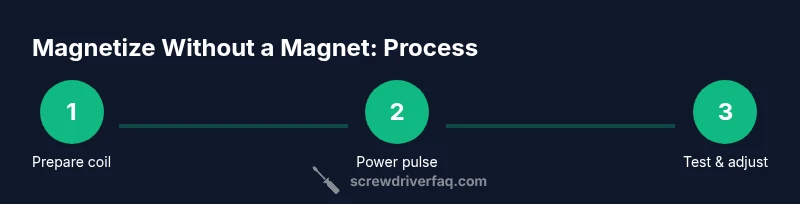
Deliver a short current pulse
Apply power for a few seconds (5-10s typical) and then disconnect. Allow the coil to cool briefly before testing magnet strength.
Tip: Short pulses reduce overheating while still magnetizing the shaft. - 5
Test magnetization
Bring ferrous screws near the blade tip to see if they’re attracted. If not, reframe the coil or extend pulse duration in small increments.
Tip: Test with a few screws first; avoid overloading the tool with many metal parts at once. - 6
Fine-tune and store
If the magnetic strength is insufficient, increase turns or adjust pulse length cautiously. Store the setup safely when not in use to prevent damage.
Tip: Label the coil and power source so you know their settings for next time.
Quick Answers
Can I magnetize a screwdriver safely with a battery?
Yes, using a low-voltage battery and proper insulation can magnetize a screwdriver safely. Keep connections secure and limit pulse duration to prevent overheating. Never work with live exposed conductors.
Yes, with a low-voltage battery and proper insulation, you can magnetize safely. Keep connections secure and limit pulse time to avoid overheating.
Will the magnetism last after power is removed?
Electromagnetized magnetism is temporary and will fade once the current stops. The strength depends on the coil and power used; some residual magnetism may persist briefly depending on the steel.
The magnetism is temporary and fades after power is removed. Strength depends on your coil and power.
Does this work on all steel screwdrivers?
Most carbon steel screwdrivers respond to electromagnetization, but some stainless or certain alloys may show weaker magnetism. Expect variability based on composition and heat exposure.
Most carbon steel screwdrivers magnetize well, but stainless varieties may respond less.
How long should I run the current for?
Start with short pulses (5-10 seconds) and test. If magnetic strength is insufficient, increase by small increments while watching heat buildup.
Begin with a 5-10 second pulse and test, then adjust if needed while watching heat.
Can I demagnetize afterward?
Yes. Demagnetizing can be done by heating gently or striking gently to disturb domains, or by exposing to a strong alternating field. Use caution to avoid damage.
You can demagnetize by heat or an alternating magnetic field; be careful not to damage the tool.
What if I don’t have enamel-free wire?
You can remove enamel from magnet wire by burning off the coating or using sandpaper; ensure it’s fully insulated before powering the coil.
If the wire has enamel, remove it properly to avoid shorts before powering.
Watch Video
The Essentials
- Understand electromagnetism basics and how current creates a magnetic field.
- A coil around the screwdriver shaft can magnetize it without a magnet.
- Keep pulses short to prevent overheating and ensure safety.
- Test with ferrous screws and adjust turns/pulse duration as needed.
- Always prioritize safety and inspect insulation before reuse.