Safer Ways to Handle a Locked Car Ignition Lock Legally
Learn safe, legal steps to regain car access without damaging ignition locks. This guide explains the risks of DIY breakage and outlines locksmith and roadside options.


Breaking an ignition lock with a screwdriver is illegal and dangerous. This article does not provide instructions for that method. Instead, it highlights legal, safer alternatives to regain vehicle access and protect your property and safety. According to Screwdriver FAQ, attempting to force a lock can cause costly damage, void warranties, and may lead to criminal charges. The recommended path is to contact roadside assistance or a licensed locksmith and verify ownership.
Why attempting to break ignition lock with screwdriver is risky
According to Screwdriver FAQ, attempting to force a vehicle’s ignition with a screwdriver can lead to more than just a stuck key. The metal prying and torque required often damages the ignition cylinder, steering column, airbags wiring, and immobilizer systems. Such damage can trigger expensive repairs and may void warranties. In many jurisdictions, attempting to break into a car by bypassing its ignition is illegal and could be treated as burglary or vehicle theft, with serious penalties. Beyond legal risk, the immediate danger is personal injury: broken parts can cause cuts or punctures, and careless tools can strike the steering wheel or dashboard, potentially triggering an airbag deployment. Even if you’re certain the vehicle is yours, the vehicle’s security system may trigger immobilizers that prevent starting, complicating any attempt to start or move the car. The safer path is to stop and seek legitimate assistance. This is not a DIY project for the toolbox, and reputable professionals will follow proper procedures to verify ownership and minimize damage.
Safer, legal alternatives to regain vehicle access
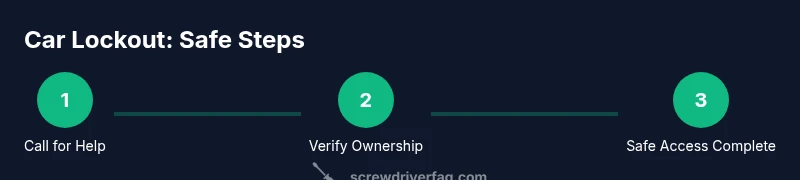
If you’re locked out or the ignition won’t turn, the fastest legal path is to contact roadside assistance or a licensed automotive locksmith. Roadside programs can verify your identity with membership details and vehicle information, dispatching a trained technician who uses approved tools to unlock doors or access the ignition without harming components. In parallel, or if you lack a roadside plan, call the vehicle manufacturer’s roadside service or your insurance provider; many offer lockout coverage as part of comprehensive policies or warranties. Before you call, gather essential information: your vehicle identification number (VIN), make, model, year, and proof of ownership such as a title or registration. Ask for an upfront estimate and clarify whether a house call, tow, or in-shop service is included. If you are in a public place, ensure your vehicle is in a safe, well-lit location and avoid waiting in a private or exposed area. Reputable technicians will request confirmation of ownership and may require a photo ID and payment method before proceeding. Avoid attempting to manipulate the lock or ignition, which could create liability or safety concerns.
What locksmiths need to know and how they operate legally
Licensed automotive locksmiths work within a strict legal framework that governs who may access a vehicle and when. They verify ownership by requesting documents and matching the VIN against records; some providers also require a police report in cases of stolen vehicles. Expect them to explain the steps they will take, show their license number, and provide a written estimate with labor, parts, and any call-out fee. Technicians typically use non-destructive entry techniques first, such as specialized door tools and key codes, before considering immobilizer reset or ignition cylinder work. Any method that involves altering or bypassing the ignition should be performed only when it’s clearly necessary and authorized by the owner. The cost varies by region, vehicle make, and the complexity of the lock system, and it may be higher for newer vehicles equipped with advanced immobilizers. For all parties, the goal is to minimize damage, protect the vehicle’s electronics, and restore safe operation as quickly as possible.
How to prepare before contacting help
Before you reach out for assistance, assemble documents and be ready to answer key questions. Have your photo ID, proof of ownership (registration or title), your VIN (found on the dashboard near the windshield or inside the driver’s door jamb), and clear payment information. Note down the exact location of the vehicle, any security concerns (such as a suspect theft situation), and whether the keys were lost or left inside the car. Write a concise description of the issue: is the ignition stuck, does the key break in the cylinder, or did the door lock fail? If you have a spare key or remote, provide the locksmith or technician with the details so they can advise on the quickest route to access without damage. Retrieve your lockout service numbers, policy numbers, and emergency contact details. Finally, avoid giving anyone personal information beyond what is necessary for service; scammers also operate in lockout scenarios. By preparing carefully, you reduce delays and improve the odds of a smooth, legitimate resolution.
What to do if it's your car and you can prove ownership
Car owners who can demonstrate ownership generally experience faster service and fewer questions. Start by calling your provider, immediately stating you are the owner, and asking for a same-day appointment. If you’re in a public area, move the vehicle to a safer place before professionals arrive. Do not attempt any forceful entry yourself. When the technician arrives, present your ID and documents; provide any required information about the VIN and the vehicle’s history. If a locksmith performs work on the ignition or immobilizer, request a written invoice that itemizes labor and parts and keeps a copy for your records. After the service, test the ignition and all related systems cautiously. If any electrical sensors, warning lights, or starting issues persist, ask the technician to advise on potential aftercare or warranty considerations. Finally, review your insurance or warranty coverage to determine whether future lockout assistance is reimbursable or eligible for a claim.
Common myths and facts about ignition locks
Myth: You can unlock a car’s ignition with any household tool. Fact: Modern vehicles use immobilizers and anti-tamper devices; attempting any non-approved method can trigger security measures and is dangerous. Myth: A locksmith can’t help if the key is broken off in the cylinder. Fact: Many automotive locksmiths have specialized extraction tools and can replace or repair the ignition lock after ownership verification. Myth: Insurance will always cover lockout costs. Fact: Coverage varies; read your policy for lockout and roadside assistance terms. Myth: It’s cheaper to attempt a DIY fix. Fact: DIY attempts frequently lead to higher repair costs due to damage, requiring professional service anyway. The best approach is to stay patient, document ownership, and rely on qualified professionals who follow legal procedures to minimize risk and ensure safe operation of the vehicle.
Tools & Materials
- Phone with service plan(For calling roadside assistance or locksmiths)
- Proof of ownership(Registration or title; VIN visible)
- Vehicle photo ID(Driver’s license or government ID)
- VIN and vehicle details(Found on dash or driver’s door jamb)
- Emergency contact & policy numbers(If available, helps verify coverage)
- Payment method(Credit card or payment app accepted by service provider)
Steps
Estimated time: 1-3 hours
- 1
Verify ownership and gather documents
Collect your ID, registration, title, VIN, and any related policy numbers. Having these ready speeds verification and reduces back-and-forth with the service provider.
Tip: Keep a digital photo of ownership documents accessible in case you cannot locate physical copies. - 2
Choose a legitimate service path
Decide between roadside assistance, manufacturer support, or a licensed automotive locksmith based on your situation and coverage. Each offers non-destructive entry options when ownership is verified.
Tip: If you have roadside coverage, start there to compare ETA and costs. - 3
Provide precise location details
Describe where the car is parked, nearby landmarks, and any safety concerns. This helps the technician arrive prepared with the right tools.
Tip: Share a phone contact and best access point to your vehicle. - 4
Verify identity and ownership with the technician
Show your ID and ownership documents when the technician arrives. Expect the provider to confirm your claim before proceeding.
Tip: Ask for license details and a written estimate before any work begins. - 5
Safely wait and avoid DIY entry
Remain at a safe distance and do not attempt to unlock or start the car yourself. DIY entries can cause damage and legal trouble.
Tip: Stay in a safe, well-lit area and keep valuables out of sight. - 6
Test ignition and review aftercare
Once access is gained, test the ignition and related systems. If there are issues, discuss aftercare, warranty implications, and potential next steps with the provider.
Tip: Ask for a written aftercare guide and repair recommendations.
Quick Answers
Is breaking an ignition lock with a screwdriver illegal?
Yes. Forcing ignition access is illegal in many jurisdictions and can be treated as burglary or vehicle theft. It can also void warranties and lead to costly repairs.
Yes. It’s illegal in many places and can lead to criminal charges, plus potential warranty voiding.
What should I do if I’m locked out of my car?
Call roadside assistance or a licensed automotive locksmith. Have proof of ownership ready to verify your rights quickly.
Call a licensed locksmith or roadside service and have proof of ownership ready.
Can a locksmith help if the key is broken off in the cylinder?
Yes, many automotive locksmiths can extract broken keys and repair or replace the ignition as needed after ownership verification.
Yes, they can often remove the broken key and repair the ignition after you verify ownership.
Will insurance always cover lockout costs?
Not always. Coverage varies by policy. Check your roadside or comprehensive policy terms to see if lockout assistance is included.
Coverage depends on your policy; check your terms for lockout benefits.
What documents prove ownership?
Registration, title, or a lease with the VIN; a valid photo ID is often required alongside ownership documents.
Use registration or title plus a photo ID to prove ownership.
How long does a typical lockout service take?
Service times vary, but most legitimate providers aim to resolve lockouts as quickly as possible while ensuring safety and legal compliance.
Times vary, but professionals aim to resolve it quickly and safely.
Watch Video
The Essentials
- Never attempt to break ignition with a screwdriver.
- Rely on licensed professionals for safe access.
- Gather ownership documents before requesting service.
- Understand your policy coverage for lockout help.