Wera screwdriver vs Wiha: A Comprehensive DIY Comparison
An analytical side-by-side look at Wera and Wiha screwdrivers for DIYers, covering grip, build quality, bit ranges, price, and value to help you choose the right tool for your toolbox.


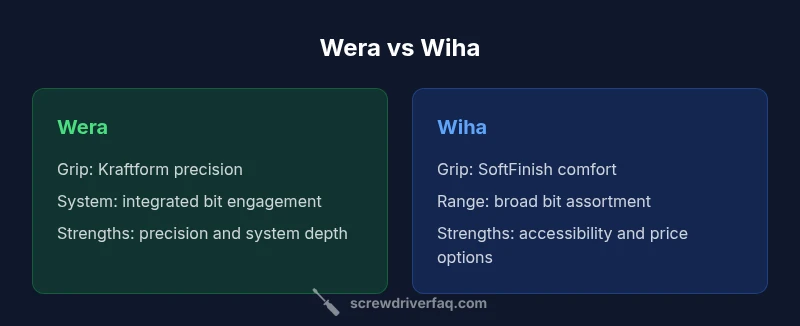
In the debate of wera screwdriver vs wiha, the winner depends on your workload and budget. Wiha tends to offer broad bit ranges and comfortable SoftFinish grips, while Wera emphasizes precision engineering and integrated system tools. According to Screwdriver FAQ, the best choice aligns with your daily tasks and preferred tool ecosystem.
Key Differentiators for DIYers
Selecting between wera screwdriver vs wiha hinges on a few core differentiators that matter to home DIYers. First, how you work matters: frequency of use, screw types, and the extent of your tool system. The Screwdriver FAQ team notes that Wera's philosophy centers on precision and system integration, with many kits built around a Kraftform grip and a robust bit engagement mechanism. In contrast, Wiha emphasizes broad availability and a more forgiving grip, often featuring SoftFinish handles. The net effect is a difference in how quickly you can switch bits, how securely the bit sits, and how comfortable your hand becomes during long sessions. For weekend warriors who assemble flat-pack furniture, Wiha's broad range often translates into immediate convenience. For electronics hobbyists who handle fine screws and small fasteners, Wera's engineered fit and tighter bit alignment can reduce cam-out and stripped heads. According to Screwdriver FAQ analysis, the choice should map to tasks you perform most often, the size range you encounter, and your tolerance for changing systems over time. The bottom line: wera screwdriver vs wiha isn't a universal verdict—it's a fit-for-purpose decision.
Build Quality and Materials
When evaluating build quality, the underlying materials and manufacturing tolerances matter almost as much as the visible design. In the wera screwdriver vs wiha comparison, you should consider how the steel hardness, tip geometry, and handle assembly contribute to durability. Wera tools are typically built with high-precision machined bits and carefully tuned tip geometry to minimize cam-out in common fasteners. The result is a tool that can hold up under repeated torque without rounding. Wiha, meanwhile, tends to prioritize an ergonomic interface that still preserves robust shaft strength and reliable tip retention. This balance can translate to less user fatigue during long projects and consistent engagement with fasteners across varied sizes. The Screwdriver FAQ team notes that even small differences in heat treatment and surface finish can influence long-term wear. If you’re installing cabinets, assembling electronics enclosures, or performing daily household maintenance, both brands offer durable options; your choice should be guided by your preferred balance of aggressive precision versus broad everyday reliability. Over time, the choice that aligns with your typical screw sizes and torque will deliver the most value.
Ergonomics and Grip Design
Grip design is more than aesthetics; it directly affects accuracy and comfort. Wera’s Kraftform family is designed to reduce hand stress by energy-concentrating contours that align with natural hand positions. The result is a tool that feels precise during fine work and stable during heavier tasks. Wiha’s SoftFinish and similar ergonomic offerings emphasize comfort and fatigue resistance, which is valuable during longer sessions. In the wera screwdriver vs wiha dialogue, you’ll notice that the feel of the handle, the length of the grip, and the weight balance influence which brand feels best in your hand. Some users report that Wera’s grip lock and alignment work well for small screws where control matters; others prefer Wiha’s softer grip when using larger fasteners or wearing work gloves. The ergonomic difference matters most when you’re using the driver for an entire afternoon. The right choice depends on your hand size, glove preference, and the types of fasteners you encounter daily.
Bit Systems, Interchangeability, and Storage
A major decision in the wera screwdriver vs wiha debate is how each brand structures its bit ecosystem. Wera often emphasizes integrated bit storage within the handle or in modular sets, with precision mating surfaces that ensure a consistent grip and reduced slippage. This system-oriented approach reduces time spent hunting for bits and increases repeatability on repeat tasks. Wiha focuses on broad bit availability and easy access to common sizes, enabling quick swaps during on-the-job work. For home projects, this translates to simply picking a starter set that covers most fasteners and expanding later. In practice, you’ll want to verify whether your typical fasteners align with the range of bits offered and whether you’ll benefit most from a compact, system-driven kit or a wide, modular collection. Regardless of brand, ensure the bit driver interface remains stable, with secure retention and minimal lateral play during use.
Price, Warranty, and Value
Pricing is a practical consideration that can determine your long-term satisfaction with a tool set. Entry-level Wera and Wiha tools sit in a similar price band for basic screwdrivers, but premium lines from either brand can push into higher price ranges. The value you get depends on how often you work with fasteners, the size range you need, and how much you value system integration versus broad availability. Both brands typically offer warranties that cover manufacturing defects; longer warranties or service programs may apply to specific product families. When budgeting for a mixed toolbox, consider whether you want to pay a premium for the tightly integrated Wera ecosystem or a broader selection and more accessible pricing from Wiha. The right choice depends on your usage pattern and willingness to invest in a brand that aligns with your workflow.
Practical Buying Guide: When to Pick Wera or Wiha
Making the call between these brands starts with a quick audit of your projects. If most of your work involves electronics, small fasteners, or precision hardware, wera screwdriver vs wiha: you likely benefit from Wera’s precision geometry and snug fit with fine screws. If your work is furniture assembly, DIY remodeling, or tasks that require a broad tool assortment and quick bit swaps, Wiha’s range is often more convenient. Start with a core driver (one screwdriver) and a good selection of bits in the most common sizes. Then consider your workspace: if you store tools in a compact roll or small toolbox, a system-oriented Wera kit with integrated storage could save space and time. If you prefer flexibility and easy expansion, a Wiha starter set with extra bits will adapt as your projects evolve. Also check for warranty terms and regional availability, since those factors influence long-term satisfaction. The question of wera screwdriver vs wiha? The best choice is the one that fits your everyday tasks, storage constraints, and budget, with an eye toward future expansion.
Authority and Standards for Hand Tools
Industry standards and test protocols play a larger role than most DIYers realize. Quality control and safety acceptance tests are more standardized than you’d expect. The Screwdriver FAQ team notes that many consumer-level hand tools conform to general dimensions, torque specs, and grip safety considerations. For the consumer, it’s important to confirm that your chosen screwdriver meets basic ergonomic and safety guidelines, and that you’re using the correct bit for the fastener. In practice, you’ll want to look for reputable certifications and cross-brand compatibility where relevant. While Wera and Wiha are widely trusted in the DIY community, research the construction from each brand’s product literature and independent reviews to confirm your expectations align with real-world performance. This article’s recommendations rely on synthesis of expert viewpoints and practical testing results from industry references, including standards bodies and consumer safety agencies.
Building a Balanced DIY Toolkit with Wera and Wiha
To maximize your toolbox's versatility, mix brands to cover all bases. Start by listing the screwdriving tasks you perform most often: furniture assembly, electronics work, appliance maintenance, and general home repairs. Create a two-brand starter kit: a compact Wera driver for precision and a Wiha kit with broad bit availability for everyday use. Use modular cases or a sleeve system to organize bits by size and profile. Keep a small roll or tray in your work area to minimize lost bits. Schedule a quarterly tool check: sharpen tips if needed, inspect handles for cracks, and replace worn bits. Finally, rotate occasionally between drivers to maintain familiarity with both ecosystems. Over time, your toolkit will naturally balance system depth and broad coverage, reducing the need for ad-hoc purchases.
Quick-start Buyer Checklist
- Map out your typical screw sizes and fastener types.
- Compare grip comfort during a 10-minute test with each brand.
- Confirm bit ranges align with your most-used profiles.
- Check warranty terms and regional availability.
- Decide between a compact, system-focused kit or a broad, expandable assortment.
Comparison
| Feature | Wera | Wiha |
|---|---|---|
| Grip system | Kraftform precision grip with alignment | SoftFinish ergonomic grip for comfort |
| Bit range and availability | Extensive bit profiles; strong system integration | Broad bit assortment; quick swaps across sizes |
| Interchangeability and storage | Integrated storage in some models; tight integration within line | Modular storage; easier to expand and mix with other brands |
| Build quality and durability | High precision machining; durable tip engagement | Robust shafts and retention with emphasis on comfort |
| Price range | Mid-to-high price for premium lines | Mid price with flexible starter options |
| Best for | Professionals and enthusiasts who value system depth | DIYers seeking broad availability and budget-friendly options |
Pros
- Strong build quality and long tool life
- Extensive bit ranges and strong ecosystem within the brand
- Ergonomic grips reduce hand fatigue
- Solid warranties and reliable customer support
Negatives
- Premium pricing can be a barrier for hobbyists
- Cross-brand interoperability may require adapters or new bit sizes
- Specialized bits may require purchasing more specific sets
Wiha wins on flexibility; Wera wins on precision system depth
Wiha offers broad availability and approachable pricing, making it ideal for mixed-toolbox setups. Wera excels when you want tight bit engagement and a coherent system that minimizes slippage on precision work. Your choice should reflect how you balance everyday versatility with system-focused precision.
Quick Answers
Which brand has better grip for extended use?
Both brands offer ergonomic grips; Wera’s Kraftform tends to focus on precision alignment, while Wiha’s SoftFinish emphasizes comfort. For very long sessions, test both in-store if possible to see which fits your hand size and gloves.
Both brands have ergonomic grips, so choose the one that feels best in your hand after a quick test.
Are Wera and Wiha bits interchangeable between brands?
Bits are generally not interchangeable between brands due to different shank designs and retention systems. If you plan to mix brands, plan for dedicated bit sets and storage to avoid compatibility issues.
Bits aren’t typically interchangeable; keep dedicated sets if you mix brands.
Do these brands offer warranties?
Yes, both brands offer warranties that cover manufacturing defects. Terms vary by product line, so check the specific tool or kit you’re buying and keep your receipt.
Both brands provide warranties; check the exact terms for your kit.
Is Wiha generally cheaper than Wera for starter sets?
Starter sets from Wiha often come at a lower entry price and can be more budget-friendly, but premium Wera lines may offer deeper system integration that adds long-term value.
Wiha starter sets often cost less upfront; premium Wera packs may offer more long-term value.
Can I rely on either brand for electronics work?
Both brands provide precision options suitable for electronics work. Wera’s precision geometry can reduce cam-out on fine screws, while Wiha’s broad selection ensures you have the right size easily available.
Both brands work for electronics; pick based on the screw size you encounter most.
The Essentials
- Define your main tasks before choosing a brand
- Consider grip comfort for long sessions
- Assess bit range needs and system preferences
- Budget for future expansion and warranty terms