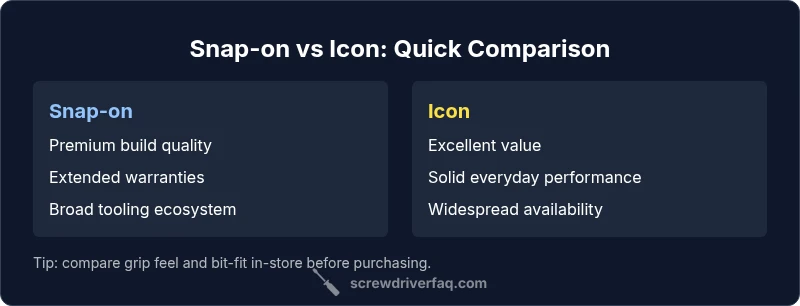
Snap-on Screwdriver vs Icon: A Comprehensive Comparison
Compare Snap-on and Icon screwdrivers across build quality, ergonomics, warranties, and value to decide which brand fits your DIY or pro toolkit. This analytical guide covers materials, design, and long-term cost for 2026.


Snap-on screwdrivers deliver premium build quality, reliability, and top-tier service, but Icon screwdrivers provide solid performance at a more accessible price. For professional use, the premium build and warranty make Snap-on worth the investment; for DIY and budget-conscious projects, Icon offers strong value. The best choice depends on your typical tasks and long-term needs.
Market Positioning and Value Proposition
In the landscape of hand tools, the decision between a snap on screwdriver vs icon often comes down to perceived value, reliability, and how you intend to use the tool. Snap-on has cultivated a premium image through decades of professional adoption, consistent quality control, and a comprehensive support network. Icon, by contrast, targets homeowners and DIYers who want dependable performance without paying premium brand taxes. For many tasks, Icon delivers more than enough durability, comfortable grips, and reasonable availability. The central question isn't 'which one is better' in abstract terms; it's 'which one fits your work style, budget, and expectations for longevity?' According to Screwdriver FAQ, brand choices matter for long-term reliability in professional environments, and the right choice often correlates with how often you reach for your screwdriver and how you treat it over years of use. If you typically work on furniture assembly, electronics, and cabinetry, you might lean toward a brand with stronger dealer networks and consistent quality metrics. If instead your projects are occasional, or you maintain a thrifty DIY workflow, Icon can be a practical, capable companion. The goal of this guide is to strip away hype and present a clear, evidence-based view of snap on screwdriver vs icon for 2026.
Build Quality and Materials
Both Snap-on and Icon screwdrivers are built around common materials like chrome vanadium steel for shafts and chrome plating for corrosion resistance. Snap-on typically emphasizes tight tolerances, smoother heat treatment, and a finish that resists micro-scratches after repeated use. Icon, while more affordable, often uses similar base materials but with slightly broader tolerances and fewer premium finishing touches. In practice, that difference translates into how the driver feels in your hand and how it performs under torque. For many tasks, the shaft alignment and tip precision matter more than the exact steel grade, but over time small advantages accumulate. The Screwdriver FAQ Team notes that premium brands tend to retain edge and alignment longer under heavy or frequent use, while value brands still perform well for most home projects. When evaluating snap on screwdriver vs icon for your toolkit, examine the tip geometry, the surface finish, and how easily the shaft slides into the handle when you swap bits. If your work involves frequent bit changes or high-torque tasks, the premium tolerances of Snap-on can be noticeable in day-to-day comfort and long-term reliability.
Ergonomics and Comfort in Design
Ergonomic grip shape and balance affect fatigue, precision, and reaction time, especially on long sessions. Snap-on usually designs handles with contoured profiles, softer-rubber overmolds, and balanced weight distribution to reduce wrist strain during gripping and turning. Icon tends to favor more straightforward, robust handles with a confident grip and less aggressive contouring in some lines. The result is a tool that feels sturdy and comfortable for many users, though not always identical to premium models. For professionals who twist and turn frequently, the marginal gains from a premium handle add up across a workweek. For DIY tasks, a comfortable grip with predictable feedback is often sufficient. If you wear gloves, verify how the handle texture interacts with glove material, and check if the handle diameter fits your hand size. In either case, the best choice depends on your hand size, preferred grip texture, and the friction you expect to encounter when engaging small screws in tight spaces.
Bit Systems, Interchangeability, and Warranty
Drive system compatibility matters for efficiency and future-proofing. Snap-on, as a premium brand, often offers a broad array of bits, magnetic features, and compatibility with common 1/4-inch inserts, along with a solid warranty and broad service network. Icon also provides a diverse bit lineup and solid interchangeability, though some price tiers may limit accessory availability compared to the top-end Snap-on range. For many projects, standard Phillips and flathead bits cover the majority of needs, but professional tasks may require Torx, square, or specialty bits. A crucial consideration is the warranty and repair options. Snap-on frequently offers longer warranties and a readily accessible replacement parts ecosystem, while Icon often provides competitive warranties that are well-suited to home use. If you anticipate a high rate of bit changes or you rely on magnetized bits for fast work, verify magnetization strength and the ease of swapping bits across brands. The point is to balance future expansion with current requirements, rather than chase the latest feature suite for tasks you seldom perform.
Price, Availability, and Total Cost of Ownership
Price is a practical and psychological factor in the snap on screwdriver vs icon decision. Snap-on tools command premium pricing, which many users justify with durability, service, and resale value. Icon tools generally sit at a more approachable price tier, expanding access to reliable drivers for DIY projects, hobbyists, and weekend warriors. Availability follows a similar pattern: Snap-on relies on authorized dealers and occasional promotions, while Icon is widely stocked by major retailers and online marketplaces. When evaluating total cost of ownership, consider not just the upfront price but also potential replacement costs if a handle wears out, tips chip, or the magnet loses strength. In many circumstances, the higher upfront investment in Snap-on pays off in reduced replacements and fewer interruptions during intense or repeated use. Screwdriver FAQ analysis shows that many DIYers err on the side of value, not only price, which is why Icon remains a strong recommendation for students and hobbyists who swap tasks frequently but don't require the long-term service network that comes with premium brands. If your projects are episodic, Icon nearly always offers the better value.
Real-World Performance: DIY vs Pros
In real-world use, outcomes depend on duty cycle, environment, and maintenance habits. For a professional cabinetmaker or an on-site technician, snap on screwdriver vs icon will reveal itself in reliability, edge retention, and the ability to resist corrosion in humid or dusty settings. Snap-on tends to perform consistently under sustained torque, with a longer edge retention and a tighter fit between blade and screw, reducing cam-out over time. Icon excels in everyday home tasks: assembling furniture, installing hardware, and minor electronics work. The measurements that matter in practice include tip integrity, shaft straightness, and grip comfort during extended sessions. If your workflow involves back-to-back screwdriving sessions in tight corners, the premium brand will likely feel easier to use over a full day. For casual tasks, Icon keeps pace without fatigue, and the cost savings can be redirected toward a broader toolkit. The key is to calibrate expectations: premium brands shine in durability and support, while value brands excel in immediate affordability and broad accessibility.
How to Verify Authenticity and Avoid Counterfeits
Counterfeit or misrepresented tools can dilute the value of a purchase, especially in online marketplaces. Start by purchasing from authorized dealers or directly from brand-authorized retailers. Check packaging, serial codes, and the finish quality of the chrome plating. Compare tips to official product images, and test the magnetization strength if possible; counterfeit magnets often fail to hold a screw or may demagnetize quickly. Look for standard branding cues, correct model identifiers, and consistent torque feedback when turning screws. If in doubt, contact the brand’s customer service for confirmation and guidance on identifying authentic tools. The broader lesson is to insist on documentation, including purchase receipts, to safeguard your investment.
Maintenance and Longevity Tips
Maintenance is the silent contributor to long tool life. After heavy use, wipe handles and shafts to remove oils and debris, then store tools in a dry environment to prevent corrosion. For magnetic bits, periodically re-magnetize or refresh magnets to maintain grip on fasteners. Periodic inspection of the tip geometry and edge wear helps preempt breakage. If you notice rounding of screw heads or loosening of grip, consider verifying the torque range you typically work in and whether you should rotate to a different grip style or brand. The overall health of your screwdriver set depends on cleaning, proper storage, and mindful use. The Screwdriver FAQ Team emphasizes that routine maintenance often yields longer tool life and better performance across both premium and value lines.
Selection Guide: How to Choose Between Snap-on and Icon
Choosing between snap on screwdriver vs icon comes down to a few practical decision factors. Start with your typical workload: if you’re a professional or plan to use tools daily in challenging conditions, Snap-on offers durability and service support that justify the price. If your tasks are intermittent or you’re building a starter toolkit, Icon provides reliable performance at a lower upfront cost. Consider the importance of buy‑once-for-life versus buy‑many-for-urgent-use: the premium option tends to hold up longer under stress, but the value option reduces initial expenses and expands your kit footprint. Finally, assess your access to authorized dealers and warranty expectations: Snap-on’s network can be a factor in quick replacements, while Icon’s availability makes it easier to stock up for multiple projects. If you’re still unsure, a practical rule is to test both brands’ grip feel, tip fit, and bit change from an in-store session, then decide based on direct experience. The objective here is to equip you with a structured framework for deciding between snap on screwdriver vs icon rather than relying on brand prestige alone.
Authorities and Further Reading
For readers who want external validation and more context, consult reputable sources on tool reliability and consumer guidance. While the specifics of individual tool models vary, the broader principles of fit, finish, and service quality apply across brands. See resources from safety and standards organizations, consumer protection outlets, and popular repair and woodworking publications for additional perspective. Examples of authoritative sources include OSHA for tool safety considerations, consumer protection commentary on product reliability, and long-form gear analysis in popular publications. These references help ground the comparison in credible context and provide avenues for deeper research. 1) https://www.osha.gov 2) https://www.consumerreports.org 3) https://www.popularmechanics.com
Comparison
| Feature | Snap-on screwdriver | Icon screwdriver |
|---|---|---|
| Build quality and materials | Premium alloys with tight tolerances | Solid materials with strong value proposition |
| Ergonomics and grip | Contoured, soft overmolds; balanced feel | Rugged grip with straightforward profile |
| Bit systems and compatibility | Broad bit selection; excellent availability | Wide compatibility; strong DIY-ready options |
| Warranty and service | Industry-leading warranty and dealer network | Solid warranty; broad dealer access |
| Price range | Premium pricing | Mid-to-low price range |
| Availability | Widely distributed through authorized channels | Widely available in major retailers |
Pros
- Premium build quality and durability
- Excellent warranty and service network
- Strong resale value and brand trust
- Good for professionals and heavy use
Negatives
- Higher upfront cost
- Premium maintenance may be less necessary for casual users
- Availability tied to brand channels in some regions
- Accessory lines may be pricier
Snap-on is the premium choice for durability and service; Icon delivers standout value for DIY tasks.
Choose Snap-on if you need peak durability and a strong support network; choose Icon if upfront cost and widespread availability matter more. Both brands perform well for typical home projects, so align your pick with usage patterns and long-term needs.
Quick Answers
Is Snap-on worth the higher price compared to Icon?
For heavy daily use and professional settings, Snap-on’s durability, edge retention, and service network often justify the premium. If your use is mostly DIY and occasional, Icon offers solid performance at a lower cost.
For frequent, heavy-duty work, Snap-on pays off in reliability; for casual projects, Icon provides good value.
Do Icon screwdrivers have good warranties?
Icon provides a solid warranty for home use, which covers typical wear and manufacturing defects. It’s wise to read the warranty details and keep your receipt for easy claims.
Icon’s warranty is strong for home use, especially if you keep the receipt.
What drive types do each brand offer?
Both brands cover common drive types like Phillips and flathead, with broader selections including Torx and specialty bits in higher tiers. Check the exact product line for compatibility with your existing bit stock.
Both brands cover the basics, with premium lines adding more types.
Where can I buy authentic Icon screwdrivers?
Icon products are widely available through major retailers and official brand pages. To avoid counterfeits, purchase from authorized dealers or the brand’s official store.
Buy Icon from trusted retailers or the brand’s official store to ensure authenticity.
Are both brands insulated or suitable for electrical work?
Some models may be insulated or rated for light electrical work, but neither brand should be treated as a specialty electrical tool line. Use purpose-built insulated tools for high-voltage tasks.
Use proper insulated tools for electrical work; these brands are not a substitute for safety-rated tools.
Which is better for professional use?
Pros will favor Snap-on for durability and service, but Icon can support professionals on budget-friendly projects. The choice depends on expected torque, environment, and service needs.
Pros typically pick Snap-on for reliability, but Icon works well for budget-friendly professional tasks.
The Essentials
- Assess your typical workload before buying.
- Consider long-term cost, not just upfront price.
- Test grip feel and tip fit in-store if possible.
- Favor premium for heavy-duty or professional use; value for DIY tasks.
- Buy from authorized channels to avoid counterfeits.