Screwdriver and Ratchet Set: A Comprehensive Buyer’s Guide
Compare screwdriver-only sets with screwdriver and ratchet sets. Learn how to choose, what to look for, and how to maximize value for home projects.


Two main options define a screwdriver and ratchet set decision: use a dedicated screwdriver kit or go with a combined set that includes a ratchet head. A screwdriver and ratchet set delivers broader versatility, faster drive in tight spaces, and better torque control for a wide range of tasks—from furniture assembly to electronics enclosures. For most DIYers, the all-in-one kit wins on practicality.
Why a screwdriver and ratchet set makes sense
DIY projects frequently involve a mix of fasteners: wood screws, sheet metal, cabinet hardware, and electronics enclosures. A screwdriver and ratchet set combines the precision of a traditional screwdriver with the speed and convenience of a ratchet-driven drive. In practical terms, you’ll spend less time chasing stubborn screws and more time finishing projects. For homeowners upgrading from a single-tool approach, the value rests in versatility: you gain multiple bit types, improved reach, and the ability to switch from driving to loosening without repositioning. According to Screwdriver FAQ, most homeowners benefit from a kit that covers common head types (Phillips, flathead, Torx) and includes a ratchet handle with a quick-release mechanism. The right set also includes a selection of driver bits and sturdy handles designed to reduce fatigue during long builds. When evaluating options, consider how often you work on furniture assembly, doors, window hardware, or electronics enclosures; if your tasks span these domains, a screwdriver and ratchet set is a wise long-term investment.
Core Components of a Typical Set
A well-rounded screwdriver and ratchet set should include a range of driver bits (Phillips, slotted/flat, Torx, and hex/Allen), a selection of bit sizes, and at least one ratchet handle with a reliable quick-release. Ergonomics matter: rubberized grips, balanced weight, and a compact head reduce hand fatigue during long sessions. A quality set also includes bit adapters, magnetic bit holders, and a storage case that keeps bits organized and easy to access. For homeowners, the practical minimum is a sturdy handle, a handful of common bit types, and a ratchet with a smooth action and positive stop. For more advanced users, extended bit ranges, specialty bits for electronics, and a compact ratchet or stubby driver improve reach in tight cabinetry and mechanical spaces. In evaluating components, check for corrosion-resistant metals, secure bit retention, and compatibility with both metric and imperial fasteners. The best sets make it simple to change bits on the fly without misplacing a key piece.
Set vs Separate Tools: Speed, Access, and Torque
Choosing between a two-in-one screwdriver and ratchet set versus separate tools hinges on how you work. A combined set streamlines tool management, reduces the number of tool changes, and supports a wider mix of fasteners without swapping handles. In contrast, a dedicated screwdriver and a separate ratchet set can offer deeper specialization: larger socket ranges for hardware with thicker heads, or ultrafine torque precision in delicate electronics repairs. The critical factors are speed of task completion, how often you operate in cramped spaces, and the level of torque you need. For many DIY tasks, the two-in-one approach saves time and space in the toolbox; for automotive repair or cabinetry projects with heavy hardware, investing in separate, higher-capacity tools may be advantageous. A practical rule: match the tool’s capability to your most frequent projects and allow room for growth. In a typical home shop, a mid-range combined set often hits the sweet spot between cost and capability. Screwdriver FAQ analysis shows that enthusiasts tend to favor quick-release bits and a broad range of sizes for flexible use.
How Ratchets Change the Game for Fasteners
Ratchets convert repetitive turning into a quick back-and-forth motion, eliminating the need for full re-positioning after every turn. This is especially helpful in confined spaces where room to swing a screwdriver is limited, such as under a sink, inside a cabinet, or behind an appliance. A quality ratchet offers a clear, low-resistance action, multi-directional operation, and a fine-toothed mechanism for precise increments. When paired with a broad bit assortment, you gain rapid driving for pocket screws and small cabinet hardware, while still retaining control for delicate tasks. It’s worth testing the ratchet’s bite in both forward and reverse directions and ensuring the quick-release mechanism is intuitive. A well-made ratchet reduces user fatigue and can extend the life of fasteners by delivering steady torque without slippage.
Ergonomics and Build Quality: Handling Comfort
The feel of a tool in your hand matters almost as much as its technical specs. Look for a two-tone grip that fits the contours of your palm, a balanced center of gravity, and a textured surface that prevents slippage. The best screwdrivers and ratchets couple a snug bit retention system with a comfortable latch for quick bit changes. Durability matters: heat-treated steel, corrosion resistance, and robust plastic or reinforced composites in the handle contribute to a longer service life. If you work in cold or hot conditions, consider an insulated grip that stays secure in temperature extremes. For overall value, prioritize sets that balance weight, grip comfort, and a reliable ratchet mechanism over flashy finishes. In daily use, these ergonomic features translate into fewer pauses and a more consistent driving experience.
Common Tasks and Real-World Scenarios
In furniture assembly, a screwdriver and ratchet set shines with quick-draft assembly of frames and fixtures, reducing the number of tool swaps. In cabinetry, you’ll appreciate the reach of a compact head and the ability to drive screws in tight corners. Electronics projects benefit from a broad bit lineup that includes precision screwdrivers and small Torx bits. Automotive repairs may require larger sockets and a high-torque ratchet, so the ability to mix in combination bits becomes valuable. Home maintenance tasks—like installing door hardware, hanging shelves, or mounting hardware—benefit from a versatile kit that can respond to a variety of fastener types and sizes. Case studies show that users who start with a two-in-one set report faster project completion and fewer lost bits due to organized storage and easy bit access. The Screwdriver FAQ team notes these patterns in practical kitchen and garage projects.
How to Choose Between Options
Begin by listing your most frequent tasks and the size range of fasteners you encounter. If you see yourself working in tight spaces, a compact ratchet and a broad bit set can be a game changer. If your projects mostly involve wood screws with occasional furniture hardware, a screwdriver-centric kit with a compact ratchet attachment might suffice. Pay attention to the bit range: include Phillips, slotted, Torx, and hex bits; ensure you have a few specialty bits if you work with electronics or metal. Check the ratchet’s material quality, the number of teeth (for fine increments), and whether it offers reversible action with a smooth release. Finally, factor in cost versus long-term value: a mid-range set with a robust warranty tends to outperform a low-cost kit, especially for frequent use. Based on Screwdriver FAQ research, prioritize sets that provide replacement bits and an accessible warranty.
Maintenance, Longevity, and Replacement Tips
Keep bits clean and dry after use to prevent corrosion; wipe the ratchet mechanism with a dry cloth and apply a light lubricant during periodic maintenance. Store sets in a dry, organized case to prevent lost bits and ensure quick access. Check bit retention magnets for wear and replace worn bits promptly to avoid slippage. When replacing bits, stick to compatible standards to maintain torque and fit. Inspect the handle and ratchet head for cracks or looseness, and avoid overtightening fasteners during use. A well-maintained set can last many years if treated with basic care, while inexpensive kits may need more frequent replacements. The Screwdriver FAQ team emphasizes routine inspection and targeted replacements rather than full tool redraws.
Budgeting and Value: Price Bands Without Guesswork
Pricing for screwdriver and ratchet sets ranges widely based on material quality, the breadth of bits, and the size of the ratchet head. In general, homeowners can expect to pay more for a complete two-in-one set than for a simple screwdriver kit, but the long-term cost of frequent replacements is often higher with cheaper tools. Look for mid-range offerings that balance robust construction with a broad bit assortment and a durable ratchet mechanism. Avoid very cheap kits that skim metal quality or rely on flimsy grips, as the costs of replacements and frustration add up. If you’re budget-conscious, target a set that includes essential bits, a compact ratchet, and a sturdy case; you can upgrade parts later as needed.
Special Considerations for Electronics, Furniture, and Automotive Projects
For electronics, use precision bits and avoid excessive torque that could strip small screws; consider insulated or ESD-safe tools for sensitive devices. For furniture and cabinetry, a balanced grip and a low-profile ratchet head help with alignment in cramped spaces. Automotive jobs may demand larger sockets, longer bit extensions, and a higher-torque ratchet; ensure your set supports both metric and imperial sizes. Regardless of project type, aim for a kit with a strong warranty and accessible replacement parts to extend its life. Following these guidelines helps you tailor your screwdriver and ratchet set to your home workshop.
Comparison
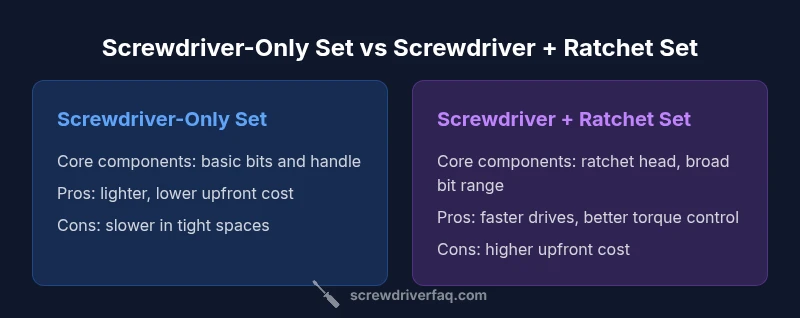
| Feature | Screwdriver-only set | Screwdriver and ratchet set |
|---|---|---|
| Core components | Standard screwdriver bits, handles only | Includes ratchet head, quick-release bits, broader bit range |
| Versatility/Speed | Manual driving, slower | Faster drives in tight spaces with ratchet |
| Torque control | Basic grip-based torque | Improved torque control via ratchet mechanism |
| Accessibility in tight spaces | Limited reach | Better access with ratchet head and compact profile |
| Bit availability | Fewer bits | Broad bit assortment including specialty bits |
| Ergonomics/Weight | Simple, lighter | Slightly heavier but ergonomic grip |
| Maintenance | Fewer moving parts | More parts to maintain; keep clean and lubricated |
| Price range | Lower upfront cost | Higher upfront cost but broader capabilities |
| Best for | Basic tasks, quick repairs | Projects needing speed, reach, and torque control |
Pros
- Increased versatility for a wide range of fasteners
- Improved speed when driving screws in tight spaces
- Easier bit changes with quick-release features
- Potential long-term savings versus buying multiple single tools
- Better ergonomics with quality grips
Negatives
- Higher upfront cost compared with a basic screwdriver kit
- More parts to maintain and replace if worn
- Bulkier setup may not suit ultra-compact workflows
Screwdriver and ratchet set is the better all-around choice for most DIYers
If you want versatility and speed across a broad range of tasks, pick the two-in-one set. It offers better value over time, though it costs more upfront than a basic screwdriver kit.
Quick Answers
What is a screwdriver and ratchet set, and why should I buy one?
A screwdriver and ratchet set combines standard screwdrivers with a ratchet-driven driver and bits, enabling both manual turning and rapid driving. It's particularly useful for furniture assembly, cabinetry, and electronics projects.
It's a combined toolkit that makes many home tasks faster.
Are ratcheting screwdrivers worth it for DIY tasks?
Yes, ratcheting screwdrivers save time and reduce wrist strain on repetitive screwing tasks, especially in tight spots.
Ratcheting tools speed up many common jobs.
What features should I look for when buying a screwdriver and ratchet set?
Seek a durable ratchet mechanism, comfortable grip, broad bit range (Phillips, flat, Torx, hex), and reliable bit retention with quick-release.
Look for comfort, durability, and bit variety.
Can a screwdriver and ratchet set handle electronics work?
Some sets include precision and insulated bits suitable for basic electronics; for high-sensitivity work, use ESD-safe tools and follow safety guidelines.
For electronics, use insulated tools and follow safety steps.
Is a compact two-in-one set enough for most home projects?
For many homeowners, a mid-sized screwdriver and ratchet set covers most tasks. For heavy carpentry or automotive work, you may need larger sockets or specialty bits.
A mid-range set fits most jobs, with room to grow.
The Essentials
- Choose a two-in-one set for versatility
- Check the ratchet's activation and return action
- Choose a broad bit assortment for coverage
- Prioritize ergonomic handles to reduce fatigue
- Budget for a mid-range set for best value