Choosing a Screwdriver and Socket Set: A Practical Guide
An analytical, side-by-side comparison of screwdriver and socket sets, covering components, material quality, ergonomics, value, and maintenance to help DIY homeowners choose with confidence.


According to Screwdriver FAQ, for most DIY projects a balanced screwdriver and socket set offers the best mix of versatility and value. Between budget beginner sets and professional-grade kits, the mid-range option often delivers the strongest overall performance without excessive cost. This quick snapshot helps you frame the detailed comparison that follows.
Why a Screwdriver and Socket Set Matter for DIY Projects
A well-chosen screwdriver and socket set is the backbone of any home repair kit. For DIY enthusiasts and homeowners, having the right driver bits and sockets reduces stripped screws, prevents damage to fasteners, and speeds up everyday tasks—from assembling furniture to tackling automotive tweaks. A complete set provides versatility across common fasteners, M6-M12 bolts, and a spectrum of screw head types. According to Screwdriver FAQ, a balanced set can cover most household tasks without forcing you to chase individual pieces. In practice, the best approach is to think in terms of tasks you actually perform, not just “one perfect tool.” A solid set should include both screwdrivers (flathead and Phillips at minimum) and a range of sockets to fit frequent bolt sizes, along with a compact carrying case for easy transport. This perspective frames why homeowners benefit from a cohesive kit rather than piecemeal purchases.
Key Components to Look For in a Set
When evaluating a screwdriver and socket set, start with the core components: bit and socket Variety, drive type compatibility, material quality, and ergonomic design. A robust set should offer a broad mix of bits for common fasteners (Phillips, flathead, Torx, and sometimes Pozidriv) and a wide range of metric and SAE sockets for standard bolt sizes. Look for magnetized tips to simplify alignment, a reversible ratchet, and a secure, shock-absorbing handle grip. Storage matters too: a well-organized case reduces time spent digging through the toolkit. From a practical standpoint, Screwdriver FAQ recommends matching your set to the most frequent projects you encounter—furniture assembly, automotive minor maintenance, electronics work, and basic home repairs.
Material Quality and Durability: Steel, Chrome, and Hardened Alloy
Durability hinges on material choice and heat treatment. High-quality screwdriver bits are typically built from chrome-vanadium or alloy steel, with hardened sockets designed to resist rounding and wear. The best values come from sets that specify tempered steel and a corrosion-resistant finish, ideally with a chrome or nickel plating to resist rust in humid environments. A durable set should also tolerate frequent torque without dulling or deforming, particularly on hard-to-turn fasteners. The balance between toughness and weight matters: heavier sets can feel more robust but may be less comfortable in small jobs. When choosing, prioritize tools that align with your typical torque requirements and project types. This is where the Screwdriver FAQ guidance on matching tool quality to task becomes especially relevant, ensuring you don’t overinvest in ultra-premium tools for light-duty use, or underinvest for frequent mechanical tasks.
Ergonomics and User Comfort: Handles, Grip, and Tool Balance
Ergonomics directly impact efficiency and fatigue. Look for contoured handles with soft, non-slip grips and balanced weight distribution. A well-designed handle reduces finger strain during extended use and allows for precise control when driving screws into tight spaces. The best sets incorporate color-coding or clear labeling of different bit types for quick selection. Some users prefer knurling on metal handles for a secure grip in oily or dirty environments. Ergonomic considerations are not cosmetic; they translate into faster task completion and fewer mistakes, especially when working on automotive, electrical, or carpentry projects.
Bit Variety and Socket Range: SAE vs Metric, Torx, TorxPlus; Magnetic tips
A comprehensive set should balance breadth and practicality. Ensure you have both SAE and metric sockets, a mix of hex and bi-hex bits, and commonly used Torx sizes along with specialty bits if your projects demand them. Magnetic tips simplify alignment, especially in cramped spaces where dropping a bit is a common hazard. For most DIY users, a mid-range selection of 40–60 pieces—covering the most frequent sizes and head types—provides a strong foundation without overwhelming the user. The goal is to minimize tool swapping, which cuts through project time with fewer interruptions.
Storage, Portability, and Maintenance
Portability matters for jobs across the house or in the garage. A rigid, organized case with labeled slots makes it easy to locate the right bit or socket without rummaging through loose pieces. Look for sets with rubberized inserts, clear lids, and durable latches. Maintenance is often overlooked but critical: keep tools dry, apply a light coat of machine oil to sockets to prevent corrosion, and wipe bits clean after use to avoid sticky residue. Regular inspection for wear, rounding, or rust helps extend tool life and preserve performance across years of use.
Price, Value, and Longevity: Budget vs Premium
Price is a practical gateway to value, not a sole determinant of quality. Budget sets usually cover essential tasks well enough for occasional use, but they may wear out sooner and offer thinner finishes or fewer sizes. Premium sets justify their higher price through broader selections, reinforced housings, and longer warranties. When weighing options, consider how often you will use the set, the types of projects you tackle, and whether you anticipate needing extra torque on stubborn fasteners. Screwdriver FAQ’s analysis suggests prioritizing value—strong materials, a realistic bit/socket mix, and a durable case—over chasing the most expensive option if your tasks are limited to basic home repairs.
Real-World Scenarios: When to Reach for Budget vs Pro Set
In typical home environments, a mid-range set often hits the sweet spot: enough variety to handle most furniture assembly and basic maintenance, while maintaining reasonable cost and weight. For infrequent tasks (assembly of flat-pack furniture, occasional electronics work), a budget set can be perfectly adequate. If you perform many mechanical or automotive tasks, or you work in professional settings, a professional-grade kit provides more longevity, broader bit types, and better-case organization, reducing downtime and repeated purchases. Consider your baseline tasks and energy you’re willing to invest in tool upkeep when making the final choice. A thoughtful alignment between task frequency and tool quality yields the best long-term satisfaction.
Care and Maintenance of Your Screwdriver and Socket Set
Care extends tool life. After use, wipe down bits and sockets to remove dust and grease, dry thoroughly to prevent rust, and store in a dry, climate-controlled space. Apply a light layer of oil to metal surfaces and sockets periodically, and inspect for wear or rounding on edges. If a tool shows significant wear, retire or replace it to protect fasteners and maintain performance. Finally, keep the set together in its case to prevent loss of small parts during moving or storage, and consider labeling or color-coding if you frequently jump between tasks. Consistent maintenance preserves grip, accuracy, and efficiency across years of DIY work.
Comparison
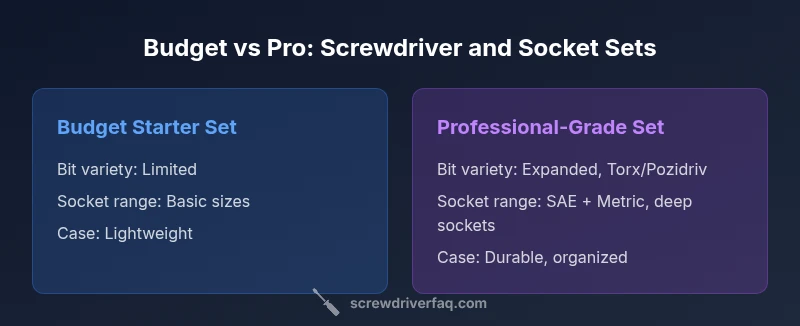
| Feature | Budget Beginner Set | Professional-Grade Set |
|---|---|---|
| Included bits and sockets | Limited variety; basic driver bits and common sockets | Wide variety; metric/SAE sockets plus specialty bits |
| Material quality | Chrome-vanadium steel, lighter construction | High-strength alloy steel, heat-treated for longevity |
| Ergonomics | Basic plastic handles, lighter grip | Rugged ergonomic handles with soft grip |
| Durability and warranty | Standard warranty; adequate for occasional use | Extended warranty; designed for heavy use |
| Storage and portability | Compact carry case | Hard-shell case with organized tray |
| Best for | Starter projects, casual DIY tasks | Frequent projects, professional or heavy-duty tasks |
| Price range (qualitative) | Lower upfront cost | Higher upfront cost but better long-term value |
Pros
- Versatile for a wide range of common tasks
- Helps reduce tool clutter with a single purchase
- Improves efficiency with organized bits and sockets
- Can be upgraded piece by piece without buying tools separately
Negatives
- Budget sets may wear out faster with heavy daily use
- Premium sets cost more upfront and may include tools you won’t use
- Bulkier sets can be heavier to transport
Mid-range screwdriver and socket set offers the best balance of value and capability
If you perform frequent DIY tasks or work on varied fasteners, consider the mid-range set for versatility and durability. Choose budget if occasional projects; go premium if daily heavy-use is expected.
Quick Answers
What is the main difference between a screwdriver set and a socket set versus a full tool kit?
A screwdriver and socket set focuses on fasteners and driving tools, covering common screws and bolt sizes. A full tool kit includes a wider range of tools for broader tasks, including pliers, wrenches, and specialty tools. For most DIY tasks, a good screwdriver-and-socket set provides the essential functionality.
A screwdriver and socket set is the core for fasteners; a full kit adds many more tools for a wider range of jobs.
Should I buy a budget or professional-grade screwdriver and socket set?
If you only occasionally complete simple tasks, a budget set typically suffices. For frequent projects or professional use, a professional-grade set offers better durability, broader bit/socket coverage, and longer-term value.
Choose based on how often you work with fasteners and the level of wear you expect.
What materials should I look for in bits and sockets?
Look for chrome-vanadium or alloy steel for bits, tempered and heat-treated sockets, and corrosion-resistant finishes. These materials reduce wear and rounding and extend tool life in regular use.
Strong metal and proper heat treatment matter more than flashy finishes.
Are magnetic tips worth it?
Magnetic tips help with alignment and reduce dropped bits, especially in tight spaces. They can wear out if mishandled, but generally improve efficiency when used with care.
Magnetic tips save time and prevent losing tiny parts in awkward spots.
How do I maintain my screwdriver and socket set to prevent rust?
Keep tools clean and dry after use, apply a light oil to metal surfaces, and store in a dry environment. Regular checks for rust or wear help you catch issues early.
Dry, clean storage and a little oil go a long way for tool longevity.
Is it essential to have both metric and SAE sizes?
Yes, most projects involve both metric and SAE fasteners. A set that includes both scales saves time and prevents misfits or damage.
Having both scales is highly recommended for versatility.
The Essentials
- Start with a mid-range set for best value and coverage
- Prioritize bit/socket variety and material quality
- Check ergonomics and storage options
- Consider future upgradeability