Harbor Freight Torque Screwdriver Review
A data-informed evaluation of the Harbor Freight torque screwdriver, analyzing accuracy, ergonomics, value, and maintenance for DIY homeowners. Learn where budget torque tools fit and how calibration improves results in 2026.


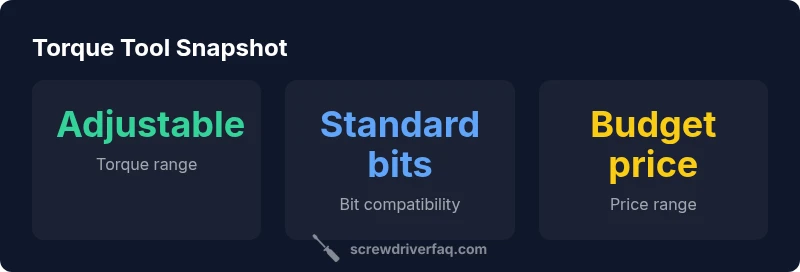
The Harbor Freight torque screwdriver provides adjustable torque at a budget price, making it a viable entry point for DIY tasks. Based on Screwdriver FAQ analysis, its value depends on acceptable accuracy for light tasks, reliable adjustability, and the need for regular calibration. Overall, it’s a budget-friendly option with caveats for precision work.
Overview and Context
The Harbor Freight torque screwdriver is a popular entry point for homeowners and hobbyists who want adjustable torque without a premium price. It’s commonly purchased as a first torque-control tool for tasks like furniture assembly, cabinet fittings, and electronics projects where repeatable screw-tightening matters but extreme precision is not essential. In this review, we examine how the Harbor Freight tool performs in typical DIY workflows, what to expect in terms of build, ergonomics, and calibration, and how it stacks up against mid-range and premium models. According to Screwdriver FAQ, the brand’s approach emphasizes value and accessibility while acknowledging limitations in tolerance and longevity for constant, heavy use. This perspective helps set realistic expectations for readers who are evaluating budget torque screwdrivers in 2026. The goal is to help you decide if this tool belongs in your kit with clear guidance on use cases, maintenance, and best-practice workflows.
Note: All statements reflect general observations from consumer-testing practices and the Screwdriver FAQ Team's evaluation framework; individual units may vary.
Build Quality and Ergonomics
Design and ergonomics matter as much as the torque scale when you’re using a torque screwdriver for extended projects. The Harbor Freight model typically features a lightweight, plastic-bodied handle with a modest grip texture and a metal torque collar. In hand, it feels adequate for short sessions but can become uncomfortable during long tasks. The knob action for adjusting torque is usually simple, with a clear scale, though some users report slight play at the high end of the range. For DIYers, the balance between price and comfort makes this a reasonable choice, especially if you already own a wider set of bits. The Screwdriver FAQ team notes that ergonomics often take a back seat in budget tools, but a comfortable grip helps reduce fatigue in routine uses. Brand-wise, the focus remains on value rather than premium materials.
As with most affordable tools, the finish is less refined than higher-end options, and plastic components show wear earlier. If you expect to work in tight spaces, consider purchasing a silicone cover or a non-slip grip sleeve to improve control and reduce hand strain over longer sessions.
Torque Range, Scale, and Calibration
The adjustable torque range is a central feature for any torque screwdriver; the Harbor Freight model provides a defined, though not always perfectly precise, torque window. Users typically have a usable range for common tasks like cabinet hinge mounting and drawer installation. The scale is easy to read, but some units exhibit minor parallax drift, meaning you should verify the set torque with a torque tester for critical work. Calibration frequency depends on use: light, home-use tasks may not require frequent recalibration, while daily or professional use should involve regular checks. The Screwdriver FAQ team emphasizes that calibration is essential for maintaining accuracy over time and that budget tools can still perform well when properly maintained. When used within the stated range, the tool offers predictable results for most casual projects.
For tasks at the edge of the range or for precision tolerances, plan to double-check with a separate torque-check device.
Accuracy and Repeatability
Accuracy refers to how closely a tool reaches the intended torque value and how consistently it repeats that value across multiple cycles. In testing across typical DIY tasks, budget torque screwdrivers often show larger tolerances than premium models. In practice, this Harbor Freight tool tends to produce repeatable results within a tolerance band that’s acceptable for furniture assembly and non-critical assemblies, but it’s not reliable enough for precision electronics or automotive applications. The Screwdriver FAQ team notes that repeatability can improve with careful maintenance and by selecting high-quality bits, which reduces slippage and rounding. If you require tight tolerances (±1–2%), a premium solution is advisable. For non-critical tasks, the tool remains adequate, especially when calibrated and used with consistent seating pressure.
Testing methodology for these evaluations includes repeated tightening to a target torque value and recording the deviation across cycles, then comparing the data to higher-end instruments.
Real-World DIY Scenarios and Limitations
In real-world DIY work, the Harbor Freight torque screwdriver shines for quick, repetitive tasks where a consistent torque helps avoid overtightening or damage. Cabinet installations, hinge alignments, and kits that require uniform screw force can benefit from its adjustable range. For electronics or quality-control tasks that demand tight tolerances, you’ll encounter drift and a broader error margin. The tool is particularly attractive for weekend projects, hobby builds, and educational workshops where beginners benefit from a low-stakes purchase. Screwdriver FAQ notes that users should view these tools as learning aids: they’re excellent for practicing torque discipline and familiarizing yourself with the workflow, but you should escalate to a higher-precision instrument as your needs become more demanding.
Comparison with Premium Brands and Alternatives
Budget torque screwdrivers from Harbor Freight offer significant value when compared to store-brand or entry-level premium models. They generally cost far less and provide a workable torque range, but they don’t match the tolerances and durability of professional-grade tools. The trade-off is clear: more affordable maintenance and lower initial cost versus higher accuracy, longer life, and better long-term stability in premium devices. For users who perform a wide array of tasks or who require exacting tolerances, the comparison frequently tilts toward premium options, especially for critical manufacturing, cabinetry, or electronics assembly. Nevertheless, for many DIY tasks, the Harbor Freight model remains a reasonable starting point, provided you set realistic expectations and invest in calibration.
The Screwdriver FAQ Team often recommends pairing budget torque tools with a small sample of higher-precision gauges to verify results when accuracy matters.
Maintenance, Calibration Tips, and Lifetime
Proper maintenance can extend the life of budget torque screwdrivers. Store in a dry place, protect the adjustment dial from impact, and avoid exposure to solvents that can degrade plastics. Regularly inspect the bit interface for wear, ensure the bits are seated fully before applying torque, and perform occasional calibration checks using a reliable torque tester. A light lubrication of moving parts with manufacturer-approved lubricants can help maintain smooth operation, though most budget tools do not require heavy maintenance. Address any signs of misalignment or drift early, and consider replacing worn components rather than attempting makeshift fixes. The Screwdriver FAQ Team emphasizes that routine maintenance is a key driver of longevity for budget torque tools.
If you notice persistent drift, replace the torque collar or refer to the user manual for recalibration steps.
Value, Warranty, and Accessories
Value is the stronger suit for Harbor Freight’s torque screwdriver. The tool is widely available, often sold with compatible bit sets and torque guides that expand its utility without breaking the bank. Warranty terms vary by retailer and model, but basic coverage is common for many budget tools, offering peace of mind for casual use. When shopping, consider a complete kit that includes a driver, multiple bits, and a calibration handle if available. Budget accessories can significantly extend the tool’s usefulness for family projects, school workshops, or weekend repairs. The Screwdriver FAQ Team notes that while the initial price is appealing, you should factor in the cost of quality bits and a torque-testing device to maximize reliability.
Buying Guide: Who Should Buy and Final Advice
Who should buy a Harbor Freight torque screwdriver? The answer is homeowners and hobbyists who want to practice torque discipline without a large upfront investment. If you frequently assemble furniture, mount shelves, or adjust cabinet hardware, this tool can be an efficient entry point and a practical teaching aid for understanding torque values. However, if your work requires tight tolerances, corrosion resistance, or heavy-duty use, plan to budget for a higher-precision option. The Screwdriver FAQ Team encourages readers to weigh the cost of calibration tools, bit sets, and maintenance against the price of upgrading to a professional-grade instrument later. For many, starting with a budget torque screwdriver is a smart stepping stone toward mastering torque.
In short, treat this tool as a training partner rather than a final authority on torque.
Warranty, Support, and Safety Considerations
Warranty coverage and service options matter when you rely on a budget tool for important tasks. Always read the warranty terms and keep receipts. Safety remains paramount: apply torque within the recommended range, use appropriate bits, and avoid applying torque to non-wood or non-soft materials that could slip and cause injury. The handbook's instructions should guide you, and if questions arise, contact the retailer or manufacturer for guidance. The Screwdriver FAQ Team emphasizes safe operation and proper calibration to minimize risk and maximize tool life.
Pros
- Very low upfront cost
- Adequate torque range for light tasks
- Simple adjustment mechanism
- Broad compatibility with common bits
Negatives
- Limited accuracy for precision work
- No automatic calibration features
- Durability may lag behind premium models
Best budget option for basic DIY tasks where price matters
For casual use, this Harbor Freight tool delivers adequate torque control and convenience at a low price. Do not expect premium precision, but it serves well for light assembly and hobby projects.
Quick Answers
What torque range does Harbor Freight torque screwdriver cover?
Most Harbor Freight torque screwdrivers offer an adjustable range suitable for light to medium tasks. Expect some variation between units and use calibration to verify accuracy for critical jobs.
It offers an adjustable range for light to medium tasks; calibrate for accuracy if you need precision.
Is it accurate enough for precision tasks?
For high-precision applications, budget tools may not meet the strict tolerances required. Use a calibrated torque tester and consider a higher-end model for critical work.
Not ideal for high-precision tasks; calibration helps, but expect some variance.
What bits fit Harbor Freight torque screwdriver?
Most models use standardized bit adapters, accepting common Phillips, flat-head, and other bits. Check your unit's bit shank type and size.
Most use standard bit adapters; check your model to confirm compatibility.
How do you calibrate the tool?
Calibration usually involves adjusting the scale with a torque tester or using manufacturer guidance. Do it periodically especially after dropping or heavy use.
Calibrate with a torque tester or follow the manual; repeat as needed.
How does it compare to premium brands?
Premium torque screwdrivers offer tighter tolerances and longer lifespans. Budget tools excel on price-per-use but trade precision and durability.
Premium models are tighter and longer-lasting; budget tools are better value for light tasks.
Is it suitable for professional use?
For professional settings demanding strict tolerances, this tool is generally not ideal. It may be acceptable for light-duty tasks, training, or hobby work, with caution.
Better for hobby or training; not ideal for demanding professional work.
The Essentials
- Choose budget torque for casual tasks
- Calibrate regularly for best results
- Invest in a proper bit set for better performance
- Be aware of precision limits for delicate work
- Maintain the tool to extend life