Home Depot Torque Screwdriver: Buying Guide for DIYers
A comprehensive guide to buying a Home Depot torque screwdriver, covering ranges, features, calibration, and maintenance for DIY, electronics, and light mechanical work.


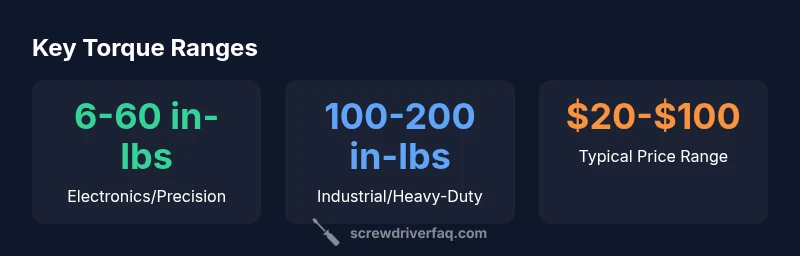
Home Depot torque screwdrivers cover a broad range of torque settings, from low-torque electronics models to heavier-duty units. Most consumer-grade units adjust from roughly 6 in-lbs up to 60 in-lbs, while premium or industrial variants can reach 100–200 in-lbs. When shopping, check the labeled range, ensure calibration options are available, and choose a model compatible with electronics and light mechanical assemblies.
What a torque screwdriver is and why the home depot torque screwdriver category matters
Torque screwdrivers are precision tools designed to apply a specific torque to fasteners. Unlike a regular screwdriver, they click, slip, or beep at the set torque to prevent over-tightening. In stores like Home Depot, you’ll find several models labeled for electronics, automotive maintenance, and light mechanical tasks. For many DIYers, choosing a home depot torque screwdriver means matching the device’s torque range with the job, verifying calibration options, and considering future maintenance. The terminology you’ll encounter includes adjustable torque ranges, tolerance classes, and linear versus click-type mechanisms. Regardless of brand, the goal is repeatable, controlled fastening that minimizes thread stripping and damaged screws.
How to choose the right torque screwdriver for your project
Selecting the right torque screwdriver requires a clear view of your project’s torque needs and the work environment. Start by identifying the typical torque range required for your tasks—electronics assemblies usually require lower ranges, while small mechanical assemblies demand higher ranges. Prefer models with an adjustable range and a clear torque scale in either in-lbs or newton-meters (N·m); many hobbyists favor in-lbs for electronics, while mechanical projects often use N·m. Consider the following decision points:
- Adjustability: A wide, easy-to-read scale with a locking mechanism helps maintain your setting during use.
- Torque range: Ensure the lower end covers delicate electronics and the upper end covers general fasteners in your toolkit.
- Calibration access: See whether the model supports periodic calibration or is certified by the manufacturer.
- Tip compatibility: Confirm you can swap tips (Phillips, flathead, Torx, etc.) for different fasteners.
- Ergonomics and durability: A comfortable handle, durable materials, and a reliable lock improve long-term use.
Pro tip: For electronics, start with a model that offers precise low-torque settings (often around 6 in-lbs) and a clear calibration verification process. For DIY or light mechanical tasks, look for mid-range models that cover roughly 20–60 in-lbs and have a robust locking function. When evaluating at Home Depot, compare the product label, user reviews, and any available calibration certificates or test data. The goal is a tool that stays accurate between calibrations and resists drift with normal use.
Key features to look for in Home Depot torque screwdrivers
The best torque screwdrivers—whether purchased at Home Depot or elsewhere—share a set of core features that support accuracy and reliability:
- Adjustable torque range: A broad, easily legible scale with a tactile detent or audible click helps confirm the torque setting during operation.
- Calibration and traceability: Look for guidance on calibration intervals, and whether the manufacturer provides calibration certificates or nut-and-bolt test data.
- Units and conversion: Some models show both in-lbs and N·m; choose one that matches your preferred measurement system.
- Lock mechanism: A reliable lock prevents accidental changes to the torque setting during use.
- Tip compatibility: Interchangeable tips (Phillips, flathead, Torx, TorxPlus) extend the tool’s versatility.
- Build quality: A metal handle, corrosion-resistant surfaces, and snug-fit tip interfaces contribute to longevity.
- Ergonomics: A comfortable grip and balance reduce fatigue during extended sessions.
Consider the intended tasks when prioritizing features. Electronics work demands finer control and stable repeatability, while hobbyist carpentry might benefit from a broader range and tougher construction. When shopping, also check for a warranty and the availability of spare tips and calibration services through Home Depot or the manufacturer.
How to use and calibrate a torque screwdriver
Using and calibrating a torque screwdriver correctly is essential to ensure consistent results. Follow these steps:
- Set the torque: Rotate the adjustment knob or dial until you reach the desired torque on the scale. If the model includes a lock, engage it.
- Verify the setting: Use a torque tester or a known-good fastener to confirm that the tool reaches the intended torque before applying it to critical work.
- Apply with a steady motion: Press straight, avoid side loading, and stop as soon as you feel the tool click or hear the audible cue.
- Recheck after use: Re-verify the torque after a few fastenings to ensure the setting remains accurate.
- Calibrate regularly: Follow the manufacturer’s recommended interval, typically every 6–12 months or after a known impact event (e.g., a dropped tool).
If you suspect drift or inconsistent readings, replace worn components or seek a professional calibration service. Some Home Depot staff may offer or recommend calibration services through the manufacturer or local service providers.
Maintenance and care to extend lifespan
To keep your home depot torque screwdriver accurate and reliable, adopt a simple maintenance routine:
- Store properly: Keep the tool in a protective case with the torque setting unlocked but secured so it doesn’t drift from bumps.
- Clean regularly: Wipe the housing and tip interface after use to remove dust and debris; avoid immersion in liquids.
- Inspect tips: Check for wear, rounding, or corrosion on tips, and replace as needed to maintain accurate engagement with fasteners.
- Calibrate on schedule: Track calibration dates and schedule service before drift impacts critical work.
- Avoid over-torque: Use the torque setting appropriate for the fastener to reduce wear on the mechanism.
With proper care, a torque screwdriver can serve for years in a DIY shop or electronics lab. Consider establishing a calibration calendar and reviewing it before major projects to ensure peak performance.
Cost ranges, warranty, and buying considerations at Home Depot
Home Depot generally offers torque screwdrivers across a spectrum of prices, reflecting build quality, precision, and range. Budget models typically cover lower torque ranges suitable for hobby electronics, while mid-range and premium options provide broader ranges, higher precision, and better ergonomics. When budgeting, consider:
- Price bands: Expect a low-to-mid price tier for entry-level, a mid tier for versatile models, and a premium tier for professional-grade tools with broader ranges and added features.
- Warranties: Check the warranty terms; longer warranties often correlate with better build quality and customer support.
- Availability: Home Depot stores and online listings can vary by region; verify stock and tip kit availability for your needs.
- Accessories: Some models ship with an assortment of tips; others require separate purchases.
If you’re new to torque-controlled fastening, start with a mid-range model that offers a comfortable grip, moderate range, and reliable calibration, then upgrade as your projects demand more precision or wider torque bands. Always compare models in-store, read user reviews, and consider the return policy if the tool doesn’t meet your expectations.
Torque screwdriver range by use-case
| Model Type | Typical Range | Best For |
|---|---|---|
| Electronics/Precision | 6-60 in-lbs | PCB assemblies and small fasteners |
| General-purpose | 20-100 in-lbs | DIY projects and light machinery |
| Industrial/Heavy-duty | 100-200 in-lbs | Small motors and heavier fasteners |
Quick Answers
What is a torque screwdriver and how is it different from a regular screwdriver?
A torque screwdriver is a precision tool that delivers a specific torque to a fastener. Unlike a standard screwdriver, it provides feedback—usually an audible click or a stop when the preset torque is reached—reducing the risk of over-tightening and damaged threads.
A torque screwdriver delivers a set torque and confirms it with a click, so you don’t over-tighten screws.
Which Home Depot torque screwdriver models are best for electronics?
For electronics, look for models with fine, adjustable ranges and clear, easy-to-read scales. Prioritize lower torque ends (often around 6 in-lbs) and a stable calibration process to protect delicate components.
Electronics work needs precise, low torque and clear readings.
How do I choose the right torque range for a project?
Identify the fastener and material requirements, then select a model whose torque range covers the required setting with a comfortable margin. If in doubt, choose a mid-range model with adjustable settings and reliable calibration.
Know the torque you need, then pick a model that covers it with room to adjust.
Do torque screwdrivers need calibration?
Yes. Calibrating ensures accuracy over time. Follow the manufacturer’s schedule, typically every 6–12 months or after any impact event, and verify with a torque tester.
Yes—regular calibration helps keep readings accurate.
What maintenance is recommended for a torque screwdriver?
Store it properly, keep tips clean and free of corrosion, inspect for wear, and calibrate per schedule. Replace worn tips and components to maintain accuracy.
Keep it clean, inspect wear, calibrate on schedule.
Are digital torque screwdrivers worth it for DIY projects?
Digital models offer precise readouts and adjustable presets but can be more expensive. For many DIYers, a high-quality analog with a clear scale and locking mechanism provides ample precision at a lower cost.
Digital tools are precise but pricier; for many DIYers, analog works well.
Can I use a torque screwdriver for regular screws?
Yes, as long as the torque range matches the fasteners you’re using. Avoid forcing too much torque on already-strained screws; use the appropriate setting for each task.
Use it within its torque range for best results.
How can I verify that my torque screwdriver is accurate?
Test the tool on a calibrated torque tester or a known, reliable fastener. Compare against the expected torque and re-calibrate if there’s drift.
Test with a calibrated tester to confirm accuracy.
“Precision is only as good as your calibration and the care you give your torque screwdriver. A reliable tool yields repeatable results.”
The Essentials
- Choose a torque screwdriver with an appropriate adjustable range for your tasks
- Check calibration options and maintenance schedules before buying
- Prefer models with clear scales, locking mechanisms, and interchangeable tips
- Calibrate regularly to maintain accuracy over time
- Maintain the tool by cleaning, storing properly, and inspecting tips for wear