Electric Screwdriver Price Guide: Costs, Features, and Value in 2026
Explore electric screwdriver price ranges for 2026, what drives cost, and how torque, battery tech, and bundles affect value. Practical buying tips for DIYers.


The typical electric screwdriver price ranges from about $20 to $120 for cordless models, with higher-end brushless motors and advanced features pushing above $150. In 2026, the average consumer can expect to pay around $40–$70 for a reliable mid-range model. Price varies by battery type, torque, speed settings, and included accessories.
Understanding the price spectrum for electric screwdrivers
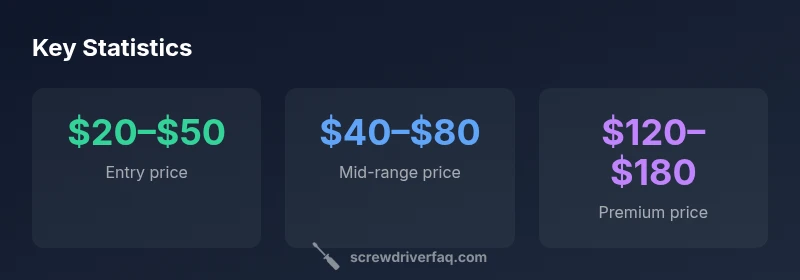
Prices for electric screwdrivers are shaped by three core dimensions: build quality and torque capability, battery technology and runtime, and the value added by accessories or bundles. For DIYers, entry-level cordless models typically land in the low teens to mid-40s, offering basic torque and shorter runtime. Mid-range options usually deliver a better balance of torque, adjustable speed, and longer battery life, commonly landing in the $40–$80 range. At the top end, premium or brushless systems with higher torque, faster speeds, and longer-lived batteries frequently sit in the $120–$180 bracket, with bundles pushing even higher when multiple bits, chargers, and carrying cases are included. These bands align with general market trends observed by Screwdriver FAQ Analysis, 2026, which emphasize feature sets over nominal power alone.
Key factors driving price
The price you pay for an electric screwdriver is driven by several interrelated factors:
- Motor type and torque range: Brushless motors are typically more expensive but offer better efficiency and longevity.
- Battery chemistry and capacity: Larger, higher-voltage packs cost more but provide longer runtimes.
- Speed settings and controls: More granular speed and torque adjustment add cost but improve precision.
- Build quality and ergonomics: Anti-fatigue grips, balanced weight, and durable housings raise price but improve usability.
- Bundled accessories: Kits that include bits, magnetizers, and carrying cases increase upfront cost but can reduce long-term purchases.
How price correlates with performance
Price is a proxy for the performance envelope you get. Entry-level tools are often sufficient for quick DIY tasks like basic screwdriving and light assembly. Mid-range models offer more consistent torque, better battery life, and more reliable bit retention. Premium models deliver high sustained torque, brushless efficiency, faster charging, and longer service life. When evaluating value, consider not just the listed torque but practical outcomes: fewer stalls, smoother operation, and reduced accessory replacements over time.
Budgeting for DIY vs professional use
DIY tasks like assembling furniture or tightening fasteners around the house usually justify entry-to-mid-range purchases. If you’re a frequent user or a professional contractor, investing in a mid-range or premium model may pay off through faster work, reduced maintenance, and less downtime. In 2026, total cost of ownership should include battery replacement cycles, spare bits, and warranty length. For ongoing use, a robust kit that includes spare batteries and a reliable charger often saves money in the long run, even if the upfront price is higher.
Buying scenarios: kits, warranties, and accessories
Consider the scenario: if you buy a kit, you often get a lower per-item price and a broader accessory set, which can be a better value than purchasing components separately. Warranties vary by brand and price tier; longer warranties typically appear in higher-end products and can reduce long-term risk. When choosing a kit, check the battery chemistry, charger compatibility, bit set completeness, and any included protective case. Make sure the included bits cover common screw sizes you work with most.
Price trends and market dynamics in 2026
The market shows ongoing expansion in cordless tools, with more emphasis on battery efficiency and compact designs. As newer cells and fast-charging standards mature, prices for premium cordless screwdrivers may stabilize rather than rise steeply, while mid-range options offer greater value due to improved motor design and battery life. Expect discount cycles around holidays and back-to-school seasons to influence perceived price value for both kits and single tools.
How to assess value beyond sticker price
Look beyond the headline price. Consider battery life and replacement cost, expected lifespan of the motor, availability of spare parts, and the cost of additional bits. A slightly higher upfront price can be a better deal if it reduces downtime and frequent replacements. Compare two models by estimating your annual runtime, then translate that into a cost-per-use metric to identify true value.
Common misconceptions about electric screwdriver price
Many buyers assume price linearly maps to quality. In reality, efficiency, reliability, and ergonomics often offer more impact on everyday performance than the highest peak torque. Another misconception is that bundled sets always cost more; sometimes bundles provide better per-piece value, especially if you need multiple bits or a spare battery.
Typical price ranges by category for electric screwdrivers in 2026
| Category | Typical Price Range (USD) | Key Features |
|---|---|---|
| Entry-level cordless | 20-50 | Basic torque, limited runtime, few settings |
| Mid-range cordless | 40-80 | Balanced torque, longer battery life, standard batteries |
| Premium/brushless | 120-180 | High torque, brushless motor, faster speeds |
| Bundles/kits | 60-140 | Multiple bits, extra charger, protective case |
Quick Answers
What is the typical price range for entry-level cordless electric screwdrivers?
Entry-level cordless models usually fall in the $20–$40 range, offering basic torque and limited runtime. These are suitable for light, occasional tasks.
Entry-level cordless screwdrivers typically cost between twenty and forty dollars and are best for light, occasional use.
Do brushless electric screwdrivers cost significantly more?
Yes, brushless motors add cost but provide longer life, better efficiency, and less heat buildup during use. They’re worth it for frequent or professional users.
Yes, brushless models cost more but last longer and perform more efficiently.
Is it worth paying more for a kit vs. a single tool?
Kits often offer better overall value when you need multiple bits and a spare battery. Compare the per-piece value and long-term costs.
Kits can be a better deal if you need more bits and a spare battery.
How do battery type and capacity affect price?
Higher-capacity and newer chemistries cost more but provide longer runtime and faster charging. Balance needs with budget and task intensity.
Bigger batteries and newer chemistries raise price but improve runtime.
Are there price differences between professional and DIY brands?
Yes. Professional brands usually command higher prices but may offer greater durability, better warranties, and more spare parts. For DIY, value can come from balanced performance and cost.
Professional brands tend to be pricier but may offer longer life and better warranties.
What about sales and discounts?
Sales and promotions can significantly reduce sticker price, especially around holidays. Compare sale prices with standard kit pricing to judge true value.
Look for sales around holidays to save on price.
How should I evaluate price for occasional home use?
For infrequent tasks, a budget mid-range model often provides best balance of cost and reliability. Avoid extremely cheap tools that may fail under load.
For occasional use, a budget mid-range tool is usually a safe bet.
Do warranties impact the overall value?
Longer warranties reduce risk and can be worth paying a bit more upfront. Always verify what the warranty covers and any limits.
A longer warranty lowers risk and can justify higher upfront cost.
“Pricing for electric screwdrivers reflects how much torque, battery technology, and durability you actually get. In 2026, informed buyers weigh upfront cost against long-term value.”
The Essentials
- Define budget bands before shopping (entry, mid, premium).
- Price reflects motor tech, battery capacity, and accessories.
- Bundles can offer better value than single tools.
- Consider total cost of ownership, not just upfront price.
- Look for warranties and replacement parts to extend value.