What Size Screwdriver for Eyeglasses: A Practical Guide
A detailed, data-driven guide on eyeglass screw sizes and the corresponding precision screwdrivers. Learn common sizes, measurement tips, and safe techniques to avoid damage while performing at-home eyewear repairs.


Eyeglass hinges use very small screws, so you should start with a precision micro screwdriver. For most frames, flathead drivers in roughly 1.0–2.5 mm blade width or Phillips drivers around PH000–PH00 are appropriate. Always verify screw type first and consider using a jeweler’s loupe or magnifier to read the size before turning.
Understanding Eyeglass Screws
Eyeglasses use miniature screws that secure temples, hinges, and nose pads. The size and style vary by brand and model, which means there is no single universal screw size for every frame. When you search for what size screwdriver for eyeglasses, you are really asking for the precise driver that matches the tiny screw head on your frames. In practice, most repair tasks revolve around two head types: flathead and Phillips. Some frames also use Torx or pin-in-slot screws, but those are far less common in everyday eyewear. Before you grab a screwdriver, examine the screw head under good lighting or with a loupe; the head shape dictates whether you need a flatblade, PH000, or a different precision tip. Using a driver that’s too large can strip the head, while one that’s too small may slip and damage delicate metal finishes. Throughout this guide from Screwdriver FAQ, we’ll break down typical ranges and provide practical tests you can perform at home.
How to Measure Your Screw Size
Measuring eyeglass screws is not about labels on the tool—it's about matching the screw head to the right precision driver. Start by cleaning the screw to remove oils or dust. Use a jeweler’s loupe or a magnifying glass to identify the head type: flathead, Phillips, Torx, or custom. For a quick field test, try a few micro drivers from a compact repair set—never force a driver into a screw head. If the head turns without binding and the slot lines up cleanly, you’ve likely found the correct size. When in doubt, check the frame manufacturer’s specification or take the frame to an optical shop for a precise measurement. Remember, the goal is to avoid cam-out or slipping that could scratch or bend delicate hinges.
Choosing the Right Precision Screwdriver
The half-millimeter differences matter with eyeglass screws. Start with a precision screwdriver set that includes both flathead and Phillips options in very small sizes (around 0.8–2.5 mm blade widths for flatheads and PH000–PH00 for Phillips). If you encounter a rare Torx or pin-in-slot screw, have a dedicated tiny Torx set and a micro-insert tool handy. When selecting a driver, prioritize a snug fit over power; a forgiving, magnetized tip helps hold small screws steady. Look for tools with comfortable, non-slip handles and a balanced weight so you can control the application without stressing the frame. For fragile frames, consider a screwdriver with a fine-tinish tip and a shallow handle to minimize torque.
Common Sizes and How to Use Them
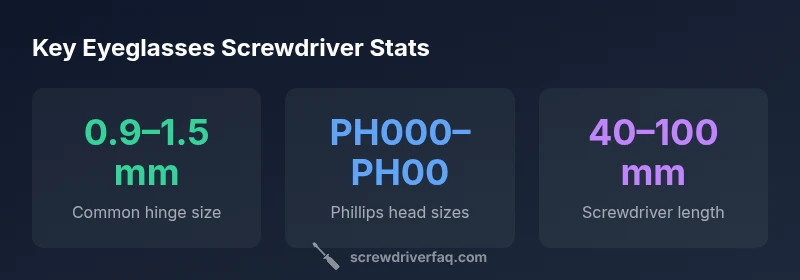
In practice, most eyeglass repairs revolve around a few small ranges. Flathead screws are commonly found in the 1.0–2.5 mm blade width range, while Phillips screws tend to be PH000 or PH00, corresponding to roughly 0.8–1.5 mm head sizes. Always check the screw head before choosing a driver, and test in a non-critical area of the frame if possible. If a screw head resists, stop and reassess rather than forcing the tool. It’s often safer to replace a stubborn screw or seek professional service than risk stripping delicate metal threads. Keeping a tiny magnifier close by helps you distinguish subtle variations that can make the difference between a successful repair and a cosmetic flaw.
Tools, Accessories, and Safe Techniques
A well-equipped eyeglasses repair kit should include several micro screwdrivers, a magnetizer, a small parts tray, a loupe or magnifying glass, and a soft, lint-free cloth to protect surfaces. Use a steady, calm hand and apply minimal torque. If the screw is stubborn, back it out slightly, clean the threads with a tiny brush, and reapply a touch of thread lubricant or dry lubricant suitable for metal. Never over-tighten—eyeglass screws are designed to hold components securely without requiring immense force. For frequent repairs, label screws by location (hinge vs nose pad) to prevent mixing up fasteners.
Maintenance, Storage, and Troubleshooting
After each repair, wipe threads and store screws in a labeled tray to prevent loss. Regularly inspect screws for wear or alignment, and replace any damaged fasteners. If a screw head cam-outs repeatedly, a slightly larger or smaller driver may be needed, or the screw may be cross-threaded and require replacement. For persistent issues, consult a professional optician or eyewear repair service. By adopting a consistent, careful approach to screwdriver sizing for eyeglasses, you minimize risk and improve repair success over time.
Common eyeglass screw size ranges
| Screw Type | Common Size Range (mm) | Notes |
|---|---|---|
| Flathead | 1.0–2.5 | Used on many hinge screws |
| Phillips | 0.8–1.5 | Typically PH000 or PH00 |
| Torx | 0.8–1.2 | Less common on frames |
Quick Answers
What is the most common screwdriver size for eyeglasses?
Most eyeglass hinges use micro screwdrivers in the 0.8–1.5 mm range for flatheads or PH000–PH00 for Phillips. Always verify on your frame to ensure the correct fit.
Most eyewear screws use tiny drivers. Check the screw head first, then pick the right driver.
How do I determine the screw size on my glasses?
Inspect the screw head with a magnifier, measure width with a caliper or ruler, then compare with standard micro driver sizes. If uncertain, consult the frame manufacturer or a professional.
Check the head shape, measure the width, and compare to standard tiny driver sizes.
Can I use a regular screwdriver on eyeglasses?
No. Regular screwdrivers are too large for eyeglass screws and can strip threads or damage the frame. Use a precision micro screwdriver set instead.
Don’t use a normal screwdriver—these screws are really tiny.
What if the screw head is damaged?
If the head is stripped, stop applying force and seek professional repair. A damaged head can be safely addressed by an experienced technician with the right tools.
If the head is damaged, it’s best to get it repaired to avoid further damage.
Are eyeglasses screws metric or imperial?
Eyeglass screws are typically measured in metric terms, but actual sizes are frame-specific. Use a caliper to read the diameter and compare to standard micro sizes.
Frames usually use metric measurements, but it’s frame-specific—measure and compare.
How can I prevent losing tiny screws?
Store screws in a small labeled tray or magnetic dish and work over a soft mat to minimize drops. Returning screws to their designated spot reduces misplacement.
Keep screws in a labeled tray so you don’t lose them.
“Eyewear screws demand careful handling; choosing the right tiny driver reduces the risk of strip and frame damage. Precision matters, especially on delicate hinges.”
The Essentials
- Use precise micro screwdrivers for eyeglass repairs
- Identify screw head type before selecting a driver
- Keep a small, labeled set of drivers for hinges and nose pads
- Read frame manufacturer specs or seek professional help if unsure