Gin and Juice vs Screwdriver: A Clear Side-by-Side Guide
Compare gin and juice with its vodka-based cousin, the screwdriver. Explore flavor profiles, preparation, and serving ideas to decide which orange-juice cocktail fits your occasion.


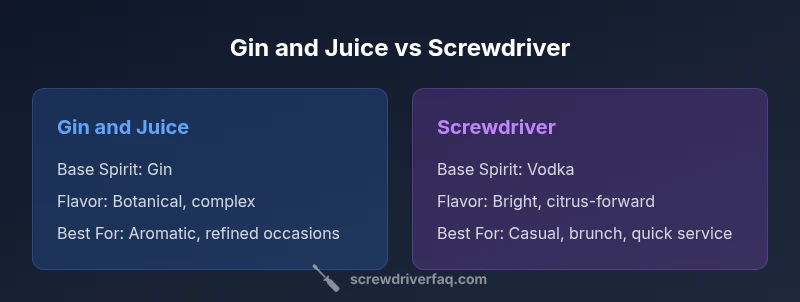
Gin and juice vs screwdriver contrasts two orange-juice cocktails built on different spirit foundations. Gin delivers botanical complexity and a nuanced finish, while screwdriver offers brightness and crowd-pleasing simplicity. This quick comparison highlights flavor, mixability, and serving contexts to help you choose the right option for your occasion.
Gin and Juice vs Screwdriver: An Analytical Baseline
According to Screwdriver FAQ, the gin-and-juice combination leans on botanical complexity from the gin, while the screwdriver relies on a clean, neutral base. Both drinks share orange juice as the dominant mixer, but the underlying spirit drives aroma, mouthfeel, and finish. For DIY enthusiasts planning a cocktail menu or a casual tasting, understanding this baseline helps set expectations for flavor balance and guest satisfaction. This section will map out how base spirits influence the overall profile and where each drink shines in everyday settings.
Flavor Distinctions: Juniper Notes vs Neutral Clarity
Gin brings juniper, coriander, citrus peels, and other botanicals forward with a layered, sometimes spicy profile. In contrast, vodka provides a canvas that preserves orange juice sweetness and acidity with minimal interference. The result is a drink that tastes distinctly botanical and aromatic in gin-based preparations, versus a screwdriver that emphasizes brightness and citrus without additional herbal complexity. For those exploring home bartending, this distinction guides how you perceive aroma, mouthfeel, and finish in each cocktail.
Ingredient Roles and Balance: Spirits, Citrus, and Sweetness
In gin and juice, the botanical character can stand up to or even dominate the citrus, depending on the gin choice and juice ratio. In a screwdriver, the vodka acts as a silent backbone that lets the orange juice take the lead, offering a cleaner, almost sparkling perception if ice and chilling are well managed. When crafting at home, consider how the juice quality, sweetness level, and optional bitters or syrups interact with the spirit. A well-balanced gin-based mix may require less sugar, while a screwdriver recipe can tolerate a touch more sweetness to counterbalance acidity.
The Citrus Element: Juices, Bitters, and Enhancers
Orange juice is the anchor for both drinks, but the way it interacts with the base spirit differs. In gin and juice, a splash of fresh citrus zest or a drop of orange bitters can highlight botanical notes without overpowering them. For a screwdriver, you can lean into the juice’s brightness with a simple squeeze of lime, or even swap half of the juice for a blood orange variant to shift the color and tang. Experimenting with bitters or syrups can open new flavor frontiers while preserving the drink’s core identity.
Serving Styles and Presentation: Glassware, Ice, and Garnish
Gin and juice often benefits from an elegant glass and a modest ice cube or large ice sphere to slow dilution, allowing botanicals to unfold as the drink warms slightly. A screwdriver suits quick service with a tall highball or a rocks glass for easy handling, particularly in social settings or parties. Garnish choices matter: a twist of orange wheel or peel with gin, versus a straightforward orange slice for screwdriver. Both drinks invite customization, so garnish can signal the mood—refined or casual.
Accessibility, Availability, and Price Context
Base spirits shape the reach of each cocktail. Gin ranges from budget-friendly to premium, with botanicals influencing price more than vodka-based blends. Vodka is often widely available and perceived as a budget-friendly neutral option, though good mid-range vodkas can elevate a screwdriver. When planning a shopping list for a group event, consider not only the base price but also the juice quality and any mixers you intend to add. These factors determine overall value and guest satisfaction.
Cultural Context and Occasion Suitability: When to Choose Each
Gin and juice tends to appear in settings that prize aroma, complexity, and a more adult tasting experience—think cocktail hours, aperitivo vibes, or gatherings where guests appreciate nuanced flavors. Screwdrivers are a practical go-to for brunches, casual parties, or any event that benefits from rapid, universally approachable drink options. A thoughtful menu can alternate between both drinks, giving guests a choice between botanical depth and straightforward refreshment.
Health, Calorie Considerations Without Giving Specific Numbers
When discussing health implications, it’s useful to compare relative contributions: both drinks primarily derive calories from the orange juice and the base spirit. A gin-and-juice variant with a high-artisan gin can feel richer but may carry more botanicals, potentially affecting perceived sweetness. A screwdriver with a lighter, well-chilled orange juice can seem crisp and refreshing. Moderation and quality ingredients are the key levers for any at-home batch.
Substitutions and Personalization: Tailoring for Taste
Both drinks welcome personalization. Try different orange juice varieties—fresh-squeezed for brightness, or store-bought for consistency. Swap the base spirit for a London dry gin with more pronounced botanicals or experiment with flavored vodkas to create a lighter, fruit-forward screwdriver. For a non-alcoholic version, use a sparkling citrus beverage or a zero-proof spirit base that mimics mouthfeel while preserving the orange-forward profile.
Step-by-Step Quick Builds: From Basics to Flair
Gin and juice: Pour 2 parts gin, 3 parts fresh orange juice, and 1 part citrus-forward mixer if desired. Stir gently over ice, then strain into a chilled glass and garnish with a twist of orange or a sprig of herbs for aroma. Screwdriver: Combine 2 parts vodka, 3 parts orange juice, and a small splash of lime if you like a zing. Serve over ice in a tall glass with an orange wheel garnish. Both drinks reward cold ingredients and careful balance.
Batch Planning: Scaling for a Crowd
When preparing for a group, batch prep helps ensure consistency. For gin and juice, mix spirits with juice in a larger pitcher, adding ice just before serving to maintain chill without excessive dilution. A screwdriver batch follows the same rule, but the neutral flavor can tolerate slightly more juice prior to serving. Taste tests during setup ensure you strike the right balance for the crowd’s preferences. Batch preparation also makes it easier to manage supply and reduce waste.
Comparison
| Feature | gin and juice | screwdriver |
|---|---|---|
| Base Spirit | Gin | Vodka |
| Flavor Profile | Botanical, aromatic, complex | Neutral, bright, citrus-forward depending on juice |
| Orange Juice Ratio | Balanced with botanicals shaping the finish | Juice-forward, clean citrus presence |
| Ideal Serving Context | Cocktail hours, refined gatherings | Brunch, casual parties, quick service |
| Ease of Substitution | Switch gin varieties for different botanical notes | Substitutions mostly involve different vodkas or juices |
| Price Range (base spirit perspective) | Medium to premium depending on gin choice | Wide range; mid-range common |
| Accessibility | More niche due to gin variety | Widely available, easy to stock |
Pros
- Highlights distinct flavor identity between the two drinks
- Supports versatile menu planning for gatherings
- Encourages experimentation with substitutions and garnishes
- Accessible to home bartenders with common ingredients
Negatives
- Gin-based drinks may require higher-quality ingredients to shine
- Vodka-based drinks can feel less nuanced if not balanced with juice quality
- Ingredient quality heavily influences outcome for both options
Gin and juice offers greater aromatic complexity; screwdriver provides quick, broad appeal.
Choose gin and juice if you value botanical depth and a nuanced finish. Choose screwdriver for fast service, crowd-pleasing brightness, and simplicity in prep.
Quick Answers
What are the main differences between gin and juice and a screwdriver?
The gin-based drink centers on botanical complexity from the gin, while the screwdriver relies on vodka's neutrality to let orange juice shine. Flavor profiles, aroma, and finish differ accordingly, guiding when to serve each at a gathering.
Gin and juice emphasizes botanicals; screwdriver highlights citrus brightness. Choose based on aroma preference and guest familiarity.
Which drink is easier for beginners to make at home?
Both are simple, but screwdriver tends to be more beginner-friendly due to the neutral spirit and straightforward balance with orange juice. Gin and juice requires selecting a gin that complements the juice without overpowering it.
Screwdriver is usually easier for beginners; gin and juice needs careful gin selection.
Can I substitute ingredients to fit my taste?
Yes. Swap the base spirit with a different gin or vodka variant, change orange juice type, or add a dash of bitters to modify aroma and sweetness. Substitutions should preserve the core balance between spirit and juice.
Experiment with different gins or juice varieties to tailor flavor.
What glassware works best for each drink?
Gin and juice shines in a cocktail or highball glass with a larger ice cube, while a screwdriver works well in a tall highball or rocks glass. Garnishes help signal the mood of the drink.
Use a tall glass for both; gin and juice with a refined garnish, screwdriver casual with orange wheel.
Are there non-alcoholic versions of these drinks?
Yes. Use non-alcoholic spirit alternatives or fruit-forward substitutes with similar balance to mimic the original profiles. Ensure the orange juice brightness remains the anchor of the drink.
Non-alcoholic versions exist; look for spirit alternatives and keep the juice bright.
Which drink pairs best with brunch foods?
Screwdriver is often favored for brunch due to its light, refreshing profile and quick prep. Gin and juice suits brunch menus that feature more nuanced flavor profiles or a cocktail hour setting.
Screwdriver for brunch crowd-pleasing; gin and juice for a more refined option.
The Essentials
- Identify your target flavor: botanical depth vs bright simplicity
- Match the base spirit to your event type and guest preferences
- Prioritize fresh juice and quality spirits for best results
- Experiment with garnishes to signal the mood of the occasion