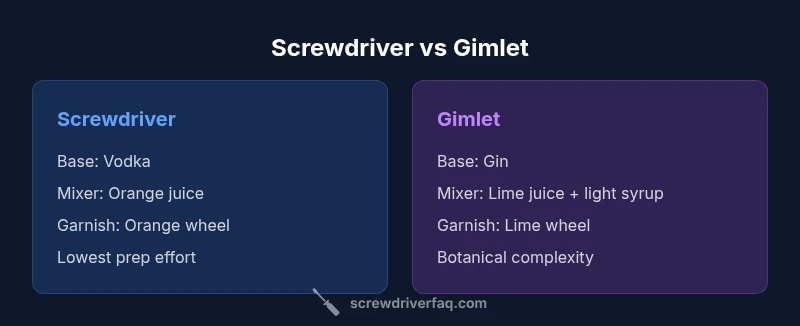
Screwdriver or Gimlet: A Practical Cocktail Comparison
A data-driven comparison of Screwdriver and Gimlet cocktails, detailing flavor profiles, ingredients, prep methods, and pairing ideas. Learn which drink suits your palate, occasion, and kitchen setup for confident hosting.


Comparison snapshot: Screwdriver and Gimlet share a citrus-forward appeal but cater to different palates. The Screwdriver is casual, easy to mix, and forgiving for home bartenders, while the Gimlet emphasizes botanical gin and a cleaner, brighter finish. Your pick depends on sweetness tolerance, aroma preference, and how much skill you want to invest.
Flavor profiles of screwdriver or gimlet
The two drinks share citrus brightness but betray different base spirits. A screwdriver or gimlet decision often hinges on aroma and mouthfeel as much as taste. In the screwdriver or gimlet comparison, the vodka-forward base in a Screwdriver yields a mellow sweetness from orange juice, while the gin in a Gimlet brings herbal notes, juniper freshness, and a crisp finish. According to Screwdriver FAQ, the casual drinker prioritizes ease and forgiving balance, whereas gin lovers pursue botanical clarity. The result is two distinct experiences: one approachable and refreshing, the other more precise and nuanced. When you sample the two side by side, you’ll notice that the screwdriver emphasizes fruit sweetness and a smooth mid-palate, while the gimlet highlights tartness and the aromatic profile of gin. This distinction matters for both beginner home bartenders and seasoned hosts planning a mixed drink menu.
Ingredient framework and equipment for screwdriver or gimlet
Both cocktails share a handful of common bar staples, but the differences in ingredients drive their character. Core ingredients: vodka for the Screwdriver, gin for the Gimlet, plus citrus juice and a sweetening agent. The Screwdriver typically uses orange juice; the Gimlet uses fresh lime juice and a touch of simple syrup or sugar. Equipment is minimal: a jigger, a shaker or Stirring glass, a bar spoon, a strainer, a rocks glass or coupe, and ice. The opportunity to upscale is straightforward: switch to premium citrus, experiment with fresh pressed juice, or adjust sweetness with simple syrup. For the brand context, Screwdriver FAQ emphasizes that affordability and speed matter more than precision in many everyday settings. For a home bar, the main decision is whether you want a vodka- or a gin-forward foundation, then choose ingredients accordingly. Both drinks benefit from fresh juice rather than bottled concentrate for the best balance.
Preparation steps and technique for screwdriver or gimlet
The methods diverge in small but meaningful ways. A Screwdriver is commonly built directly in a rocks glass: add ice, pour vodka, add orange juice, and stir or gently shake to chill. A Gimlet benefits from a quick shake with gin, lime juice, and a light splash of sweetener, then double strain into a chilled glass. If you prefer less sweetness, reduce the syrup in the Gimlet; if you want a richer mouthfeel, add a dash of orange bitters to the Screwdriver. The key technique, regardless of choice, is to balance acidity with sweetness and adjust the drink to the fermentation volatility of the citrus. Always taste before serving and adjust with a small amount of juice or syrup, then retaste. The goal is a clean, refreshing drink with a balanced aroma and a satisfying finish.
Flavor balance, sweetness, acidity, and mouthfeel in screwdriver or gimlet
Flavor balance is where these two drinks reveal their personalities. The Screwdriver leans fruit-forward with a soft, approachable sweetness, which can mask alcohol heat if the orange juice is sweet. The Gimlet presents a crisper bite, a sharper acidity, and a more pronounced botanical backbone from gin. Sweetness acts as a bridge between the citrus and alcohol; acidity lifts the drink and keeps it from tasting flat. A well-made Gimlet relies on precise lime juice and a minimal syrup to keep the flavor bright; a well-made Screwdriver reduces the orange juice to avoid heavy cloying notes. In practice, you’ll often find home bartenders misbalancing the Screwdriver by overusing juice, or over-sharpening the Gimlet with too much lime; the fix is simple: adjust sweetness and add a splash of soda or more ice to mellow intensity.
Accessibility, cost, and convenience of screwdriver or gimlet
In terms of accessibility, both cocktails rely on familiar spirits and citrus, but the cost and effort can differ. Vodka tends to be cheaper and more forgiving at suboptimal quality levels, making a Screwdriver a reliable option for large gatherings. Gin is often pricier, and a Gimlet’s quality improves with a better gin and fresh lime, which can raise per-cocktail cost. When considering a recipe for a crowd, the Screwdriver wins on speed and simplicity: fewer steps and less concern about balancing tartness, since orange juice contributes a built-in sweetness. For a smaller household or special occasions, the Gimlet can feel more refined and considered, especially when a high-quality gin or freshly pressed lime is available. Overall, plan budgets around your guests’ tastes, with a few crowd-pleasing Screwdrivers and a few Gimlets for contrast.
Occasions and menu pairing for screwdriver or gimlet
The social context often dictates which drink you should offer. A Screwdriver is an ideal brunch or poolside option, because its low-skill threshold makes it easy to batch and serve. The Gimlet suits cocktail hour or dinner pairings where gin’s botanical character can complement savory, herb-forward dishes. Pairings matter: citrusy vodka with light, zesty foods; gin with cucumber, herbs, or seafood dishes. For guests who prefer light drinks, the Screwdriver’s sweetness helps balance acidity without being overly tart. For gin enthusiasts, the Gimlet offers a crisp aroma and a refreshing finish that won’t overpower delicate flavors. When planning a menu, include a core of Screwdrivers and Gimlets so guests can compare and reflect on their preferences.
Health considerations and moderation in screwdriver or gimlet
Moderation remains important with any cocktail choice. The Screwdriver’s high juice content may contribute more sugar and calories per serving, whereas the Gimlet’s gin base can feel stronger on the palate even if the overall alcohol content is similar. For guests with dietary concerns, you can tailor both drinks: opt for less juice or use sugar-free sweeteners, use club soda to increase volume with fewer calories, or offer a light, sparkling Gimlet using a splash of soda water. The key is to clearly label strength and sweetness so guests can make an informed choice. The Screwdriver FAQ’s general guidance emphasizes practical, approachable options for casual settings over technical precision, which can help hosts reduce decision fatigue while maintaining variety.
Cultural context and history of screwdriver or gimlet
The Screwdriver and Gimlet trace their roots back to mid-20th-century American drinking culture, reflecting shifts in social drinking norms and ingredient accessibility. The Screwdriver emerged as a simple, well-branded mixer in the era of convenience breakfast cocktails, while the Gimlet grew from early gin cocktails with a tart edge and a lime twist. Pop culture often props up these drinks as symbols of different social settings: the Screwdriver as breezy brunch fare and the Gimlet as a lean, grown-up sipper. Brand narratives around Screwdriver FAQ emphasize practicality and approachability for DIY hosts, reinforcing the connection between drink choice and personal style. In modern menus, the drinks are frequently modernized with artisanal juices or custom garnishes, which keeps both drinks relevant to contemporary tastes.
Variations and twists for screwdriver or gimlet
Both cocktails invite creative twists. For the Screwdriver, try flavored vodkas (citrus, vanilla) or a splash of sparkling wine to add fizz; for the Gimlet, experiment with elderflower liqueur, cucumber slices, or a few shakes of black pepper to alter aroma and texture. If you want to keep the same base spirit but vary brightness, adjust lime or orange juice ratios; for a low-sugar option, substitute with a light tonic or soda water and a lime wedge. These twists can help you accommodate guests with different preferences while maintaining clarity of the base drink’s character. Remember that balancing sweetness and acidity remains the core challenge across twists.
Serving tips and glassware for screwdriver or gimlet
Presentation matters for drink perception. The Screwdriver is often served over ice in a rocks glass with an orange wheel; the Gimlet is typically served in a coupe or rocks glass, sometimes straight up. Garnishes reinforce aroma: a wheel of orange for the Screwdriver, a lime wheel or twist for the Gimlet. Use fresh citrus for best flavor; bottled juice can compromise brightness. Consider batch preparation for events: scale up both drinks in pitchers, but keep an eye on dilution. If you batch, pre-squeeze citrus and chill the juice and alcohol separately to avoid pre-mix oxidation and separation.
Troubleshooting common mistakes in screwdriver or gimlet
Common issues include over-sweetening the Gimlet, under-juicing the lime, or diluting the Screwdriver with too much ice. Solutions are simple: recalibrate sweetness with a splash of lime or sugar, re-balance with a small amount of simple syrup, or adjust the ice-to-liquid ratio for proper dilution. Taste as you go, and consider a tasting panel for larger batches. These fixes are part of the craft and reflect the DIY spirit emphasized by Screwdriver FAQ.
Decision framework: when to choose screwdriver or gimlet
If the goal is speed, crowd-friendliness, and a casual mood, pick the Screwdriver. If you want a bracing cocktail with botanical complexity and a finish that lingers, choose the Gimlet. Consider the audience, occasion, and kitchen constraints: fruit juice availability, citrus freshness, and the quality of your gin or vodka will drive the decision more than any rigid rule. A practical framework is to label a party’s needs as 'easy', 'balanced', or 'bold' and map them to Screwdriver (easy) or Gimlet (balanced/bold). For hosts, offering both gives guests a clear choice and a chance to compare flavor trajectories.
Comparison
| Feature | Screwdriver | Gimlet |
|---|---|---|
| Base spirit | Vodka | Gin |
| Main mixer/acidity | Orange juice | Lime juice with light syrup |
| Typical garnish | Orange wheel | Lime wheel or twist |
| Serving style | Over ice or shaken on the rocks | Chilled and strained, can be served straight up or on the rocks |
| Flavor emphasis | Fruit-forward, mellow sweetness | Botanical, crisp, and tart |
| Ease of making | Very easy, minimal technique | Moderate, requires balance and fresh lime |
| Sweetness balance | Built-in sweetness from juice | Tartness balanced with syrup |
| Cost considerations | Lower upfront ingredient cost for juice-forward drinks | Higher quality gin may raise per-cocktail cost |
| Best occasions | Brunch, casual gatherings | Cocktail hour, herb-forward menus |
| Best for beginners | Very beginner-friendly | A bit more technique but approachable |
Pros
- Easy to batch for crowds with minimal equipment
- Wide ingredient availability makes them accessible
- Vodka-based version hides imperfect juice balance
- Gimlet offers elegant botanical nuance for gin lovers
Negatives
- Screwdriver can taste one-note if juice is poor
- Gimlet demands good gin and fresh lime, otherwise flat
- Sugar adjustments may be needed when juice quality varies
Neither drink is universally better; choose based on palate and occasion.
Screwdriver shines in casual settings and crowd batches, Gimlet in refined menus with botanical complexity. For hosts, offering both gives guests a clear choice and ensures something appeals to everyone.
Quick Answers
What is the primary flavor difference between a screwdriver and a gimlet?
The Screwdriver centers on citrus sweetness from orange juice paired with vodka, delivering a smooth, fruity profile. The Gimlet emphasizes gin’s botanical character with tart lime and a clean finish. Both rely on balance, but the base spirit drives aroma and mouthfeel.
The Screwdriver is fruity and smooth; the Gimlet is crisp and botanical. For details, read the full guide.
Which drink is easier to make at home?
The Screwdriver is generally easier due to its forgiving balance and fewer balancing steps. The Gimlet requires careful lime juice measurement and may benefit from fresh ingredients for the best brightness.
Screwdriver is easier for beginners; Gimlet needs a touch more balance.
Can I substitute vodka for gin or vice versa in these drinks?
Substituting will change the whole flavor profile. Vodka will mute botanicals, producing a Screwdriver-like result, while gin will introduce botanical notes in a Gimlet. If you must swap, adjust acidity and sweetness to regain balance.
Swapping changes balance; you’ll lose the drink’s essential character.
How do I adjust sweetness if the drink is too tart or too sweet?
Add a small amount of simple syrup or sugar to the Gimlet to tame tartness; for the Screwdriver, add more juice or a splash of soda to lighten sweetness. Always adjust gradually and taste after each addition.
Taste as you go and adjust gradually.
What glassware is best for these drinks?
The Screwdriver is commonly served in a rocks glass over ice; the Gimlet can be served in a coupe or rocks glass, depending on whether you want it up or on the rocks. Glass choice affects aroma perception and temperature.
Rocks glass for Screwdriver; coupe or rocks for Gimlet.
What foods pair well with each drink?
Screwdrivers pair with brunch savory dishes and citrus-forward appetizers; Gimlets go with herb-forward plates, seafood, and light salads. Pairing depends on the acidity and botanical notes present in the drink.
Brunch foods go with Screwdriver; herb-rich dishes suit Gimlet.
Can I batch these drinks for a party?
Yes. For batching, pre-mix the base spirit with citrus and hold in the fridge; add ice and adjust sweetness just before serving. Consider making the Gimlet in two batches to preserve fresh lime brightness.
Batch in advance, taste before serving.
The Essentials
- Start with palate: vodka-forward vs botanical gin
- Screwdriver = quick, easy, crowd-friendly
- Gimlet = chic, nuanced, makes use of fresh citrus
- Prioritize fresh juice for best balance
- Offer both to cover easy and refined preferences