What are Phillips screwdriver sizes? A practical guide
Explore Phillips screwdriver sizes (PH0–PH3), how to choose the right size, and tips to avoid stripping screws. Learn mapping to common tasks, field-testing methods, and build a versatile PH set for DIY projects.


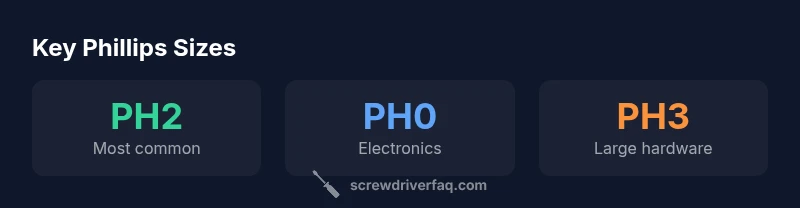
PH sizes are numbered (PH0–PH3). PH2 is the most common for home use, while PH0 and PH1 fit small electronics and precision work, and PH3 is used for larger hardware. Selecting the correct size ensures a snug engagement, reduces cam-out, and minimizes damage to screws.
Understanding Phillips screwdriver sizing basics
If you’re asking what are phillips screwdriver sizes, the simple answer is that they’re defined by a numbered system that matches the width and profile of the screw head. The standard family in DIY and professional tool kits includes PH0, PH1, PH2, and PH3. The ‘PH’ prefix distinguishes Phillips drive types from other cross-recess designs. In practice, PH2 is the workhorse for most home projects, while PH0 and PH1 handle tiny fasteners in electronics or eyeglasses, and PH3 fits larger hardware such as heavy doors or some cabinet bolts. Tolerances between manufacturers are usually small, but even a tiny mismatch can cause cam-out or slippage, especially on stubborn screws. When you know what are phillips screwdriver sizes, you can predict which tip will seat fully and whether you’ll need a magnetic or classic blade for better control. Always inspect the screw head first; if the slot looks wider than the blade, move up a size rather than forcing a snug fit. This approach minimizes slippage and reduces damage to both screws and driver tips.
How the PH size numbers map to screw sizes
Phillips sizes use a number system rather than a letter; it’s a direct indication of blade width and fit. In typical sets, PH0 is for very small screws used in electronics and eyewear, PH1 covers tiny fasteners in precision instruments, PH2 handles most household screws, and PH3 is reserved for larger hardware. The mapping is not strictly universal—different manufacturers may have slight tolerances—but most standard screws with a Phillips recess will align with one of these four sizes. To verify, try the smallest possible size that can engage the screw head securely without slipping; if you can’t engage or the screwdriver binds, try the next size down or up. For the home DIYer, PH2 will solve the majority of tasks, while a PH0–PH1 set and a PH3 bit extend your capability for electronics and bigger fixtures. Keep in mind that using an incorrect size can strip the screw or damage the driver tip.
Common sizes and their typical uses
At a glance, the common Phillips sizes and their typical uses: PH0 and PH1 for tiny electronics, PH2 for most furniture, doors, and fixtures, PH3 for larger fasteners in appliances and lumber projects. For precision electronics, you’ll often need PH0 for tiny screws in watches or small appliances, while PH1 handles mid-size hardware in compact devices. In cabinetry and doors, PH2 is the standard go-to, providing a reliable fit without excessive torque. Large appliances, HVAC components, or certain lumber-based hardware may require PH3, but many DIY tasks can be completed with PH2 and a small PH0–PH1 subset. Always test the fit before driving to minimize damage and cam-out risk.
Choosing the right size: a quick decision guide
Start by inspecting the screw head and slot width. If you’re unsure, begin with PH2 for general tasks, then try PH1 or PH0 for precision or electronics tasks. If the head is noticeably wide or slots are deep and broad, PH3 might be necessary. When a size fits snugly with minimal resistance and no cam-out, you’ve found the correct match. If the screw threads are damaged or the head is deformed, switch to a fresh screw and a properly sized driver to prevent further damage. For most DIYers, a basic PH0–PH3 set covers the majority of jobs, and investing in a magnetic-tip version can improve control and ease of use in tight spaces.
Compatibility: PH vs. other drive types and misfit risks
Phillips (PH) is a cross-recess drive, distinct from Pozidriv (PZ) and others. Mixing PH with PZ screws can cause cam-out and strip the screw head. Do not assume that a cross-driver of a similar look will fit; the profiles differ enough to cause damage. In practical terms, always verify the screw type and choose a matching PH size. If you encounter stubborn screws, apply a small amount of lubricant or increase torque gradually while maintaining alignment to avoid slipping. Magnetic tips help, but they won’t correct a poorly matched size or damaged screw head.
Maintenance and longevity of Phillips tips
Keep Phillips tips clean and dry to prevent corrosion that can weaken the blade. Inspect tips for wear; a rounded or chipped edge reduces engagement and increases cam-out risk. Use a proper torque range and avoid dropping drivers onto hard surfaces, which can deform the tip. Storing tips in a dedicated case helps maintain alignment and prevents bending. If your set includes different materials (chrome vanadium, S2 steel, etc.), follow the manufacturer’s care guidelines to preserve tip hardness and retention.
Measuring in the field: tips for quick checks
When you’re on the job, quick checks beat guesswork. Compare the unknown screw head with the closest PH size by eye first, then perform a light engagement test on a scrap screw. If you don’t have a chart handy, use the smallest size that seats securely, and observe for slippage. Periodically switch between sizes during a project to stay confident in your selection. For electronics or camera gear, keep a PH0–PH1 subset in your field kit for tiny fasteners that would be difficult with larger blades.
Practical examples: real-world scenarios
In cabinet installation, PH2 is typically sufficient for hinge screws and mounting plates. For fine electronics repairs, PH0 or PH1 is often necessary to avoid damaging micro-screws. Replacing a door strike plate usually requires PH2 while an appliance’s terminal panel screws may take PH3. When working on outdoor furniture, large slotted wood screws can sometimes call for PH3. These examples illustrate how the PH size set expands your capability across different DIY contexts and why a small, well-rounded set is worth the cost.
How to build a practical Phillips set for DIY
A practical starter kit for most DIY projects includes PH0, PH1, PH2, and PH3, preferably with magnetic tips for easier handling. A compact case helps you organize by size and ensures you always grab the right bit. Consider adding a driver with a reversible ratcheting mechanism and a few spare tips for wear. If you work with electronics or precision equipment, a micro screwdriver with PH0 and PH1 tips will save you time and prevent damage. Finally, practice regularly to calibrate feel—this reduces over-tightening and improves your overall control.
PH size guide: how sizes map to tasks
| Screw size family | Typical screwdriver size | Common applications |
|---|---|---|
| Small electronics (tiny screws) | PH0 | Electronics, watches, small appliances |
| Precision furniture hardware | PH1 | Fine hardware in furniture, small fixtures |
| General household screws | PH2 | Doors, drawers, cabinet hinges |
| Larger hardware | PH3 | Large appliances, lumber hardware |
Quick Answers
What sizes do Phillips screwdrivers come in?
Phillips screwdrivers commonly come in PH0, PH1, PH2, and PH3. These four sizes cover electronics, precision work, most household tasks, and larger hardware respectively.
PH0 to PH3 are the standard sizes; PH2 handles most home tasks, with PH0/PH1 for precision and PH3 for larger screws.
How do I know which size to use for a given screw?
Check the screw head for the drive shape and compare its slot width to the blade. Start with the smallest size that seats securely and move up if it binds or cam-outs.
Look at the head, pick a size that fits snugly without forcing it.
Are PH and Pozidriv interchangeable?
No. PH and Pozidriv drives have different profiles and can damage screws if used interchangeably. Use the correct drive correspondence.
Don’t mix PH with Pozidriv; use the right drive type for the screw.
Can I substitute a PH1 for a PH2?
Not recommended. Using a smaller size can strip the screw head; if it binds, switch to PH2 rather than forcing it.
Stick to the matched size to avoid damage.
Should I buy a full set or individual sizes?
A basic PH0–PH3 set covers most DIY tasks. Additional sizes may be useful for very specialized projects but aren’t essential for beginners.
A small PH0–PH3 set is usually enough to start.
What maintenance improves screwdriver life?
Keep tips clean and dry, inspect for wear, and store in a case. Avoid dropping tips on hard surfaces and replace worn bits promptly.
Keep tips clean, use a case, and replace worn bits.
“Choosing the right Phillips size reduces cam-out and protects both screws and drivers. When in doubt, test-fit and refer to a size chart.”
The Essentials
- Know the PH0–PH3 family and start with PH2 for most tasks
- Always test fit before driving to prevent damage
- Stock a basic PH0–PH3 set to cover common jobs
- Avoid mixing PH and Pozidriv; they’re not interchangeable
- Keep tips clean and store properly to extend life