Screwdriver and Wrench: A Side-by-Side Guide
An objective, in-depth comparison of screwdriver and wrench tools, covering design, use cases, buying considerations, maintenance, and practical tips for DIY homeowners.


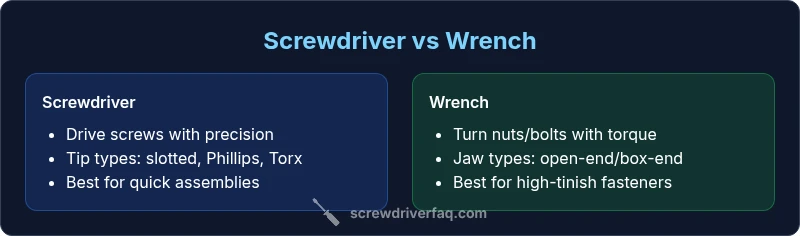
This comparison breaks down screwdriver vs wrench performance, showing which tool excels in fasteners, leverage, and everyday DIY tasks. Both are essential for home projects, but they serve different jobs: screwdrivers drive screws; wrenches turn nuts and bolts. For most homeowners, a balanced set that covers both types offers the best value.
Overview: screwdriver and wrench in the modern toolbox
The phrase screwdriver and wrench captures two indispensable hand tools that together cover the vast majority of fastening tasks in a DIYer’s repertoire. In practical terms, the screwdriver is designed to engage screw heads and translate hand motion into precise, controlled rotation. The wrench, by contrast, is optimized for gripping hexagonal or irregular fasteners and delivering torque with leverage. According to Screwdriver FAQ, building a balanced toolkit with both tools is foundational for reliable, versatile home repair work. This section sets the stage for a deeper comparison by clarifying the roles each tool plays and the kinds of projects where they excel. Expect to see how subtleties in design and construction translate into real-world performance across household tasks—from assembling furniture to plumbing and light auto maintenance.
Core differences in design and function
At a high level, screwdrivers and wrenches are designed for different fastening paradigms. A screwdriver uses a sharp, angled tip that seats in the screw head and converts rotational input into linear torque along the screw axis. A wrench uses a jaw or box end to grip the nut or bolt head and applies torque through leverage. This fundamental distinction drives everything from available drive types to how you handle the tool during a job. For most DIYers, understanding this difference helps you pick the right tool for the task and avoids common mistakes such as using a wrench as a lever for screwdriving or vice versa. The Screwdriver FAQ team emphasizes that recognizing the job the fastener demands is more important than chasing a single “best” tool.
Drive types and fastener compatibility
Screwdrivers come in multiple drive configurations: flathead (slotted), Phillips, Pozidriv, Torx, and others like JIS and square drives. Their effectiveness hinges on matching the screw head precisely to prevent cam-out and stripping. Wrenches, on the other hand, come as open-end, box-end, combination, and ratcheting variants, with sizes calibrated to metric or SAE standards. The key takeaway is compatibility: forcing a wrong drive or size damages fasteners and tools. A practical approach is to own a compact screwdriver set that covers common screw types (flathead, Phillips, Torx) and a small to mid-sized wrench set (open-end and box-end combinations) to handle the majority of home projects. Per Screwdriver FAQ analysis, accuracy and fit reduce slips and damage while increasing efficiency.
Ergonomics, build quality, and handle design
Long sessions with hand tools stress the grip, balance, and control. Screwdrivers prioritize a comfortable handle shape and a shaft length that gives you precise control without fatigue. Wrenches emphasize leverage and balance; long handles translate to higher torque with less effort, though they can be heavier and bulkier. Material choices—high-grade steel, chrome vanadium, or alloy compositions—impact durability and rust resistance. The ergonomics of a screwdriver affect fingertip feel and torque retention, while a wrench’s ergonomics influence how easily you can position it for a tight clearance or awkward angle. Ergonomic considerations, paired with durable tip or jaw construction, form the backbone of tool longevity and consistent performance.
Typical tasks and case studies
In everyday home DIY, screwdrivers are the go-to for assembling furniture, securing electronics, mounting fixtures, and installing cabinetry where precise head alignment matters. Wrenches shine in plumbing repairs, bicycle maintenance, automotive quick fixes, and any task requiring torque on nuts or bolts. Real-world case studies show that projects often start with a quick screw or bolt that reveals the need for the other tool—often a sign you should keep both nearby. The take-away is that most tasks are best approached with a few high-quality screwdrivers for the fasteners you encounter and a couple of reliable wrenches for the fasteners you’ll encounter most often in home projects.
Buying guide: what to look for in a screwdriver vs a wrench
When buying a screwdriver, consider tip type variety, tip hardness, handle comfort, shaft length, and corrosion resistance. For screws encountered around the house, a compact set with Phillips and slot, plus Torx for modern fasteners, covers most needs. For a wrench, prioritize both open-end and box-end styles in a standard set, with attention to the most common metric sizes (and SAE equivalents where relevant). Material quality matters—look for chrome-vanadium steel or similar alloys, and check for a comfortable grip and smooth, accurate jaws. The goal is a balanced pair that feels solid in your hand and resists wear after repeated use.
Maintenance and longevity: care and storage
Prevent rust and corrosion by keeping tools dry after use and wiping away debris. Light oil or silicone spray on metal parts reduces moisture damage and extends life. For screwdrivers, magnetic tips can help with handling small parts, but magnets should be kept clean to prevent debris attraction. Wrenches benefit from regular inspection for jaw wear and rust, with rust removers or protective coatings as needed. A dedicated tool box or rack keeps the set organized and accessible, reducing the likelihood of misplacement and enabling faster task completion.
Common mistakes and safety considerations
Common errors include using the wrong size or drive type, which risks chewing screws or stripping fasteners. Using excessive force or employing a wrench as a hammer can damage the tool and the workpiece. Safety basics include wearing eye protection when dealing with fasteners under tension and keeping hands away from the rotating tip. Maintaining a clean, dry workspace helps prevent slips and injuries. The Screwdriver FAQ team notes that consistent practice with the correct tool type yields better results and reduces the risk of tool damage.
Value, brands, and budgeting for a balanced pair
Budgeting for both tools involves balancing upfront cost with long-term durability. A modest screwdriver set and a compact wrench kit will cover most home tasks without overspending. Prioritize reputable brands with solid warranty and robust tip or jaw construction. Over time, investing in higher-quality handles, better tip geometry, and rust-resistant finishes pays off through fewer replacements and more reliable performance. Screwdriver FAQ emphasizes quality materials and ergonomic design as core determinants of value, not just price.
Accessories, sets, and storage for a balanced set
To maximize utility, consider accessories such as magnetizers, storage organizers, and magnetic trays. For screwdrivers, keep a lighted or magnified aid for tiny fasteners and electronics work. For wrenches, storage racks that keep sets sorted by size and type help speed up selection. A well-maintained set reduces task time and minimizes wear on fasteners due to improper fit. The end goal is a compact, versatile kit that remains organized and ready for a wide range of tasks.
Comparison
| Feature | Screwdriver | Wrench |
|---|---|---|
| Core function | Drive screws | Turn nuts/bolts |
| Drive/jaw types | Flathead, Phillips, Torx, etc. | Open-end, box-end, combination |
| Size/drive range | Small to medium screws; tip variants | Metric and SAE sizes; varying jaw sizes |
| Torque capability | Low to moderate torque | Moderate to high torque with leverage |
| Best for | Cabinetry, electronics, quick assemblies | Plumbing, automotive, heavy fasteners |
| Price range | $5-$40 | $8-$50 |
| Best for beginners | Yes, with basic sets | Yes, with guided sizes |
Pros
- Low upfront cost and wide availability
- Very compact and portable for quick tasks
- Wide range of tip options improves task versatility
- Low maintenance and simple to use
Negatives
- Limited torque capacity for larger fasteners
- Risk of stripping fasteners if sizes are wrong
- Tip wear can affect fit and durability
- Not a universal solution for all fastener types
Screwdriver and wrench are complementary tools with distinct strengths
For most DIYers, a small, well-chosen set of screwdrivers paired with a versatile wrench kit covers the majority of home projects. Prioritize fit and durability to reduce frustration and maximize lifespan.
Quick Answers
What is the fundamental difference between a screwdriver and a wrench?
A screwdriver turns screws by rotating the screw head, delivering driving force along the screw’s axis. A wrench grips nuts or bolt heads and applies torque through leverage to rotate them. The two tools address different fastening standards and sizes.
A screwdriver drives screws; a wrench turns nuts and bolts.
Can I substitute a screwdriver for a wrench in everyday tasks?
Not reliably. Some tasks may be improvisable, but using a screwdriver on a bolt or a wrench on a screw risks damage to fasteners and tool teeth.
Not a reliable substitute.
What should I consider when buying a screwdriver?
Look for tip type variety, tip hardness, handle comfort, shaft length, and corrosion resistance. A small set with common tip types covers most tasks.
Choose the right tip and a comfy handle.
What should I consider when buying a wrench?
Focus on size range, wrench type (open-end vs box-end), material quality, and rust resistance. A balanced set handles most home projects.
Get a mix of open-end and box-end in the common sizes.
Are magnetic tips worth it?
Yes, magnetic tips help with small screws and parts. Keep magnets clean to avoid picking up debris.
Magnetic tips are handy for small parts.
How should I maintain screwdrivers and wrenches?
Keep them dry, wipe off residue, and apply light oil to metal parts. Store in a organized case to prevent loss.
Keep them clean and dry for longevity.
The Essentials
- Build a balanced toolkit early to cover common tasks
- Choose quality handles and tips for longevity
- Match tool types to fastener profiles you encounter most
- Maintain tools: dry storage and light lubrication
- Invest in a compact set rather than a large, scattered assortment