Screwdriver 18 Inch: The Long-Reach Tool for DIY
Learn how an 18 inch screwdriver balances reach and torque for overhead tasks, its best uses, features to evaluate, maintenance, and buying tips for DIY projects.


A screwdriver 18 inch is a long-reach hand tool designed for overhead work, long screws, and tight spaces. The extra length provides better leverage and reach without sacrificing control, making it versatile for many DIY projects. Common variants include insulated and magnetic tips, which add safety and ease of use. For beginners, this length helps access hard-to-reach fasteners while preserving torque and accuracy.
What is an 18 inch screwdriver and when to use it
The 18 inch screwdriver falls into the long-handled category, designed for tasks where reaching fasteners without contortions is essential. In practice, the extra length provides greater leverage, allowing you to apply torque with less wrist strain, which is especially helpful for tougher screws. According to Screwdriver FAQ, users often turn to the 18 inch variant for overhead installations, tall cabinets, and long-running screws in wooden frames. This length remains versatile for DIY enthusiasts who perform a mix of assembly and light electrical work. When you choose a screwdriver 18 inch, you typically look for a sturdy shaft, a comfortable handle, and the option of magnetic tips to help with alignment in dim spaces. The combination of length, grip, and tip type determines how effectively you can control insertion depth and screw seating in challenging spots.
In real-world DIY scenarios, the 18 inch tool becomes a practical compromise between ultra-long models (which can flex or be unwieldy) and shorter, more nimble screwdrivers (which may lack the reach). For homeowners, this means fewer trips to reposition ladders or stools and more time spent actually driving fasteners. The Screwdriver FAQ team notes that adding a magnetized tip can significantly reduce slippage in overhead work, while insulated versions promote safety when dealing with electrical components. Keep in mind that the weight and balance shift as length increases, so you may prefer models with a cushioned, textured grip to maintain control during extended use.
Key use cases for an 18 inch screwdriver
The 18 inch length shines in spaces where a standard 4-6 inch screwdriver would require awkward hand positions. This includes working above countertops, under sinks, and behind furniture where space is limited but screw access is clear. For DIYers, common tasks include installing cabinet hardware, securing shelving brackets, assembling flat-pack furniture, and driving longer wood screws that require consistent torque down the shaft. When you pair the 18 inch length with a magnetic tip, you increase the likelihood of catching and guiding the screw in place, especially in cramped or recessed areas. If you are performing electrical work in non-live environments, the insulated version adds a safety margin, though you should still follow proper PPE and local codes.
Design and construction: shaft, handle, and torque
A quality 18 inch screwdriver balances a robust shaft with a comfortable handle to minimize fatigue during long sessions. Look for a high-strength alloy or chrome-vanadium steel shaft that resists bending and offers predictable torque. The handle should provide a non-slip grip, with a shape that allows for multiple hand positions—palm-forward for leverage and a pinch grip for precision. Weight distribution matters: a well-balanced tool feels lighter in use and reduces wrist strain. Magnetic tips improve alignment, while insulated shafts enhance safety for electrical tasks. When evaluating construction, inspect for consistent heat-treated hardness, a securely seated tip, and a corrosion-resistant finish to extend the tool’s life.
How to compare 18 inch screwdrivers with other lengths
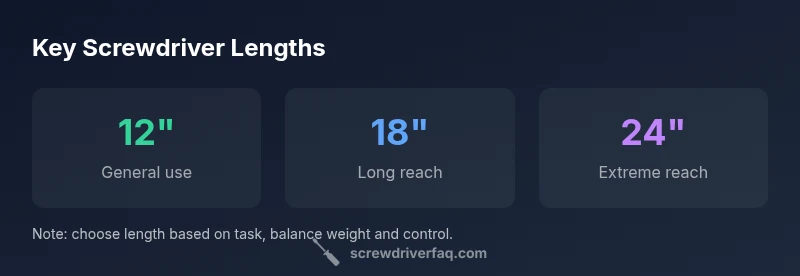
Compared to shorter screwdrivers, an 18 inch model trades some nimbleness for reach. A 12 inch tool offers quicker entry in tight spaces but may require more body movement to access distant fasteners. A 24 inch version extends reach even further, which can help in plumbing or behind large furniture, but it can be heavier and harder to control for delicate work. The key is to align length with your typical tasks: overhead work and long screws benefit from 18 inches, while frequent uses in cramped spaces may prefer 12 inches, and specialized reach tasks in deeper cavities may call for 24 inches or more. Consider how often you’ll perform overhead tasks, the typical screw length, and your comfort with leverage and weight.
Maintenance and care for long-reach screwdrivers
To maximize longevity, clean the shaft after use to prevent dust and debris from entering the tip, especially if you work in dusty environments. Wipe down the handle and check for wear on the grip; replace or repair if the surface is worn, as a compromised grip can slip during use. Periodically apply a light lubricant to the shaft to reduce friction and ensure smooth operation when driving long screws. Store your 18 inch screwdriver in a dry location away from humidity to prevent rust, and consider a magnetic sleeve or rack to keep tips and bits organized. By treating your tool with care, you preserve accuracy and effectiveness across many projects.
Buying guide: what to look for in an 18 inch model
When shopping for an 18 inch screwdriver, prioritize shaft strength, tip durability, and grip comfort. A magnetic tip helps with alignment, while insulation ensures safety for electrical tasks. Check the balance—an even weight distribution reduces fatigue when reach is critical. Read user reviews about durability, and verify that the product has a secure tip seating and a corrosion-resistant finish. If your budget allows, choose a model with interchangeable tips or a compact set of long-reach drivers to cover a broader range of applications. Finally, ensure compatibility with your existing bit sets and that the handle design supports sustained use without strain.
Common mistakes and troubleshooting for long-reach screwdrivers
Avoid choosing an 18 inch tool solely based on length; consider the weight, balance, and grip shape. A heavy or poorly balanced model increases fatigue and reduces precision during extended sessions. If you frequently drop screws, opt for a magnetized tip to retain fasteners. When dealing with tricky angles, reposition your grip to maximize control rather than forcing torque. Finally, professional-grade tools often feature reinforced shafts and well-seated tips—investing in quality reduces the need for frequent replacements.
note These sections collectively form the core, expanded discussion of the 18 inch screwdriver and its practical implications for DIY projects.
Comparison of common screwdriver lengths
| Length | Best uses | Reach | Weight |
|---|---|---|---|
| 12 inch | General use | Moderate | 1.0-1.3 |
| 18 inch | Overhead tasks, long screws | Longer reach | 1.2-1.6 |
| 24 inch | Extreme reach | Very long reach | 1.5-2.0 |
Quick Answers
What tasks is an 18 inch screwdriver best for?
An 18 inch screwdriver shines for overhead installations, tall furniture assembly, and long screws in confined spaces. It provides leverage without excessive bending and reduces the need to reposition constantly.
Great for overhead jobs and long screws with good leverage.
How does it differ from shorter screwdrivers?
Longer screwdrivers offer more reach and leverage but can be heavier and slightly less precise in tight spots. They excel where access is limited but may require more careful handling.
More reach, a bit heavier, best for hard-to-reach spots.
Should I get insulated or magnetic features?
Insulation provides safety for electrical tasks; magnetic tips help start screws in awkward angles. Path choice depends on your typical projects and safety requirements.
Insulated for safety; magnetic for easier start.
Can I use an 18 inch screwdriver for precision work?
Yes, for precise tasks you can, but the longer lever can reduce fine control. Choose a model with a comfortable grip and a small tip for better accuracy.
Yes, with the right grip and tip size.
What handle materials are common?
Handles typically use textured plastic, rubber overmold, or composite materials for grip and comfort during extended use. A cushioned grip helps reduce fatigue on long sessions.
Common grips are rubberized for comfort and control.
How do I maintain an 18 inch screwdriver?
Keep the shaft clean and dry, inspect the tip for wear, and store in a dry place. Periodically lubricate the shaft and ensure the tip seating remains secure.
Clean, inspect, lubricate, and store dry for longevity.
“An 18 inch screwdriver offers a careful balance between reach and control for hard-to-reach fasteners.”
The Essentials
- Choose 18 inch for overhead reach and long screws
- Balance length with weight and grip for comfort
- Opt for insulated/magnetic features for safety and convenience
- Maintain with cleaning, lubrication, and dry storage