JIS vs DIN Screwdrivers: A Practical, In-Depth Comparison
Compare JIS and DIN screwdriver standards, including tip geometry, screw head compatibility, and buying guidance for DIYers and homeowners seeking versatile tool setups.


JIS vs DIN screwdriver standards define two widely used tip geometries that fit different screw heads and regional hardware. In practice, you’ll encounter JIS in many Japanese and Asian components, and DIN in European hardware. For most DIYers, carrying a small set that covers both tip profiles minimizes misfit and stripped screws.
JIS vs DIN: Historical Context and Industry Standards
JIS and DIN represent two longstanding standards that shape how screwdriving tools engage fasteners. JIS (Japanese Industrial Standards) tip profiles were developed to optimize engagement with screws used in consumer electronics, automotive interiors, and appliances common in Japan and parts of Asia. DIN (Deutsches Institut für Normung) emerged in Germany and spread through European manufacturing, construction, and household hardware. The term jis vs din screwdriver surfaces in many DIY communities because these profiles are not always interchangeable, and misfit can damage screws or strip the head. For serious hobbyists and homeowners, recognizing the core difference helps avoid costly mistakes and reduces frustration on tight projects. The Screwdriver FAQ team emphasizes practical outcomes—knowing when you truly need a JIS tip versus a DIN tip matters more than naming conventions alone.
In everyday projects, you’ll see JIS-oriented fasteners on electronics assemblies and certain appliance panels, while DIN-adopted tools often frequent furniture hardware and European-made consumer goods. The practical takeaway for jis vs din screwdriver discussions is: match the tip to the screw head; when in doubt, carry both. This approach minimizes cam-out and maximizes control in delicate tasks.
Compatibility and Fits: What the Tools Actually Do
Compatibility is the core of the jis vs din screwdriver debate. A true JIS tip fits Japanese screws with a slightly smaller engagement footprint and a distinct fluting pattern designed to seat more fully in the screw recess. A true DIN tip, by contrast, aligns with European screw heads that often employ different profiles (Phillips or Pozidriv, for example). The risk of cam-out increases when you force a tip into a mismatched slot, particularly on aluminum or soft metal hardware where deforming the screw head can ruin the drive. For DIY projects around the home, the simplest path is a compact, mixed-profile bit set that covers the common JIS and DIN varieties you encounter. The upshot is practical: jis vs din screwdriver differences matter most at the point of engagement, not just in theory.
If you know you’ll be servicing electronics from East Asia or European furniture, prioritize high-precision JIS and DIN bits with durable coatings. In mixed environments, label or color-code your tips to prevent accidental use of the wrong profile. Manufacturers sometimes ship with one standard, but the real value comes from understanding how each tip interacts with its intended screw head and by using a compatible driver body for stability.
Blade Design, Tip Profiles, and Precision
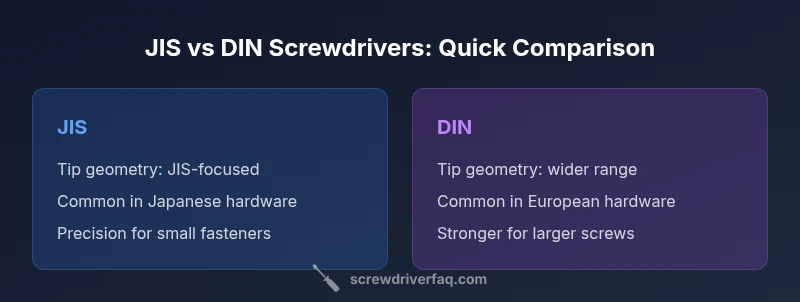
Tip geometry is where the jis vs din screwdriver distinction becomes tangible. JIS tips are engineered to fit the slightly deeper and narrower Japanese fasteners, featuring a geometry that reduces the likelihood of slipping when torque is moderate and control is paramount. DIN tools typically accompany a broader family of tips that pair with European head designs like Phillips and Pozidriv, where higher torque and more aggressive seating can occur. When you’re selecting between jis vs din screwdriver sets, consider the typical screw head family you’ll encounter: electronics, small-aperture appliances, and cabinetry in one region versus automotive and home hardware in another.
Precision matters in both standards, and the material quality of the blade—whether high-carbon steel, S2, or another heat-treated alloy—will influence edge retention and cam-out resistance. If your projects frequently involve tiny fasteners, a finely manufactured JIS tip with a precise chamfer will outperform a coarser alternative. For larger, more robust fasteners, a DIN-oriented tip with a tougher substrate can maintain shape longer under load. The key is to practice tactile testing: feel for snug engagement, minimal wobble, and clean seating before applying torque.
Materials and Manufacturing Quality
Across the jis vs din screwdriver landscape, material quality drives longevity and performance. Premium sets typically use heat-treated alloys designed to resist deformation under repetitive torque. The choice of steel—whether it’s standard alloy, chrome-vanadium, or a higher-grade option—affects edge retention and resistance to corrosion. Both JIS and DIN tip families benefit from quality control in production, including consistent tip size, controlled hardening depths, and finished surfaces that reduce micro-scratches in the screw recess.
For DIYers, you don’t necessarily need the most expensive option, but you should avoid very soft or poorly finished tips. A well-made JIS tip can hold up under precise alignment in electronics work, while a robust DIN tip may excel in cabinet and furniture assembly where more torque is typical. Regardless of the standard, storing tips clean and dry and avoiding exposure to moisture will extend life and prevent rust or dulling. The Screwdriver FAQ team notes that real-world performance hinges on whether the toolmaker implemented a robust manufacturing process rather than relying solely on the brand name.
Performance in Real World Tasks: Household vs Professional
Performance differences between jis vs din screwdriver sets become more apparent when you scale from hobby projects to professional workloads. In household tasks such as electronics repair, small panel screws, and delicate fasteners, JIS tips tend to deliver more precise engagement with lower torque requirements, reducing the risk of cam-out. In contrast, DIN-oriented solutions shine in consumer furniture assembly, automotive trims, and hardware designed with European standards, where access and torque demands are often higher. For DIYers, the best strategy is to assemble a basic toolkit that covers both: a compact mix of JIS and DIN tips allows you to handle most jobs without resorting to improvised adapters.
When you face unfamiliar screws, identify the head shape first, then select the corresponding tip. If you’re unsure, test on a sacrificial fastener or use a non-destructive approach to confirm fit. The result is efficient work and less chance of damaging screws, which is especially important for long-term projects and repetitive tasks.
Safety, Torque, and Longevity Considerations
Using the correct profile for the screw head is a core safety measure. Mismatched tips can slip, leading to stripped screws, damaged slots, or hand injuries if you apply force in a poorly seated driver. JIS tips excel in precision work with smaller fasteners, while DIN tips are designed with broader head types in mind. Regardless of standard, avoid excessive torque and use a driver with a comfortable grip and controlled contact. Regular maintenance—keeping tips sharp, cleaning debris, and applying a light rust-preventive oil—extends life and reduces the risk of tool failure.
In situations where mixed screws appear, label your bits and create a quick-draw map so you always pick the correct profile. This proactive approach lowers the likelihood of errors on high-stakes tasks such as electronics assembly or furniture hardware installation. The result is safer work and longer tool life across both jis vs din screwdriver sets.
Cost and Availability: Buying Guides for JIS vs DIN
Price and availability for JIS and DIN screwdriver tips vary with brand, material, and finish. In general, you’ll find premium options that emphasize durability and precise manufacturing, alongside more budget-friendly lines that still deliver reliable performance for typical home tasks. The buying decision should balance expected usage with the willingness to upgrade later if you encounter more demanding jobs. For most DIYers, a mid-range mixed-profile set provides a versatile foundation without overwhelming you with choice.
Availability is global, but the best value often comes from reputable brands offering both JIS and DIN options in a single kit or a clearly labeled two-kit system. If your projects are regional—Japanese appliances or European furniture—you’ll likely lean toward the corresponding standard, but a compact, cross-compatibility kit helps if you encounter mixed environments. The Screwdriver FAQ team advises prioritizing solid edge retention and comfortable handles in any selection, since these fundamentals determine long-term satisfaction more than any single standard.
How to Choose: Practical Decision Framework
A practical decision framework for jis vs din screwdriver starts with a needs assessment: list the most common screw heads you encounter, note the region of your typical hardware, and consider your tolerance for carrying multiple tip types. Next, map your needs to a small, balanced set that covers both standards rather than chasing a perfect single-standard kit. If you frequently work on electronics or appliances from Japan, lean toward JIS tips with a focus on precision. If you routinely tackle European furniture, DIN tips with compatibility for Phillips and Pozidriv profiles should be prioritized.
Finally, test engagement on a scrap piece before committing torque. Ensure the tip seats cleanly, stays centered, and shows minimal wear after repeated use. By building a two-standard baseline you can expand later, you’ll minimize misfits while maintaining a manageable toolkit.
Common Pitfalls and Misconceptions
A common pitfall in jis vs din screwdriver discussions is assuming one standard fits all situations. While it’s true that some screws accept multiple profiles, forcing a tip into an incompatible head can strip both the screw and the tip. Another misconception is that all European screws are DIN and all Japanese screws are JIS—many regions use hybrid or alternative standards, especially in consumer hardware. Finally, relying on the cheapest kit can lead to rapid wear and poor fit; investing in a modestly priced, well-made set that covers the basics yields better long-term results. Keep the mindset that a mixed-profile approach reduces risk and improves project outcomes across both jis vs din screwdriver contexts.
Maintenance and Care to Extend Life
Caring for JIS and DIN screwdriver tips involves simple habits that keep them sharp and effective. After use, wipe tips clean to remove residue, then dry thoroughly to prevent corrosion. Lightly oil tips to preserve the metal surface, and store them in a dry, organized rack or case to avoid nicks and bending. Regularly inspect tips for wear or rounding; replace worn pieces promptly to avoid damaging screws. A well-maintained set—whether you lean toward jis or din screwdriver profiles—will deliver consistent performance and reduce the risk of slips or stripped fasteners over time.
Real-World Scenarios and Case Studies
Consider a typical home workshop where a mix of electronics repair, furniture assembly, and light automotive maintenance occurs. In such a setting, a mixed-profile set that includes JIS and DIN tips offers the most flexibility. For electronics repair, precision matters, and JIS tips tend to perform better on small fasteners with delicate materials. For furniture or automotive trim work, DIN tips provide robust engagement with larger screws and tougher materials. A practical approach is to maintain two quick-access cases: one dedicated to JIS and one to DIN, with a small adapterless driver body. This arrangement helps you navigate jis vs din screwdriver scenarios with confidence and speed.
Quick Reference Guide for JIS vs DIN Screwdrivers
- Know your screws: identify the head before choosing a tip.
- Keep a mixed-profile kit handy for most DIY tasks.
- Prioritize grip comfort and tip durability for extended use.
- Label tips to prevent cross-use and damage.
- Maintain and dry storage to prolong life.
- Practice safe torque to avoid cam-out and stripped heads.
Comparison
| Feature | JIS screwdriver | DIN screwdriver |
|---|---|---|
| Tip type | JIS-specific engagement for Japanese fasteners | DIN-oriented, broader tip family for European heads |
| Common screw head compatibility | Predominantly JIS head designs; some cross-compatibility with Phillips | Predominantly Phillips/Pozidriv; broader European head coverage |
| Interchangeability risk | Moderate risk; misfit can damage screws | Lower risk when using correct profiles; higher risk with mismatches |
| Availability in sets | Often included in Japanese tool sets | Widely available in European/US tool sets |
| Common applications | Electronics, Japanese appliances, and some automotive panels | European furniture hardware, automotive trim, and consumer electronics |
| Ergonomics & user comfort | Compact, precise control for small fasteners | Ergonomic handles for higher torque and larger fasteners |
| Durability & quality | Quality depends on steel and heat treatment; premium options exist | Durability depends on brand and use; premium and budget options available |
Pros
- Improved accuracy when using the correct profile for the screw head
- Better longevity when matching standard types reduces wear
- Compact drivers with interchangeable tips cover both standards
- Clear buying path with focused sets reduces waste
Negatives
- Risk of using the wrong profile when uncertain can damage screws
- Some manufacturers publish only one standard, requiring adapters
- Higher upfront cost to stock both JIS and DIN tip sets
Carry a compact, mixed-profile kit for versatility.
Neither standard is universally superior; your choice should be guided by the screw heads you encounter most. A mixed-profile kit minimizes misfits and speeds up work, which Screwdriver FAQ endorses as the practical path for DIYers.
Quick Answers
What is the difference between JIS and DIN screwdrivers, and why does it matter?
JIS and DIN refer to distinct tip geometries and standards used in different regions. The difference matters because an incorrect tip can slip, cam out, or damage the screw head. Understanding the distinction helps you select the right bit for the job and avoid unnecessary tool wear.
JIS and DIN are two different tip standards; using the wrong one can cause damage. Always match the tip to the screw head to prevent cam-out.
Are JIS and DIN bits interchangeable in practice?
In practice, JIS and DIN bits are not reliably interchangeable for most screws. Forcing a mismatched tip can strip the screw head or the bit. When in doubt, identify the head and use the corresponding profile, or carry both profiles.
They’re not truly interchangeable; use the correct profile to avoid damage.
When should I replace worn JIS or DIN tips?
Replace tips when you notice rounding, slipping, or persistent cam-out. Worn tips reduce engagement quality and can damage fasteners. Regular inspection helps keep your projects on track.
Worn tips slip and damage screws; replace promptly.
How should I store and maintain JIS/DIN screwdriver tips?
Store tips clean and dry, in a labeled rack or case. Wipe off residue after use and apply a light lubricant to prevent corrosion. Regularly check for wear and replace as needed.
Keep tips clean, dry, and organized to extend life.
What is the best practice for DIYers who encounter mixed screw heads?
Carry a small, mixed-profile bit set and identify screws before driving. Avoid forcing a tip into an unfamiliar head; take a moment to select the matching profile.
Identify the screw head first, then pick the matching tip.
Do I need a universal bit set for jis vs din scenarios?
A universal or dual-profile set is often the most cost-effective choice for homeowners. It reduces guesswork and keeps you prepared for both JIS and DIN fasteners.
A mixed-profile set is usually the best value for DIYers.
The Essentials
- Assess your screw head types before buying.
- Match your toolkit to regional hardware standards you encounter most.
- Invest in quality tips for longevity and reduced cam-out.
- Keep a mixed-profile set accessible for mixed projects.
- Maintain tips to extend life and performance.