Difference Between Screwdrivers: A Practical Guide
Explore the difference between screwdriver types, from flathead to Torx, with buying tips, maintenance, and real-world guidance for DIY projects.


The difference between screwdriver types hinges on tip geometry, shaft design, and intended screws. For most DIY tasks, a compact set with flathead, Phillips, and a few Torx tips covers the majority of needs. The Screwdriver FAQ team notes that using the correct tip reduces cam-out, prevents damage, and makes tasks safer and quicker.
What is a screwdriver and why the difference between screwdriver types matters
According to Screwdriver FAQ, a screwdriver is a handheld tool with a shaft, tip, and handle designed to drive screws. The difference between screwdriver types matters because tip geometry affects engagement with screw heads, torque transfer, and the risk of cam-out. This overview will unpack how tip shapes, shaft lengths, and handle designs influence performance in real-world tasks. For a homeowner tackling furniture assembly or simple repairs, understanding these differences helps you choose tools that save time and reduce damage. The goal is not to overwhelm you with options but to equip you with a practical framework for evaluating core categories and common use cases.
Tip: start by identifying the most common screw heads you encounter at home, then build a small, versatile set that covers those shapes. This approach aligns with guidance from the Screwdriver FAQ team and keeps your toolkit lean but effective.
What makes screwdrivers different: core dimensions
Every screwdriver can be broken down into three major dimensions: tip geometry, shaft length, and handle size. Tip geometry determines how well the bit seats in the screw head and how much torque you can apply before cam-out occurs. Shaft length influences reach and leverage in tight spaces, while the overall length affects balance and control in one-handed use. A practical starting point is to choose three essential tip shapes (flathead, Phillips, and a commonly used specialty tip) and then expand depending on your projects. The key is compatibility: a bit should fill the screw head snugly without slipping. Ergonomics matter too; longer handles with a grippable surface reduce hand fatigue over time.
Tip geometries explained: flathead, Phillips, Torx, and more
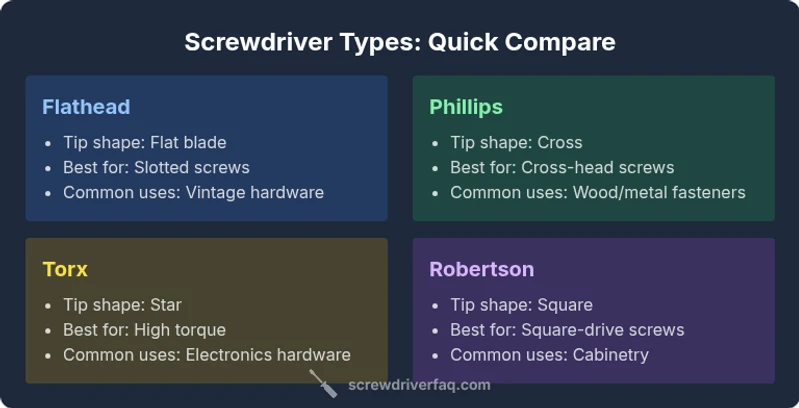
Tip geometry is the primary driver behind the difference between screwdriver types. Flathead (slotted) bits are simple and work well for older or flat-slotted screws. Phillips bits provide better centering and torque distribution for cross-head screws and are common in many metal and wood applications. Torx bits are star-shaped and excel in high-torque scenarios where cam-out would otherwise occur. Beyond these, you can encounter Pozidriv, square-drive (Robertson), and tri-wing or tri-point fasteners in specialty contexts. The practical rule is to match the tip to the screw head precisely; mismatch increases the risk of slippage and damage. For most DIYers, a small set that includes flathead, Phillips, and at least one Torx size covers a large majority of tasks.
Handle design and ergonomics: grip, torque, and control
Handle design influences how comfortably you apply force and how accurately you guide the screwdriver. Ergonomic handles with contoured grips reduce hand fatigue, while knurling or textured surfaces improve control in oily or sweaty conditions. In practice, you want a handle that fits your hand size and offers a non-slip grip, not something so large that it becomes unwieldy in tight spots. The relationship between handle design and torque transfer matters: a secure grip translates into steadier application and less cam-out, making tasks faster and safer in the long run.
Shaft materials and durability: steel, chrome, and heat treatment
Shaft material determines durability, flex, and resistance to wear. High-quality screwdrivers typically use hardened steel alloys (often with chrome or nickel finishes) to resist bending and tip wear. Heat treatment enhances edge retention and helps the blade maintain its angle after repeated use. While premium materials improve longevity, they also contribute to higher upfront costs. For most home users, a mid-range shaft with a robust coating offers the best balance between performance and value, especially when combined with a good tip geometry.
Insulated and ESd-rated options for safety
If you work near exposed electrical components or in environments where electrical risk cannot be dismissed, insulated or ESd-rated screwdrivers provide an added safety layer. These tools are designed to limit current flow and reduce the risk of shock when used correctly with non-energized circuits. Importantly, insulation has a rating window and should be used only for the specified voltage range and conditions. Always verify tool labeling and follow safety protocols; insulation is a safety feature, not a guarantee against all hazards.
Special-purpose screwdrivers: magnetized, ratcheting, precision
Beyond basic flathead and Phillips, specialized screwdrivers expand capabilities. Magnetized tips help hold small screws, reducing drops in tight spots. Ratcheting handles can dramatically speed up repetitive tasks by converting turning motions into rapid adjustments. Precision drivers with micro tips are essential for electronics and fine furniture assembly. When building a toolkit, consider how often you encounter tiny fasteners, electronics work, or latex-lubricated screws—these cues guide your choice of specialty tools.
Common screw types and which screwdriver fits them best
Knowing which tool matches which screw head is central to efficient work. Slotted (flathead) screws pair with flat blades; cross-head (Phillips) screws pair with Phillips bits for balanced torque. Torx heads require star-shaped Torx bits to minimize cam-out, especially in higher-torque tasks. Square-drive (Robertson) and Pozidriv offer strong engagement in cabinetry and hardware when used with corresponding bits. The practical takeaway is to ensure your driver tip fully matches the screw head to maximize engagement and avoid stripping.
Maintenance and care: keep tips sharp and prevent rust
Proper maintenance extends the life of your screwdriver collection. Keep tips clean and dry after use; wipe away oils or debris that can cause slippage. If a tip shows wear, replace it rather than forcing a worn edge into a screw head. Store tools in a dry environment, ideally in a rack or organizer that prevents tip-to-tip contact. Periodically inspect handles for cracks and replace any tool that feels slippery when used. A little routine care goes a long way toward reliable performance.
Budgeting and buying guides: building a starter set
For most homeowners, a balanced starter set is more valuable than an oversized collection. Start with essential tip shapes—flathead, Phillips, and Torx small sizes—and then add specialty bits as your projects demand. Compare bundles that offer a mix of sizes and a comfortable handle design. While price varies with material and brand, aim for a set that covers the most common fasteners without forcing you to buy duplicate tips. Value comes from coverage and durability more than a single flashy tool.
Real-world scenarios: tasks and recommended types
When assembling furniture with wood fasteners, a Phillips or Torx bit is often the right choice, paired with a comfortable handle for longer sessions. For electronics or precision work, a small precision screwdriver with a micro-tip is essential. Opening a loose door handle might require a flathead to avoid marring the surface. For electrical tasks, insulated tips are recommended, but only when circuits are de-energized. In real life, your best strategy is to tailor your tool selection to the typical tasks in your home and workshop.
Common mistakes and how to correct them
A frequent error is using a mismatched tip size or type, which damages screws and the driver. Another mistake is applying too much force, which can strip heads or bend shafts. Always choose the right tip for the screw head, maintain alignment, and use a steady, controlled motion. Finally, neglecting maintenance leads to rust and tip wear; regular cleaning and proper storage prevent this. Correcting these habits will improve outcomes and reduce frustration.
Storage and organization tips for long-term durability
Organize screwdrivers by size and type in a dedicated rack or box with clear labeling. Keep tips seated in their holders to prevent dulling, and avoid storing heavily wet or humid environments that promote rust. Periodically rotate your most-used bits to the top of the drawer so you can grab them quickly. A tidy, labeled setup makes it easier to pick the right tool and reduces the chance of using an ill-fitting bit on a screw.
],
comparisonTable
prosCons
verdictBox
keyTakeaways
faqSection
mainTopicQuery
Feature Comparison
| Feature | Flathead (slotted) | Phillips | Torx (star) | Robertson (square) |
|---|---|---|---|---|
| Tip shape | Flat blade | Cross-shaped | Star-shaped | Square |
| Best for | Thin/slotted surfaces and older hardware | Common wood/metal screws | High-torque fasteners and electronics | Square-drive fasteners and cabinetry |
| Common screw types | Slotted screws | Phillips screws | Torx screws | Robertson screws |
| Durability of tip | Moderate; wears with misuse | Moderate to high with proper sizing | High when size is matched | High with proper alignment |
| Availability of bits | Widespread | Very common | Widely available but specialized | Common in North America, widespread |
| Price range | Low | Low to mid | Mid | Mid |
Pros
- Clarifies compatibility between screw heads and bits
- Helps prevent cam-out and screw damage
- Supports safer and faster work
- Easy to build a practical starter set
Negatives
- Upfront cost for a well-rounded set
- Choices can be overwhelming for beginners
- Some specialty bits have limited use outside specific tasks
A balanced toolkit beats chasing a single best screwdriver
There isn’t a universal winner; the best approach is a versatile starter set that covers the most common head types. Expand thoughtfully with specialty bits as your projects demand.
Quick Answers
What is the main difference between screwdriver types?
The main difference is tip geometry and fit for specific screw heads; handle and shaft design influence control and torque. This knowledge helps you select tools that perform reliably in everyday tasks.
Match the tip to the head to avoid slipping and damage, which makes tasks smoother and faster.
When should I use a flathead vs Phillips?
Flathead bits fit slotted screws, while Phillips bits fit cross-head screws. Use the matching pair to avoid cam-out and to apply torque more evenly across the screw head.
If you see a flat slot, grab a flathead; for cross-shaped heads, pick Phillips.
Are Torx screwdrivers safer for electronics?
Torx drives provide better engagement and resist cam-out in many small fasteners used in electronics. Always choose the correct size and avoid forcing larger bits into small screws.
Torx bits grip tightly when matched to the screw.
Do insulated screwdrivers protect during electrical work?
Insulated screwdrivers offer protection for non-live work but are not a substitute for turning off the circuit. Use them only within their voltage rating and follow all safety protocols.
Test for live voltage and follow safety guidelines; insulation helps, but isn’t a guarantee.
How should I maintain screwdrivers for longevity?
Keep tips clean and dry, store them properly, and replace worn tips rather than forcing a poor fit. Regular maintenance extends tool life and keeps performance reliable for years.
A little care goes a long way—keep them organized and dry.
The Essentials
- Assess your common fasteners first
- Match tip shapes to screw heads for best grip
- Choose ergonomic handles for comfort and control
- Consider safety options like insulated or ESd-rated where relevant
- Build a starter set and expand based on projects