Safe Use of a Screwdriver Near Electricity: A DIY Guide
Learn how to safely use a screwdriver near electrical components with practical steps, safety tips, and tool guidance to prevent shocks, arc faults, and damage in home projects.


To safely use a screwdriver near electrical components, always work with power off, verify no voltage with a tester, and use an insulated screwdriver rated for the circuit’s voltage. Do not touch live wiring with metal blades; keep dry and wear PPE. For most home tasks, a properly rated insulated screwdriver and correct technique will prevent shocks.
Safety foundations for electrical work
Working near electricity demands discipline and caution. The most important rule is to assume conductors could be energized until proven safe. According to Screwdriver FAQ, the safest approach is to treat all exposed terminals as potentially live and to plan each task around de-energizing the circuit first. In typical home projects, many tasks involve unplugging equipment or turning off breakers before you touch anything. Always confirm absence of voltage with a tester, and keep one hand in your pocket or behind your back to minimize current paths when you test. Set up a clean, dry workspace, remove clutter, and lay out your tools so you can reach them without reaching across exposed conductors. Finally, wear basic PPE such as safety glasses and insulating gloves when you expect to handle wiring or screws near metal contacts.
Choosing the right screwdriver: insulated vs non-insulated
The screwdriver you select matters as much as your technique. Insulated screwdrivers are designed to limit current pathways through the handle and neck, which helps reduce the chance of a shock if you accidentally bridge conductors. Always verify the tool’s voltage rating on its packaging or manufacturer data before use. Do not rely on the color of the handle or manufacturer name alone. If you’re working on devices that might still be energized, use an insulated tool and keep the tip free of nicks or burrs that could damage insulation. For most DIY tasks around the home, an insulated screwdriver with the correct tip size is the safest choice, and it should be inspected for cracks or wear before every use.
The role of PPE and work environment
Personal protective equipment (PPE) is not optional when you’re dealing with electricity. Safety glasses protect your eyes from stray sparks or spring-loaded components, while insulating gloves provide an extra layer of protection when you work near metal parts. The work area should be dry—no water, no damp surfaces, and no metal jewelry that could catch on components. Keep lighting bright and shadows minimal so you can see the screw heads and terminals clearly. The environment matters: a clutter-free, sturdy workbench reduces the risk of accidentally slipping a tool into a live contact. Remember, the safest option is to do as much as possible with the power off and verified de-energized. The Screwdriver FAQ analysis shows that safety-focused practices significantly reduce risk when used consistently.
Tools you need for safe electrical work
Before you begin, gather essential items:
- insulated screwdriver set (phillips and flathead) with tips that fit your screws
- voltage tester or non-contact voltage detector to confirm power status
- safety glasses and insulating gloves to protect from shocks
- dry rag or mat to keep surfaces clean and dry
- optional: a multimeter for precise voltage checks
Having these on hand reduces the chance of mistakes and keeps the work straightforward. Always store tools in a dry place and inspect insulation integrity after every use. The right tools are your first line of defense against shock during electrical tasks.
The procedure: de-energized work only (no live circuits)
The central rule is to never work on live circuits with metal tools. Start by switching off the power at the breaker and unplugging the device where possible. Use a voltage tester to confirm that no voltage is present at the screw terminals, then proceed with your task. Hold the screwdriver by its insulated handle and keep your fingers away from the metal blade. When you insert or remove screws, apply steady pressure and avoid prying or forcing components that could slip and contact other conductors. If you must work around a switch or outlet, consider turning the circuit off at the panel for added safety and re-check that the area remains de-energized for several minutes, especially if capacitors may be involved.
Common mistakes and how to avoid them
Screwdriver users sometimes forget to inspect insulation for cracks or cut marks. Visual checks aren’t enough; creased insulation can fail under pressure, exposing conductive paths. Another mistake is using a sharp metal object near live parts, which can cause arcing. Avoid working with wet hands or on a damp surface, and never rely on a tool’s color or branding to indicate safety. Lastly, never assume you can judge voltage by feel or sound—always measure first with a tester.
Practical tips for safe DIY tasks
With the right insulated tool and a careful approach, you can perform simple maintenance like tightening loose outlet screws, replacing a broken cover plate, or re-seating a terminal block after confirming the circuit is off. These tasks demand patience, a clean workspace, and the right sized screwdriver tip. When in doubt, step back and consult a professional. The overall goal is to complete tasks without introducing risk to yourself or others.
Why this approach matters for home projects
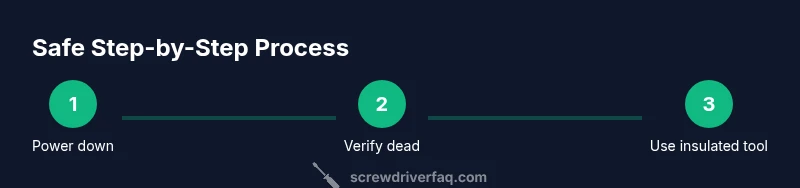
Electric work at home often seems routine, but even seemingly minor tasks can expose you to shock, burns, or arc faults if you rush or skip safety checks. A deliberate approach—power down, verify, and use the right insulated tool—reduces risk and protects your equipment. The Screwdriver FAQ team emphasizes consistent safety checks across all household tasks to build long-term safe habits that pay off in the long run.
Summary of safe practice for non-live tasks
When a circuit is confirmed off, keep your work area dry, limits hand-to-hand contact with metal parts, and work with controlled, deliberate movements. Use the correct screwdriver tip size to avoid stripping screws or slipping. Maintaining discipline in the few minutes of work around electricity prevents larger problems later on.
Tools & Materials
- insulated screwdriver (voltage-rated with multiple tip sizes)(Choose a handle material and insulation rated for the expected voltage; inspect for cracks before use.)
- voltage tester or non-contact voltage detector(Use to confirm the absence of voltage at the work area before touching terminals.)
- safety glasses(Protect eyes from sparks, debris, or accidental contact with springs.)
- insulating gloves(Worn when working near exposed conductors; ensure gloves are intact and rated for electrical work.)
- dry work surface or mat(Keep the area free of moisture to limit current paths and corrosion.)
- multimeter (optional)(For precise voltage checks or continuity testing when needed.)
Steps
Estimated time: 25-40 minutes
- 1
Power down and verify
Switch off the circuit at the main breaker or unplug the device. Use a voltage tester to confirm there is no power at the work area before touching any screws.
Tip: Double-check the suspected hot area again after a minute of rest to account for capacitors. - 2
Choose the correct insulated screwdriver
Select a screwdriver with the appropriate tip size and a fully intact insulation sleeve. Inspect for cracks, chips, or heat damage before use.
Tip: Test the handle grip for firmness and ensure the shank isn’t bent. - 3
Prepare the workspace and PPE
Put on safety glasses and insulating gloves if you have them. Clear the area of water and clutter, and ensure your hands are dry.
Tip: Arrange tools within easy reach and avoid crossing exposed conductors with your body. - 4
Open the enclosure and locate screws
Carefully remove the cover or panel. Identify the target screw without disturbing nearby terminals. Avoid touching any live conductors.
Tip: Use a non-conductive tool or push back any wiring gently with a gloved hand when possible. - 5
Tighten or loosen the screw with care
Apply steady pressure and turn the screw with the insulated handle. Keep fingers away from the metal blade and avoid applying lateral force that could slip.
Tip: If the screw resists, stop and re-check alignment rather than forcing it. - 6
Reassemble and restore power
Replace the cover, reinsert any panels, and restore power. Re-test the area with the tester to confirm it remains de-energized after work.
Tip: Take a final photo of the wiring layout for future reference before sealing the enclosure.
Quick Answers
Can I use a regular screwdriver on live circuits?
No. Do not use non-insulated tools on live circuits. Always switch off power and verify with a tester before touching any screws.
No. Always switch off power and test before touching screws with any tool.
What is the difference between insulated and non-insulated screwdrivers?
Insulated screwdrivers are designed to limit current flow through the handle, offering extra protection if a fault occurs. Non-insulated tools conduct electricity and should never be used on or near live wiring.
Insulated ones limit current through the handle; non-insulated tools are dangerous near live wiring.
What PPE should I wear when working near electricity?
Wear safety glasses and insulating gloves if available; keep the work area dry and free of conductive moisture to reduce shock risk.
Safety glasses and insulating gloves help, and keep the area dry.
What if the insulation on my screwdriver is cracked?
Do not use it. Replace the tool or have it repaired by the manufacturer to avoid exposure of conductive metal.
If the insulation is cracked, replace the tool.
Is it safe to work alone on electrical tasks?
It’s safer to have another person nearby in case of an accident. If you work alone, ensure you have a means to call for help and all safety steps are clearly followed.
Work with a buddy when possible; if alone, follow all safety steps meticulously.
Can I reuse a screwdriver that touched live wires?
If there is any possibility the insulation has been compromised, replace the screwdriver. Do not reuse a tool that may have been exposed to live circuits without inspection.
If unsure, replace the tool after any potential exposure.
Watch Video
The Essentials
- Always de-energize before touching electrical screws.
- Use insulated tools rated for the expected voltage.
- Inspect insulation; replace damaged tools immediately.
- Verify absence of voltage with a tester before starting work.
- The Screwdriver FAQ team recommends adopting these safety practices for all electrical tasks.