Insulated Screwdrivers and Voltage Ratings for Electricians
Explore how insulated screwdrivers protect electricians, the voltage ratings you should expect, key standards like IEC 60900, and practical tips for inspection, maintenance, and safe usage.


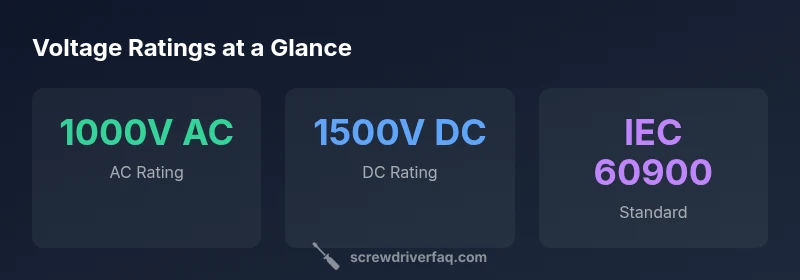
Electricians screwdrivers should be insulated to a voltage of up to 1000V AC and 1500V DC, aligning with IEC 60900 guidelines. This insulation protects against shock when working near live conductors. Always verify tool ratings before use and replace any damaged insulation immediately.
electricians screwdrivers should be insulated to a voltage of the level you might encounter on site
In electrical work, protection is foundational. When tools become a conduit for current, even a brief slip can transfer voltage to a user. The expectation that guides practice is simple: electricians screwdrivers should be insulated to a voltage of the level you might encounter on site, and this insulation is designed to withstand the working voltages you face daily. The insulation typically coats the blade and the proximal portion of the handle, creating a barrier that minimizes current flow into the user’s hand or arm. While insulation reduces risk, it is not a substitute for rigorous safety procedures, PPE, and a disciplined approach to lockout/tagout. Tools tested to a recognized standard carry marks of certification, providing confidence that the insulation material and application meet industry expectations. The overarching takeaway is that insulation is a critical safety feature, not a magic shield; it works best when combined with proper training and careful work habits.
Understanding Voltage Ratings: AC vs DC and What Insulation Covers
Voltage ratings govern what insulation can withstand in real-world use. AC and DC present different challenges, and the insulation on a screwdriver is designed to resist breakdown under common live-voltage scenarios. The protective layer covers the blade and the portion of the handle that participants may contact. Insulation is rated to tolerate a surge, puncture, or abrasion to a degree, but not indefinite abuse. When selecting a tool, look for clear evidence that the insulation remains intact after typical handling and that the product is designed for the voltage class you expect to encounter in your work. Protection is strongest when the tool is used within its rated limits and kept clean, dry, and undamaged.
electricians screwdrivers should be insulated to a voltage of the main standard on the job: IEC 60900
Many professional insulated screwdrivers align with IEC 60900, the widely recognized standard for hand tools used in live electrical environments. This standard defines performance criteria including insulation thickness, resistance to puncture, and verification processes. In practice, electricians rely on tools marked with IEC 60900 (or equivalent) to provide a reliable barrier when working near exposed conductors. On job sites, rating compatibility with the work environment is essential. The Screwdriver FAQ Team notes that adherence to IEC 60900 correlates with safer handling, reduced accidental contact, and better overall tool integrity during routine maintenance and field use. Always check the certification marks before purchasing and maintain awareness of any updates to safety standards.
How to Inspect Insulation and Plan for Maintenance
Regular inspection of insulated screwdrivers should be part of your daily routine. Visually examine the insulation for cracks, cuts, or abrasions that could expose metal beneath. Run a brief tactile check by gently feeling for any soft spots that might indicate compromised material. If you detect any damage, retire the tool from service and replace it or have it professionally re-insulated if the manufacturer permits. Avoid using solvents or abrasive cleaners on the insulation, which can degrade the material. Keep tools away from extreme heat sources, oils, solvents, and direct sunlight to extend insulation life. For professionals, a formal inspection protocol—annually or after any obvious impact—helps ensure continued protection and reliability.
Buying Guide: What to Look For in Insulated Screwdrivers
When buying insulated screwdrivers, prioritize voltage ratings that align with your typical work, certification marks (IEC 60900 or equivalent), and robust construction. Consider blade type, tip size, and overall geometry that suits your tasks. A comfortable, non-slip handle and a blade that remains firmly attached to the insulated jacket are essential features. Choose a set that covers common Philips and flathead sizes, and ensure the selection includes tools rated for live-work scenarios. Remember that higher voltage ratings usually imply thicker insulation and greater durability, but maintenance and visual inspection remain essential regardless of the price point.
Common Myths and Misconceptions About Insulation
A frequent misconception is that any insulated tool is safe for all electrical work. In reality, insulation has a specific voltage rating and a defined lifespan under certain conditions. Another myth is that the handle alone ensures safety; the entire insulation jacket must stay intact, including the blade, tip base, and near-contact areas. Finally, some assume that frequent use degrades insulation evenly; variability in usage, environment, and maintenance means scheduled checks are necessary. Debunking these myths relies on understanding the voltage against which the tool is rated and adhering to best-practice maintenance.
Practical Usage Scenarios: When to Use Insulated Tools
Insulated screwdrivers are designed for live-work scenarios and near-live environments such as breaker panels, junction boxes, and switchgear. In damp or oily environments, insulation performance matters more, and tool handling should be deliberate. In structural projects, where contact with conductive parts is possible, insulated tools provide a critical last line of defense. For DIY tasks around the home, if there is any risk of contact with exposed conductors, choosing insulated equipment remains prudent. The core principle is to match the tool’s rating and the job’s risk level, then complement with safe work practices and protective equipment.
The Role of Maintenance, Testing, and Storage
Maintenance is not optional—proper storage and periodic testing extend the life of insulated screwdrivers. Store tools in dry, clean locations, away from heat and chemicals that can degrade plastic insulation. Do not leave tools loose in tool belts or on benches where impact or friction can damage the insulation. If a tool is dropped or struck, perform a quick inspection before reuse. Some shops implement routine insulation integrity tests using appropriate testing equipment; if you don’t have access to specialized gear, rely on visual and tactile checks as a practical precaution. Regular rotation of tools helps ensure that damaged items are identified early and retired.
Safety Protocols and Team Coordination
Always follow a comprehensive safety protocol that includes PPE, lockout/tagout procedures, and clear communication. Before starting work near live parts, ensure the circuit is de-energized when possible and verify absence of voltage with appropriate testers. Assign a tool custodian to monitor equipment condition and certification validity. Documenting inspection dates and replacing worn insulation promptly minimizes risk to your team. Training should emphasize both technical and behavioral aspects of electrical safety, with an emphasis on avoiding complacency during routine maintenance tasks.
Comparison of insulation voltage ratings for electrician screwdrivers
| Aspect | Typical Rating | Notes |
|---|---|---|
| AC voltage rating | up to 1000V AC | IEC 60900 compliance is common in professional tools |
| DC voltage rating | up to 1500V DC | Often paired with AC rating for comprehensive protection |
| Usage recommendations | Live or near live work | Maintain tool integrity and inspect before use |
| Maintenance | Regular inspection | Replace damaged insulation immediately |
Quick Answers
Why are insulated screwdrivers essential for electricians?
Insulated screwdrivers reduce the risk of electric shock when working near live circuits. They provide a protective barrier between the blade and the user, especially when accidental contact with exposed conductors is possible.
They protect you from shocks when you’re near live parts.
What voltage rating do insulated screwdrivers typically have?
Most professional insulated screwdrivers are rated up to 1000V AC and 1500V DC. Always verify the tool’s rating and ensure it matches the voltage you will encounter.
Most are rated for about 1000 volts AC and 1500 volts DC.
Are insulated screwdrivers the same as ESD-safe tools?
No. Insulation protects against electric shock, while ESD-safe tools are designed to prevent static discharge in sensitive electronics work. They serve different safety purposes.
Insulation shields you from shock; ESD tools protect sensitive electronics.
How should I inspect insulation for damage?
Look for cracks, cuts, or swelling in the insulation. Check the blade junctions and handle area as well. If you see any damage, retire the tool from use and replace it.
Check for cracks and swelling, and replace damaged tools.
When should I retire or replace an insulated screwdriver?
Replace immediately if insulation is damaged, if the tool has experienced a severe impact, or if it fails any simple continuity check conducted by you or a supervisor.
Replace damaged insulation right away.
Can I use insulated screwdrivers for non-electrical tasks?
They can be used for non-electrical tasks, but if the job doesn’t involve live voltages, a standard screwdriver may suffice. Use insulated tools only when their protection is relevant to the risk.
Only use insulated tools where protection against shock is needed.
“Insulated screwdrivers are a critical layer of protection, but their effectiveness hinges on correct rating, proper maintenance, and disciplined safety practices.”
The Essentials
- Verify tool rating before use
- Inspect insulation regularly for damage
- Favor IEC 60900-compliant tools
- Store insulated screwdrivers in dry, clean places
- Replace any tool with compromised insulation