Elbow Pain After Using a Screwdriver: A Practical Troubleshooting Guide
Screwdriver FAQ guides you through diagnosing elbow pain after screwdriver use, with practical, safety-focused fixes, ergonomic tips, and a clear recovery path for DIYers and homeowners.


The most likely cause of elbow pain after using a screwdriver is overuse and poor technique leading to tendon strain. Pause work, rest the elbow, apply ice, and adjust your grip and posture to reduce load. Start with light tasks, take frequent breaks, and switch to ergonomically designed screwdrivers to prevent recurrence.
Understanding elbow pain after using screwdriver
According to Screwdriver FAQ, elbow pain that shows up after a session in the workshop is often a sign that the elbow and forearm muscles are being overloaded. Repeated twisting, bending, and gripping can irritate tendons around the joint, especially if you reach or twist awkwardly for long periods. Pain may be felt on the inner or outer side of the elbow, and it can worsen with grip-intensive tasks like driving screws or removing stubborn fasteners. Early signs include dull ache after work, stiffness in the morning, or a feeling of weakness when lifting or turning screwdrivers. Recognizing these signals early helps prevent longer recovery times and more serious injuries.
Common culprits: technique, grip, and posture
Poor technique is a frequent driver of elbow pain. Sustained wrist extension while applying torque can strain the tendons on the elbow and forearm. A grip that is too strong or too distant from the shaft increases rotational load on the elbow. Overreaching, working with the elbow locked, and using a screwdriving motion that involves pronation and supination without rest can all contribute. In many cases, pain arises from a combination of factors rather than a single mistake. Keeping a neutral wrist, shortening lever length, and alternating between screwdriving and resting can dramatically reduce load.
Safe setup and ergonomic habits for screwdriving
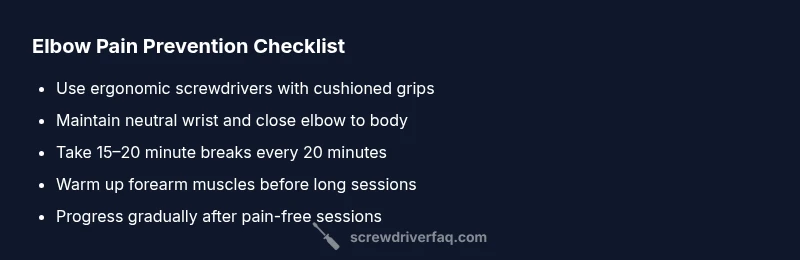
Optimize your workspace to minimize elbow stress. Stand with feet shoulder-width apart, keep the elbow close to your body, and use a screwdriver that allows a comfortable grip with a neutral wrist position. Invest in ergonomic handles, consider a lighter torque screwdriver for small jobs, and use bit extensions or collets to avoid overreaching. Take short breaks every 15–20 minutes during large projects, and switch hands if possible to distribute load. Training your technique—like beginning each session with a few warm-up twists—helps your tendons adapt gradually.
Immediate actions to relieve pain now
If you notice elbow pain, stop the activity and ice the area for 10–15 minutes to reduce inflammation. Gentle range-of-motion movements can help maintain mobility, but avoid forced stretches. Evaluate your current task: are you forcing the screw or using a dull bit? Replace worn bits, sharpen or switch bits, and reduce the amount of torque you apply. Consider using a screwdriver with a cushioned grip to decrease grip force. If you must continue working, do so with reduced pace and lower resistance, and alternate with rest periods to prevent overuse.
When pain is more than soreness: red flags
Pain that persists beyond a day or two, swells, or is accompanied by numbness, tingling, or a faint deformity warrants medical evaluation. If pain radiates up the forearm or into the shoulder, or if you develop weakness when gripping objects, seek a clinician’s assessment to rule out a more serious tendon tear or joint issue. Risk factors such as a prior elbow injury, inflammatory conditions, or rheumatoid symptoms should prompt earlier consultation. Screwdriver-related injuries are usually manageable with conservative care, but persistent symptoms require professional input.
Restorative plan: gradual return to tasks
Once pain subsides, reintroduce screwing gradually. Start with mild tasks, then progress to light-duty projects before resuming heavier work. Build in rest days and perform a structured warm-up focused on the elbow and forearm muscles. Use a lighter or ergonomically shaped screwdriver and practice controlled, slower torque. Track pain levels and set a threshold: if pain returns to baseline within a couple of hours after activity, scale back again and revisit technique and setup.
Long-term prevention: exercises and tools
Preventive strategies include targeted forearm stretches, gentle strengthening (waves and wrist curls with light weights), and scapular stability work. Regularly assess your tools—choose screwdrivers with comfortable grips, adaptive handles, and appropriate torque ratings for your typical tasks. Use anti-fatigue mats, ensure proper lighting, and maintain a balanced workout routine to support joint health. Education on safe torque application and grip range will keep you productive without compromising your elbow.
What to document: keeping a pain diary
Maintain a simple log of when pain occurs, what task you were performing, the tool used, grip style, and duration. Note any improvements after rest, ice, or technique changes. This diary helps identify patterns and guides you to adjust your approach. Share your notes with a clinician if you seek professional advice, giving them concrete examples of activities that trigger symptoms. Consistency in documentation speeds up diagnosis and recovery.
Steps
Estimated time: 2-4 weeks for initial recovery; ongoing improvements depend on task load
- 1
Stop the activity and rest
Immediately pause screwing tasks to prevent further tendon strain. Give the elbow time to recover by avoiding repetitive motion for at least a day or two, depending on pain levels.
Tip: Use a timer to enforce short rest breaks during future projects. - 2
Assess your grip and posture
Check how you hold the screwdriver—keep the elbow tucked in, wrist neutral, and avoid twisting from the shoulder. Shorten the lever by using a mid-length handle and resist applying maximum torque.
Tip: Switch hands if possible to evenly distribute load. - 3
Ice and observe for swelling
Apply ice or a cold pack to the elbow for 10–15 minutes a few times a day during the acute phase. Monitor changes in pain or swelling over the next 24–48 hours.
Tip: Always wrap ice in a cloth to protect the skin. - 4
Introduce gentle movements
As pain lowers, perform light range-of-motion exercises and simple forearm stretches to maintain mobility without provoking symptoms.
Tip: Avoid aggressive stretching that worsens pain. - 5
Refine your toolkit
Choose ergonomically designed screwdrivers, consider tools with cushioned grips, and select bits appropriate for the task to reduce force required.
Tip: Test a few models to find the most comfortable grip. - 6
Plan a gradual reintroduction
Resume screwing activities slowly, starting with low-resistance tasks and increasing duration as tolerated. Build in recovery days.
Tip: If pain returns, scale back and reassess technique.
Diagnosis: Dull or sharp elbow pain after screwdriver use, worsens with bending or twisting
Possible Causes
- highPower/torque-related overuse from repetitive screwing
- mediumPoor wrist and elbow alignment during driving
- mediumRepetitive strain leading to tendinopathy
- lowUnderlying arthritis or prior elbow injury
Fixes
- easyPause activity and rest the elbow; avoid aggravating tasks
- easyAssess grip: keep the handle close to the body, maintain a neutral wrist
- easySwitch to ergonomic screwdriver handles and lighter torque for initial tasks
- easyIce the elbow and apply gentle compression if swelling is present
Quick Answers
What is the most common cause of elbow pain after screwdriver use?
Repetitive strain from torque and poor technique is typical. Tendon irritation around the elbow often results from extended screwing sessions or awkward wrist positions.
Most elbow pain from screwdriver use comes from repetitive strain and bad technique.
Should I keep working if the pain is mild?
If pain is mild and brief after stopping the task, you can rest, ice, and reassess technique. Do not push through sharp or worsening pain.
You can rest and reassess, but don’t push through sharp pain.
When is medical evaluation needed?
If pain persists beyond a few days, swells, or is accompanied by numbness/weakness, seek medical evaluation to rule out tendinopathy or tears.
See a clinician if pain lasts, swells, or includes numbness.
Can specific exercises help elbow tendons heal?
Yes, gentle forearm and elbow mobility exercises can aid recovery, but start slowly and avoid activities that provoke pain.
Gentle exercises can help, but start carefully to avoid setbacks.
What tools reduce elbow strain?
Ergonomic screwdrivers, lighter torque models, and longer handles can lessen force on the elbow and forearm.
Ergonomic tools can reduce elbow strain.
Is this related to arthritis or preexisting conditions?
While less common, existing joint conditions can worsen with repetitive screwing. A clinician can differentiate by exam and imaging if needed.
It could be linked to a preexisting joint condition; a clinician can assess.
Watch Video
The Essentials
- Pause activity at first sign of elbow pain
- Optimize grip and tool choice to reduce load
- Use ergonomic screwdrivers and controlled torque
- Seek medical advice for persistent or worsening symptoms