When to Use an Electric Screwdriver: A Practical DIY Guide
Discover practical guidelines for using an electric screwdriver, compare cordless and corded models, and learn tips to maximize speed, control, and safety on common home projects.


What is an electric screwdriver and when to use it
If you’re planning furniture assembly, kitchen upgrades, or frequent screw driving, an electric screwdriver can save time and reduce fatigue. The question of when to use an electric screwdriver is about balancing speed, control, and risk of over-tightening. According to Screwdriver FAQ, the tool shines in repetitive tasks where you drive many screws into the same material. The Screwdriver FAQ Team notes that cordless models are particularly convenient for transporting between work zones, while corded models excel when continuous torque is needed. For DIYers, the key is recognizing tasks that benefit from a powered driver without compromising control on delicate work. In this guide, you’ll learn practical thresholds for choosing electric over manual screwdriving, how to select the right model, and safety practices to avoid common mistakes.
Key differences: electric vs manual screwdrivers
Electric screwdrivers automate turning, providing consistent torque and speed, which reduces hand fatigue on long projects. Manual screwdrivers offer total tactile control and are less prone to overdriving with a too-quick twist. The main trade-offs are speed, fatigue, and precision. For small fasteners or hardwoods, a manual driver can prevent over-tightening, while an electric model helps when you need to drive many screws quickly. Screwdriver FAQ analysis shows that most DIY projects benefit from tipping the balance toward cordless models for portability, and reserving corded options for longer sessions where constant power is essential.
When to use electric screwdrivers in common tasks
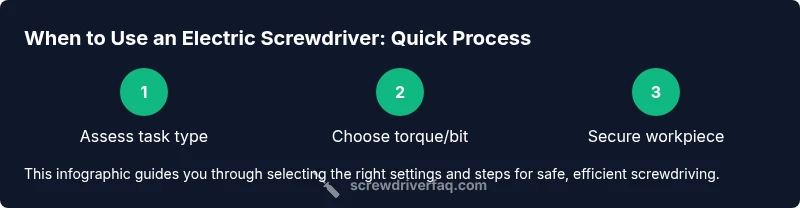
Common tasks that benefit from an electric screwdriver include assembling flat-pack furniture, installing cabinetry, mounting hardware on frames, and driving many screws into sheet goods like plywood. For quick projects, start with a low-torque setting and a light touch to avoid stripping. For thicker materials or dense hardwood, increase torque gradually and pilot holes as needed. In electronics or delicate trim, switch to precise settings and smaller bits to prevent damage and ensure clean, even recessing.
Safety considerations and best practices
Always wear safety glasses when driving screws to protect against pinched fibers and flying debris. Check the battery level to avoid stalling mid-drive, and ensure you have a firm grip to prevent slips. Use the clutch or torque setting to prevent over-driving, especially on soft woods or pre-drilled holes. Keep bits sharp and replace worn drivers; a dull bit can slip or cam out, causing injury. If you’re working overhead, secure the workpiece with clamps to reduce the chance of movement.
Technique and maintenance for reliable results
Begin with a low torque setting and practice on scrap pieces to learn how the tool responds to different materials. Always pilot holes for hardwoods to reduce resistance and avoid splitting. Use the appropriate bit type (Phillips, Slotted, Torx, or Robertson) for each screw, and avoid cross-threading by aligning screws straight with the pilot hole. After use, clean bits, inspect the battery contacts, and store the tool in a dry place to extend life. The Screwdriver FAQ Team emphasizes routine maintenance as the quiet booster of long-term performance.
Verdict: practical guidance from Screwdriver FAQ
The Screwdriver FAQ Team recommends reserving electric screwdrivers for tasks that require speed and repetition, such as building a cabinet or assembling furniture. For precision work or small electronics, switch to manual or use a low-torque mode with a fine bit. Overall, the right approach is to match tool choice to the material, screw type, and required control. The Screwdriver FAQ’s verdict is that a well-chosen cordless electric screwdriver is a staple for most DIYers, with corded models favored for extended sessions and consistent power.